Sep 10, 2026 · 51 min
CocoMao
CEO and co-founder of OpenArt, an AI visual storytelling platform
From $10M to $70M ARR in 12 Months, The Story of OpenArt - Coco Mao
In this episode
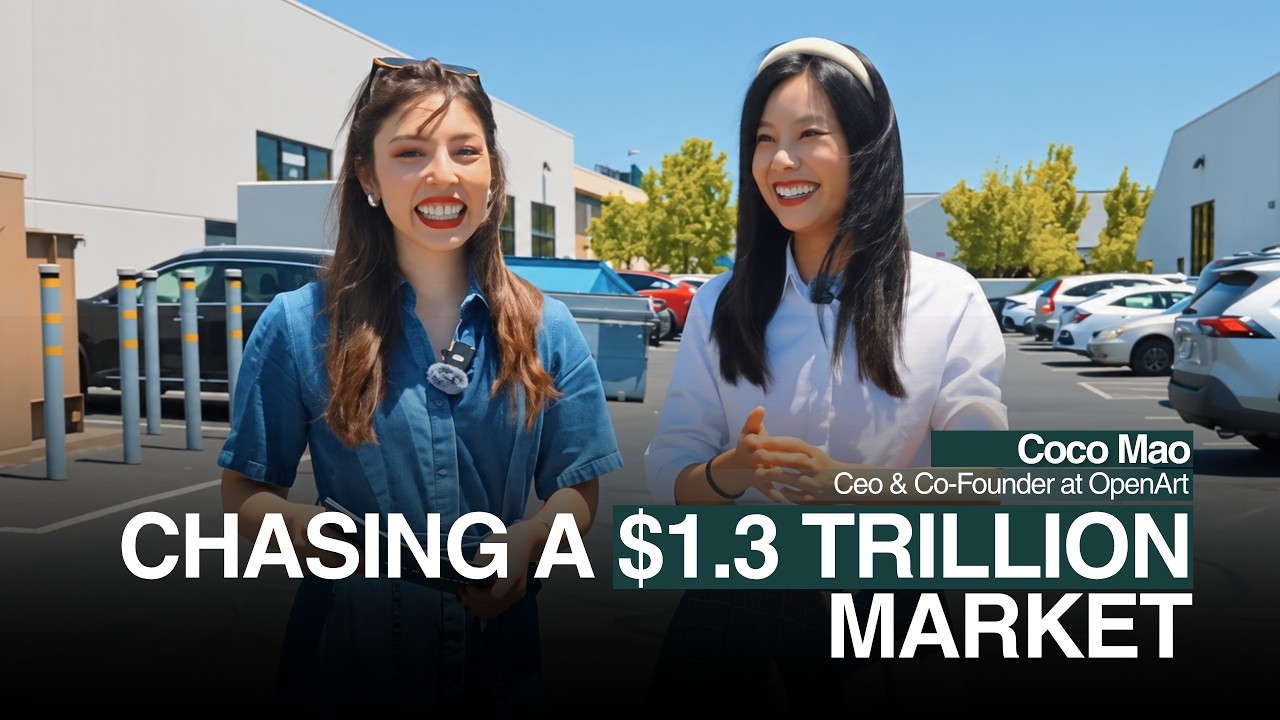
Today I walk with Coco Mao, CEO and co-founder of OpenArt, an AI visual storytelling platform. Coco spent years as an engineer at Google, ran her own startup inside Google's internal startup incubator, and built OpenArt through six months of weekly pivots until a prototype built in under three days went viral on Hacker News, and now she's betting the entire company on a new category she calls vibe directing.
- Why she quit her Google side-hustles, including the Amazon fidget-toy business she overstocked right before founding OpenArt
- The six-month stretch of weekly pivots that ended with a three-day prototype going viral on Hacker News
- OpenArt's bet on "vibe directing," the video-agent category she compares directly to vibe coding
- What actually separates good AI-generated work from "total slop": idea and taste, not the tools
- Launching the AI Personality Awards with Fanvue, and why she thinks AI influencers will make human creators more valuable, not less
Chapters
- Trailer
- Coco Mao, CEO & Co-Founder, OpenArt
- Selling fidget toys on Amazon before quitting Google
- Meeting co-founder Jon inside Google's startup incubator
- Betting on AI art in 2022, a non-consensus space
- The weekly pivot that led to a Hacker News-viral prototype
- Naming OpenArt and getting mistaken for OpenAI
- Raising a seed round on speed, not metrics
- Hire fast, fire very fast
- Why OpenArt survived while image-gen rivals disappeared
- Vibe directing: the next category after vibe coding
- What separates good AI work from total slop
- Launching the AI Personality Awards with Fanvue
- The hardest part of scaling: reinventing yourself
- The one founder belief she now thinks is wrong
- Outro
About the guest
Full transcript
LubaHi everyone. Today I'm talking to Coco Mao, CEO and co-founder of OpenArt, an AI visual storytelling platform. Coco and I met when she was an engineer at Google running one of the startups in their startup accelerator, and she was always so passionate about creator tools and starting a company. And now OpenArt is over 70 million ARR with just about 60 employees, redefining what creativity and democratizing creativity looks like.
Coco and I talk about the inflection of OpenArt, how they've iterated to what the platform is today, her view on AI slop and what makes actually good AI-generated products, and so much more. This was a really rich conversation, and I hope you enjoy it as much as I did. Let's get to it!
Coco, thank you so much for your time. I'm so excited for our conversation.
CocoThank you so much for having me.
LubaSo, I'm going to get started with your previous career at Google. So at Google you were working on Tangi, a short-form creator platform. And you were working in the creator space before the AI-generated boom.
CocoThat's right.
LubaI'm curious, what did you notice about creators then?
CocoYeah. So I think, okay, so we started with Tangi because I saw the short-form video coming as a new format. And at that time, you know, short-form video was still very new. And then it was 2018. The idea for us was that we wanted to create a short-form platform focused on lifestyle content, like Pinterest and TikTok had a baby.
And then at that time we found that everyone could be a creator. You know, at that time, we were serving a lot of stay-at-home moms who are creating like cooking tutorials, DIY tutorials, parenting videos. And then I realized that really, anyone can be a creator. And then as you can see, like if you become a very successful creator, then you can really monetize.
LubaThat's awesome. So you kind of noticed this democratization of creation before the idea for OpenArt emerged.
CocoYes.
LubaI also heard that you've always wanted to start a company. You know, before you joined Google, you were already like, I'm set on starting a startup. Where did that come from? Why did you want to start a company?
CocoThat's a great question. I don't even know when I really wanted to start a company, but I've always been a hustler, you know. Like, while I was at Google, I started my Amazon shop selling fidget...
LubaFidget...
CocoToys. It was during the pandemic, you know, the fidget...
LubaWas it so successful?
CocoPretty successful, I would say. Like, yeah, pretty successful. I had, like, good revenue, except near the end, I actually overstocked a lot of fidget toys.
LubaSo it wasn't dropshipping, you had all...
CocoYeah, I actually had all the boxes in the end. If I didn't overstock, I think I would have made a lot more money. But unfortunately I overstocked in 2020.
LubaOkay.
CocoYes. I overstocked hundreds of boxes. But then I actually donated them to nearby schools, so I thought I did something meaningful.
LubaSo you were always a hustler?
CocoYeah, I was always a hustler. And oh, besides the Amazon, I also had my own podcast before, and I had my TikTok channel of my dog. And then I just, you know, I love creating, I love filming, and I think that's something I really enjoy.
LubaSo do you remember that moment when you were like, it's time to leave Google? I'm ready to embark on my own journey.
CocoYeah. You know, like, I think a lot of immigrant founders have this issue like visa, green card, a lot of that. And at that time, I was thinking, okay, I'll stay at Google until I get my green card, which I did after many, many years. And then I thought, okay, I need to leave. But then the pandemic hit, you know, and I was thinking, okay, I also can explore the idea a little bit. That's why I started the Amazon business, to learn more about e-commerce in general. And yeah, after like almost a year or something, I decided to leave.
LubaAnd did you meet John at Google, your co-founder?
CocoOh yes. So it was during my last startup. You know, I was looking for someone inside Google who can do this stuff together. And then someone told me, oh, there's...
LubaWhen you say your last startup, you were talking about the startup within Google, Area 120 at one point.
CocoYeah, exactly. The incubator thing. And I think, honestly, there are so many talented people at Google. However, I would also say that in big companies, a lot of people, they might start very aspiring. I think you really want to find people who, even though they're at Google, are also doing side hustles.
For example, my co-founder John, he did so many failed startup flop ideas before Tangi, while he was in college, while he was just like, inside Google. He did this, like, Animal Crossing app that got like 10,000 five-star reviews. So I think you really want to look for people who, while doing their full-time job, have some side hustles. That could be a really good trait for a co-founder.
LubaTotally. So why not continue building your startup within Google? Why did you want to, you know, do your own?
CocoI think building a startup inside a big company, as I learned later, is actually fundamentally flawed, because in the startup world, you know, there is high risk, high reward. So in order to get high reward, you almost need to make sure that people take very high risk. And I think if you are staying in a big company, the risk is not high enough. You know, like Google still paid us, like...
LubaWow.
CocoYeah, yeah. And then so, you know, even if I failed, I still got... hey, I just need to, you know, change to another project. So I don't think there's a high-risk, high-reward system inside the incubator. That's why actually, years later, in 2023, Google shut down the incubator too, after a year. And I think that's actually a wise decision for Google. However, I do think such an incubator is a really good growth opportunity for individuals.
LubaWhen you guys decided to start a company together, just to paint the picture, it was around 2022 and AI image generation was a very new thing. And Midjourney technically was already kind of a pioneer in the space. Why did you decide to jump into this kind of non-consensus space?
CocoYeah, I'll be honest with you. I think a lot of people think, oh, a startup founder has a very clear vision at the very beginning. That's totally not true for us. And I would say not true for the majority of the founders I know. Like, most of the founders actually pivot a lot before they settle on an idea that works, and that's the same for us. I remember that, like from the time we left Google to the time we actually found something that's working, which is OpenArt, it was like half a year in between.
LubaWow.
CocoYeah. We started with one totally different idea, stayed there for a few months, and then finally declared it's not going to work. Or at least we think we're not excited enough about the problem space. And then we basically started this weekly pivot. We changed the idea every week.
And then I remember one day, because I was playing with DALL-E 2 at that time, we thought, oh, there could be a community for AI artists. And at that time, you know, AI art was such a new thing and the AI image was new. We had no idea how big it could be. But then, you know, since you are pivoting, why not try another idea?
And then so we spent less than a week building this prototype, which is like full of images. We crawled a lot of AI images online, from Reddit, from Discord, and then put the prompt there, because people had trouble figuring out what's right. And then we called it Pinterest for AI images. We posted it on Hacker News and then just immediately got the rolls.
LubaYeah. That's incredible. But how did you personally have conviction that that's something that you wanted to keep going with? Because obviously, you know, there are short viral stints that can happen and that's exciting. But I feel like the conviction that the founders have in the space is really important.
CocoI'll be honest with you, I think one thing we do really well is iterations. So I think we had this immediate hit with this Pinterest images idea. However, as people were coming in, you know, you talk to the users, you realize that, oh, actually, they need the creation tool, not just a place where they browse images. And then as you develop more and more, you see more and more evidence: oh, this is going to be something big.
And OpenArt has gone through several iterations throughout our journey. So back in 2024, we were mainly focused on images, like image generation, image editing. And then later, last year, we realized that, wow, because we really want to focus on visual storytelling, and in order to really democratize visual storytelling, we found that video is actually a better format. And then we kind of added more video products, more video creative tools.
And now today, what we are betting on is agents, because we found agentic workflow is something that's truly needed. It happened in the coding space. You know, people started with Cursor, like line by line, autocomplete, and now everything is vibe coding. Even though they give it a new name called agentic engineering, it's essentially vibe coding. And we think the same thing is going to happen with the creative space. Right now, people are writing prompt by prompt, creating assets, but tomorrow people are going to vibe direct to create stories.
LubaWow. Insane. I want to bookmark talking about the agentic creation, but wanted to go back to iteration. OpenArt did what a lot of startup mentors, books, etc. talk about a lot: iterate, talk to customers, don't fall in love with your initial idea, you know, keep doing that. How did you guys stay so disciplined to actually keep doing that? Because I think it's always easier said than done. And there are very few startups that do it to a T.
CocoI would say that we are very impactful on perfectionist. You know, I think one thing that's preventing a lot of people from iterating is that they want to get it perfect and then try. But for us, remember, when we did the very first version of OpenArt, we literally spent only three days.
LubaWow.
CocoAnd then it was very, very raw. And I think a lot of people would say it's not good enough. But for us, or for me personally, I think if something has product-market fit, even when it's at a very raw state, you should see some positive signal.
Because it's almost like a girl wearing very pretty makeup. Then you couldn't tell if people like you just because of your makeup or because people like you as a person. But then if you just, you know, go out not wearing makeup and people still talk to you, you're sure they just like you as a person. I know it's not the best analogy, but that's how I feel about product-market fit. It's like if you have a certain product-market fit, even at its most raw state, you should see some positive signal.
LubaWhat was that initial product-market fit signal for OpenArt? Was it when you guys went viral on Hacker News?
CocoYeah, I think that was the very first one. And then later it's when we actually started ranking for AI art. So that's where our additional traffic comes from. We realized that because of our name, OpenArt, when people search "AI art," we would actually come up as the first one. And then when these people come in, you can see that they started using our tool. They were even paying for our tool, even though I would say it was very, very raw. Like, you could just create images with Stable Diffusion, and then we had some DALL-E 2 access. But then you can see, even with a very, very raw product, people are willing to pay. And then that's when you realize, oh okay, then there's some opportunity there.
LubaHow did you guys come up with the name OpenArt?
CocoIt was a pretty random idea. John and I went for a walk, and then I just came up with this name. And we thought, because, you know, a lot of companies starting with "Open" is becoming this, like, popular...
LubaOpen... or OpenAI, obviously.
CocoOpenAI, OpenSea, open like open house, all of that. And then yeah, we thought it seems to make us feel legit. And then what's funny is that because we're called OpenArt, a lot of people initially mistook us for OpenAI. So they were keen and thought they were paying OpenAI, and then they were actually paying us. And like, you know, we try our best. But then I do think we rode the wave.
LubaThat's awesome. Yeah. So when you started raising your first round, I think the space was hugely underestimated, and it was very non-consensus.
CocoYeah.
LubaHow did you convince investors, and what did they see in you and in the product that you were successful at raising?
CocoSo we actually were lucky enough that we raised a round even with our previous ideas. So that's without...
LubaWhat was the previous idea?
CocoThe previous idea was very funny. It was basically a marketplace between brands and creators.
LubaI think I remember.
CocoThat whole brand thing. And what's really funny is that now we're making a lot of marketing videos, except with AI. So this concept, the old brands, comes back again.
LubaThat's great. The full circle.
CocoYeah. But at that time it was not much AI and not much tech. But the problem is actually very similar to what we're solving: brands need content.
LubaYeah, yeah.
CocoBut we're solving it a different way today.
LubaSo then you raised that pre-seed and then raised a seed. You had a lot of metrics already to prove your idea?
CocoYeah. So when we raised the seed we had some metrics. I wouldn't say impressive metrics, but enough to convince investors that, you know, this team is on to something. I would say the investors invested in us because we were really quick at iterating, not necessarily because, oh, we had impressive metrics, because we didn't. And then also we had three people at that time, which is me, John, and one engineer. So I think the investors more invested in people, and then they thought the space was interesting. But again, I think it was very, like, raw.
LubaTell me more about the actual speed of iteration. So if we go into specifics, how quickly do you guys iterate as a team now, and has that changed from a few years ago?
CocoSo the team now is a lot bigger than before, but I think we still try our best to iterate really fast. And in fact, right now the team has two tracks. One track is development, because there are millions of people using us. We couldn't afford to just launch something randomly, because it would potentially affect a lot of people's work. So we try to be more stable. So there's a core development track.
But then on the other hand, you know, as a generative AI company, it's very important to keep track of all the latest tech and then try out new things. So we have a discovery track where we will launch something to a small audience, like a small percentage of the audience, like a big experiment, and then just see, for this smaller group, what's people's reaction. And then if it's good, we can move it to the development track.
LubaHow do you instill such a culture of iteration for a team that's growing? Like, what are you guys specifically doing with incentive structure, maybe rewards, so that new employees know that, you know, this is not the time to kind of laze around and wait until perfection, but you've got to move fast and test?
CocoI think a few things. One is that you've got to find the people with the same mindset, because when we hire, being really hacky and being scrappy is actually one of the criteria we're looking for.
LubaHow do you test for that?
CocoFor example, through the interview process. One of the things is, oh, can you vibe code, like vibe code OpenArt within an hour, you know?
LubaThat's like an in-person interview?
CocoYeah. It's one of the coding questions we ask people. But again, this is not to literally build OpenArt within an hour, because otherwise what are we doing? But the point is, can you actually get the gist of things and then get the MVP fast, within an hour? So I think MVP is a very, very emphasized term on our team. Like, how can you build the minimum viable product and test it out?
So one is you select people. And then if you also find people who are not really doing this, then you let them go. So we also, you know...
LubaSo would you say you hire fast and fire slow, or fire fast and hire slow?
CocoI would say hire reasonably fast, but fire very fast. Yes. Very fast. So there is a diff in between.
LubaInteresting. Okay. So how quickly do you guys hire? Would you say that if someone has promise, you'd rather hire them quickly, and then if it doesn't work out, you let them go?
CocoYeah. Yeah, I think that's our approach.
LubaIs that an expectation you set from the start?
CocoSo I would say our firing rate is not that high. Fortunately, I think our interview process in general is pretty good. So when we let people in, most of the time it works out.
LubaThat's awesome.
CocoYeah.
LubaSo a lot of AI image generation tools at the time spiked up and disappeared. What would you say made OpenArt work?
CocoThat's a great question. I do see a lot of competitors come and go. I think there are a few things we did right that made us stay. One is that, again, it goes back to the iteration. Because, you know, if you think about us, 2024 we mainly focused on images, 2025 we focused on videos, and now we're all in on agents. So we're able to find the right thing to focus on at the right time.
LubaHow do you do that?
CocoAgain, it's through a lot of iterations, learnings, and talking to the users, and then really getting all the information everywhere. And I think being with the users is definitely one of the important things. For example, we run user interviews constantly. Like we just...
LubaWhat is constantly?
CocoConstantly. I would say it used to be like every month, but now it's more like every two months or something.
LubaYeah, but who is doing the user interviews now? You guys are what, like 60, 70 people in the company?
CocoYeah. So usually it's the product managers. I also do it sometimes. And then sometimes if we don't have enough bandwidth, we can work with professional user researchers. For example, last month we actually ran a churned user study. So basically we hired a company that would reach out to all of our churned users and then interview them: why did you leave OpenArt? But the way we did it was very smart, because they didn't know the user research company was working for us. So it's a very anonymous user interview.
LubaThat's cool. So you used to do that every month, now you do it every two months, and then someone distills the learnings. And then based on that, how do you find the balance of when to pull the trigger and actually lean into something completely novel that the user is telling you? Because you were just saying that the evolution has been image to video to now agentic.
CocoYeah.
LubaAnd you guys are doing a lot of things also across the board.
CocoYes.
LubaAnd with not a very big team.
CocoI would say before we actually take any leap of faith, we have our MVP. So for example, the reason we're very bullish on agents, or this whole idea of video agents, is that last year in July, we launched a product called One Click Story. And the idea is very similar to a video agent, except at that time, one, the foundational models were not good enough; second, the agent framework was not good enough. So we only did a kind of non-agentic way of full video generation.
But even with that, again, we were able to see some retention, we were able to see some traction. So this year we're just trying to solve the same problem with better solutions. That's why we're very confident this year. I think we're very bullish on the whole agent approach.
LubaOkay. Now tell me more about the agentic approach. What's the pitch?
CocoYes. So the category we are trying to define is called vibe directing, you know, like vibe coding. The idea of vibe coding is that people who don't know code at all can just have a chat, a very conversational chat, and talk about what they want to build, and then the agent will write the code for them, and then they get the tool they want to build.
So vibe directing is very similar. Instead of knowing how to write the script, how to do a storyboard, or you don't even need to know anything about video editing or anything about image or video generation, you just have a chat with the OpenArt Director, and then the director will write the script for you, come up with a character for you, and then create all the assets and stitch them together to edit, and then you get the full video.
LubaThat's incredible. So anyone who has an idea, who is creative, who wants to put something out in the world, would use OpenArt as their full creative suite to make it happen.
CocoYeah. And then the very interesting thing is that before, you'd need to learn about prompting. You need to learn prompt engineering. But now it's all about conversations. You're having a conversation with OpenArt Director as if you're talking to another friend. Imagine you have a Hollywood director friend. You're just talking to them about your idea, and then they can get the full crew to execute for you.
LubaWhat excites you personally? What is the motivation behind what you're building?
CocoWell, a few things. One, I'm very passionate about our mission. Our mission is to democratize visual storytelling. And I really think making a product like OpenArt Director is making visual storytelling accessible to everyone. So I think this mission is very exciting to me personally.
And then second, I also think we are tapping into something that may fundamentally change people's creative workflow entirely. Because if you think about it, there are two big spaces I think AI will revolutionize. One is coding, and a lot of companies are doing that. And the second one is media. And you are creating content, so you know how big the whole content economy is. And I think generative AI will make content creation forever different.
So today we're recording. That's great. And I think this type of content will still exist.
LubaHopefully.
CocoHopefully. But then on the other hand, I think China is opening a new category of storytelling. So you know, right now we're recording. But I imagine we could use generative AI to have Luba and Coco talk, for example, in space. And then just have two people even act in a micro drama. You can direct your own micro drama without even acting in one. So I think the possibility is just so limitless.
LubaYeah, 100%. That's very exciting. So on this passion front, you said you're passionate about democratizing storytelling and creating different tools for people. Did you personally find this passion... because you started the company with the passion for starting a company, and obviously you were excited about the creative space. But do you remember the moment when you were like, this is the mission, this is why OpenArt is going to, you know, change the lives of so many people?
CocoThat's a great question. So I still remember... again, to be very transparent with all the founders, a lot of times the mission is not clear when you set out. And in fact, for us, again, we were pivoting, so we didn't know exactly what we were doing. And even when we started OpenArt, there were just so many different use cases of, like, you know, images, videos.
But again, since we were doing user interviews, I talked to so many different people who are creating for different purposes. And I still remember, we have four categories of different types of people. And one type we call story visualizers. And when I talked to these people, I found their use case, in my personal opinion, is the most interesting.
For example, I still remember this tutor who was telling us that she was using OpenArt to create all the images to help kids learn how to read. But then she needs to create a story for them so that it's easier for the kids. And there are many cases like that. And for me, those use cases are the most exciting.
And also if you think about inherent human needs, like think about the ancient times when our ancestors drew murals on the wall, right? And then people started inventing paper and then started drawing on the paper. And now all the social media is a form of visual storytelling. So I think it's just so inherent in human needs. I think the need for visual storytelling is very solid, but the format keeps changing as the new tech comes in.
LubaYeah, I think the future where you can just express your creativity through words is so exciting, because it cuts out all the time that you need to spend learning the tools. But it does bring me to a question of what separates good AI-generated work from total slop.
CocoI think two things. One is idea. The second one is taste. So in terms of idea, I'll tell you a true story. So before the OpenArt Director launch, we actually had several internal jams where all the people used OpenArt Director to create work. And we had several tracks, like a storytelling track, ads track, music video track, and so on.
You know what's funny about the winners? In the end, they were actually not the creative directors. They were actually the engineers. I think without, for example, a product like OpenArt Director, the engineers can never win, because they couldn't really express their ideas with the craft. They don't have the craftsmanship. But after you really democratize visual storytelling, then you can compare someone with a good idea, an interesting story idea, with someone who's just really good with craftsmanship.
LubaA visionary versus an executor?
CocoExactly, exactly. And then people who had good ideas really, really stood out, because you are leveling the execution playground.
And the second thing is around taste. Because even with the same idea, someone with better taste could just create something more visually pleasing. And that's why, if you give AI really good reference images, even with the same idea, it could create more interesting visuals, because you're feeding AI better taste in image references. So I would say good idea plus good taste. And then with these agentic workflows, you can get the best story.
LubaSo everyone talks about taste, especially here in the Valley. You know, AI, whoever has better taste is going to be more successful. Whoever has a better idea is going to be more successful. How do you teach good taste, and how can someone come up with better ideas?
CocoI think, one, this is what I really believe: I think everyone is inherently creative, so everyone has good ideas. However, you need to let the ideas come out of you. For example, if you're busy working every day, then you are not even giving your brain some break to let the ideas come out of you. And so I think you need to give yourself some creative time, either relax or give yourself environments to let your creativity come out, so that you can really have the ideas come out of you. Because what I really believe is everyone has good ideas. You just need to let them out.
And the second thing is that for taste, I wouldn't say I'm the most tasteful person, to be completely honest. However, I do think ever since I started doing OpenArt and surrounded myself with all of these designers, the creative directors, I really found my taste has improved a lot. So the second thing I would say is just surround yourself with very tasteful people, and your taste will dramatically improve without you realizing it.
LubaYeah. So it's basically input curation. Who do you surround yourself with? What are you consuming? And also letting yourself have time to process the inputs and see what comes out of you.
CocoExactly. And then also just blindly believe that you have good ideas inside you. You just need to let them out.
LubaSo basically curate your inputs and then give yourself time and space to process the inputs and find your own creative edge and creative ideas.
CocoYes.
LubaI really love the point about giving yourself time and space to essentially be bored and see what ideas come out of you, because we are so overstimulated. And for myself, I'm constantly like, okay, you know, how do I find time to listen to myself? How do I control my inputs and the amount of inputs that I have? And that requires a lot of discipline to do, and awareness that that is what you need to do to be creative.
So I'm really curious for you, you know, given that OpenArt seems to be a very data-driven company. You guys are constantly iterating and listening to the users and looking at the data. How do you, as a founder and CEO, find the time and space to listen to yourself and your ideas, and I assume your intuition as well, for where to take the company?
CocoYeah, so one, while we're very data-driven, I also think I personally trust my intuition a lot. And that's why perhaps we're doing a creative company, because I really do trust my intuition a lot of times.
And I think, Luba, you have a really, really good point about how nowadays people are afraid of being bored. However, that's actually very bad for being creative, because in order to be creative, sometimes you need to allow yourself to be bored so that all of these good ideas come out of you.
And for me, for example, I try to have my morning run every day, like 30 minutes. And I don't listen to music. I don't listen to podcasts. I used to listen to music and podcasts. But then I realized that while I'm using all of my running time to absorb more information, what I'm missing is this downtime. My brain was constantly thinking, even when I'm running. So instead I just let my brain go blank. I don't need to think about something. I don't need to force myself to think. But then what usually turns out is that I have my best ideas when I run, because I let my brain just go wild, go blank.
LubaSo a 30-minute run every single day.
CocoI try to.
LubaWhat's the realistic?
CocoRealistic, I would say five, six days a week.
LubaThat's quite a lot. Yeah. Are there any other routines or practices that you do to find that boredom and listen to yourself?
CocoThe other thing I would say, well, very similar, is when I drive. Again, I used to listen to music, to podcasts, but now sometimes I intentionally don't do anything, so that I just let myself quiet down my brain. Oh, the other good suggestion I would say is, on weekends I love to go hiking. So if you can go hike and just be close to nature, I think that's another great way to really detox and have your dopamine go down.
LubaWhat's a recent idea that you came up with in your time of boredom?
CocoRecent idea? I don't remember, but I definitely came up with the name OpenArt while I was hiking.
LubaThat's amazing. Yeah. And do you meditate? Do you do anything else?
CocoOkay. I think meditation works for many people, but it doesn't work for me, because I'm a very active person. So I couldn't sit still. So running is a form of active meditation for me. But I think meditation works for many people.
LubaTotally. So kind of try different things and see what works for you.
CocoYeah, exactly. I think the main point is that you need to allow yourself to be bored. It's okay to be bored. It's important to be bored, and being bored is actually healthy for you.
Luba100%. I've been super impressed with the amount of content you guys have been putting out pretty much since day one. You started building out your LinkedIn brand, then you started a YouTube channel for OpenArt, and now you even have AI awards, which is insane. I want to learn more about that. But there has just been such a great balance of education, creating a brand, and obviously continuing to iterate and build tools for your community. How did you know that spending so much time on content was a good idea?
CocoYeah. So first of all, we are, you know, a generative AI creative company. So it's very important for us to use content to teach people how to make content. And content is very visual. And for example, YouTube was one of our earliest channels. We started YouTube last year. And I think among all of our competitors, we were probably the first to break, like, 100K followers.
LubaI think now you're up to 50K?
CocoOh, well, no, over 400K.
LubaWow. Insane. Okay.
CocoAnd then the second thing I would say is that, while we are building the product, we also really want to make sure that average people, not even professional AI filmmakers, can use our product. So education is actually very critical in our mission to democratize visual storytelling. And so that's why we have a YouTube team, we have an Instagram, TikTok team, just to make sure we're in all the places to teach people how to use our tool.
LubaAnd tell me more about the team composition. How many people is that? How were you guys so successful at knowing exactly what would work on each platform? Even with YouTube, you know, growth to 400K in like a year or a year and a half is absolutely insane. So you've been so good at identifying what works and, again, iterating on it very quickly.
CocoThank you. Thank you for the compliment. I think we're very fortunate to find the right people. For example, the person who is in charge of our YouTube, he was making a YouTube channel by himself, so he was an experienced YouTuber. And then we approached him to be in charge of our YouTube content. So he was the one teaching us, you should do this, you should do that, instead of us just figuring it out.
And also he's so passionate about teaching people that it doesn't feel like a job for him. He can constantly come up with new ideas because he wants to teach people. So I think finding the right person for the role is the best thing. Because for me, I haven't done a YouTube channel myself. I tried, and I wasn't able to bring it up. But then once you find the right people with the passion, you just see the difference.
LubaSo hiring is obviously one of the main jobs of any founder. How much time do you spend on hiring, and what are some things that have really worked for you personally in finding those gems in the rough and finding the right folks?
CocoYeah. So my co-founder mainly focuses on hiring. However, I would say a lot of our best hires, we didn't find them through recruiters. They actually come to us.
LubaBecause you're building a cool product.
CocoYes. And then you try to find ways for people to find you. For example, we started doing hackathons last year, and one of the first few schools we did was MIT. And through that contest, we hired our head of partnerships. We hired several creative directors. To be honest, when we started, we didn't expect to be so successful and get so much talent. But once you put yourself out there and people like your product, people like you as a person, they want to work with you.
LubaTell me more about AI Awards. So AI Awards is almost like an Oscars for AI creators. Who came up with the idea? Why are you doing that?
CocoSo the full name is AI Personality Awards.
LubaOkay.
CocoYeah. So we worked together with Fanvue, if you know it. So Fanvue is a platform which helps creators monetize. And it turns out a lot of the creators on Fanvue are actually AI creators, like AI influencers. So for example, Luba, you are a real influencer because I like your music.
LubaYeah, yeah. Who knows.
CocoBut for AI influencers, a lot of these influencers are made up, and most of the time they tell people it's made up. But it's very similar to any Disney character, where people like the character for who they are. So these AI influencers are basically these made-up characters, and then people follow them. So back in March, we launched this AI Personality Awards. We send you and to select the best AI influencers.
LubaVery cool. And so what's the goal with that?
CocoThe goal is to let people realize that you can create AI influencers. You can monetize through them. This is a new breed of influencers. Because if you think about traditional influencers like you, right, you need to be either pretty like you, or you need to be funny like me, right? But if you don't want to be in front of the camera, or if you're very shy talking in front of the camera, you can in fact create an AI influencer that will represent you. You can make that influencer talk. They can speak up your idea.
LubaOkay, so real influencers are really worried about this AI influencer takeover.
CocoYeah.
LubaWhat do you think will differentiate real influencers from AI influencers? Do real influencers have a shot, given that you can create this perfect persona that looks exactly right, says the exact right things, and the line between real and fake is so blurred now, and it's only going to get worse?
CocoYou know, I think AI influencers are going to make human influencers more precious. Because if you think about food, it's already happening. Like organic food, you can find it in Whole Foods, right? And then...
LubaThey're expensive.
CocoYeah, exactly. They're more expensive. And then the most health-conscious people will go to Whole Foods to buy. But if you go to, I don't know, average grocery shops, you actually just get all the genetically modified food, and people are okay with it, because a lot of times you are okay with, you know, cheaper food.
And I think it's going to happen for content. AI content will likely be that genetically modified food. They're everywhere. It's easier to produce, and there's more variety. However, that actually makes all the human-made content like yours more precious, because you have to go to Whole Foods, or like, live with Luba, to watch the human influencer content.
LubaDo you think this is good for the world, that there are going to be so many AI influencers?
CocoHonestly, I think it's yes and no. Yes, because it allows more people to express themselves. So I think from that aspect it's really good. It democratizes creative expression. However, what I feel more concerned about is the quality, because, you know, people are talking about AI slop. Do you really need that much content in the world? So I think that part we need to be more conscious of, because we really don't want all the junk content. But what I feel optimistic about is that people's bar will get higher and higher, because if you keep producing low-quality content, no one will watch. So you kind of need to make your bar higher.
LubaYeah, that makes sense. I want to spend a few minutes on your personal founder journey. What's been the hardest thing for you as a founder over the years?
CocoI think it's constantly reinventing yourself. Because what I realized is that for every period of time, you need to change yourself so that you can catch up with the growth of the company. For example, I think the Coco at the time when we had two or three people as a founder is very different from the leader that a company needs when you have like 50, 60 people. The skill set is different, the mindset is different. But if you keep being the same person, then you can't catch up with the company's growth, because the company needs you to be a different person now.
So I think it's this constant evolution of yourself. It could be hard, but also very exciting, because you keep growing. But then you need to know, oh, we're at this stage, I need to change now. So it's very important for you to have the self-awareness to know you need to change yourself.
LubaI think it's important to have the awareness of how you need to change and when to actually change, and also the honesty of whether you want to change in those ways that the company requires.
CocoAnd admitting that you are not perfect. Admitting that perhaps your leadership style from a previous period just doesn't work at the current time. So you need to be brutally honest with yourself and have very low ego. Just be okay with, oh, you know, the company needs you to grow.
Actually, I have more empathy now for investors who change CEOs. Before, I thought those investors were just dumb, and I had all the empathy for the founder. But now I actually have more empathy for the investors. Because really, when you grow a company to like a thousand people, it's very different from the company when you started.
LubaBut do you think the investor always has all the right information to make that decision? Because obviously they're looking from the outside in.
CocoI think investors are very results-driven. So on the one hand, I think yes, because they look at the results. But on the other hand, I think sometimes investors are not patient enough for the founders to grow. Because, you know, if you really grow the company fast, that means the founder needs to grow super fast. And sometimes the founder could, but it's just not enough time for them to grow. So at those times, I think investors could give founders more patience.
LubaYeah. What has been the thing that you're working on right now? How are you evolving?
CocoI think I'm working on a few things. One is, how do you lead a team of our size? Because before, the biggest team I led was like 10, 20 people, but now we're going to like 60, 70. So it's already, you know, like 6x the size. So how do you lead people with that?
And then second, how do I delegate more, so that I'm actually not interfering with others? I think I have the builder personality, so I like to dive into details. But now if I dive into details, people may actually get annoyed, because I don't know all the details. So if I try to dive into details, it could interfere with people's work. So I actually try to delegate more and not go into too much detail.
LubaAnd how do you learn that skill for yourself? Do you work with an executive coach? Do you have a constant feedback loop to see how you're doing with it?
CocoYeah, one, I do have an advisor. His name is Dennis, and he's been extremely helpful. And second, I think our culture has been so open-minded and so transparent that people are very comfortable telling me. For example, a few weeks ago I received feedback telling me, "Coco, you are not executing everything now, so you need to kind of give people enough freedom." Yes, they told me, and not to ask about everything. And then, you know, I really thought about it. I think they are right. So I had to admit to myself that I really need to give people enough trust and freedom.
LubaThat's incredible that you have such a transparent culture.
CocoYeah.
LubaWhat's a way to reinforce it?
CocoIt's that when people give you constructive feedback, don't get angry, and really listen to them. And then people will learn, oh, it's okay to give Coco constructive feedback.
LubaAnd how do you determine whether that feedback is a one-off? Because, you know, feedback obviously is a gift generally. But sometimes feedback comes from a person who maybe needs to work on their own issues, and that's why they're giving that sort of feedback. So where is the balance, in how many pieces of similar feedback you listen to before changing your behavior?
CocoI don't think it's about quantity. I think it's about really analyzing it for yourself. For example, once people give me constructive feedback, I always ask them to explain in detail, why do you think this way?
LubaMaybe give an example.
CocoExactly. Give examples. A lot of times I can have empathy for the situation and I would agree. But sometimes it's also that person's... you know, because it's never one-sided. I think it's always two-sided. Sometimes I also push back. If I'm, you know, meddling with your work, if I bother you too much, or if I dive too much into details, you could tell me on the spot. I would also give them feedback like that, because I feel like you should feel comfortable just telling me on the spot. I'm totally okay with you confronting me in front of others, because at the end of the day, it's about getting things done, instead of, oh, you're not respecting me.
LubaYeah, that's very true. So again, it comes back to low ego.
CocoYes.
LubaSet your ego aside and really try to listen to the facts and detangle the facts.
CocoExactly. I would really agree with your summary of low ego. I think on our team, I'm low ego and almost everyone has very low ego. Almost everyone. Yeah, almost... let's just say everyone. So that's why it's very efficient to get things done, because no one cares about who's right or wrong. People just want to get things done.
LubaYeah, yeah. That's incredible. What is one belief that you have that's only getting stronger every single day?
CocoI think, again, it goes back to our journey of pivoting. I think a lot of people thought, oh, founders need to have a very clear vision when they start. But I really do think you just need to start with something small, and then you'll eventually see the full picture. So you don't need to force yourself to see the whole path very clearly.
In fact, I think when you start, it's okay to be very foggy. It's okay to just see ten meters ahead. Because once you go in more, you'll eventually train yourself to see further and further. And a lot of times it's not because you are incapable, it's because the environment keeps changing. So just be okay with not totally being in control.
LubaThat's incredible. Yeah, well, let's end on this note of reinvention and low ego and thinking that you just need to get started. Coco, thank you so much for your time.
CocoThank you for having me.