
Nov 5, 2026 · 38 min
HunterWalk
Co-Founder, Homebrew
$56 Billion Investor Says Investors Don't Make Companies
In this episode
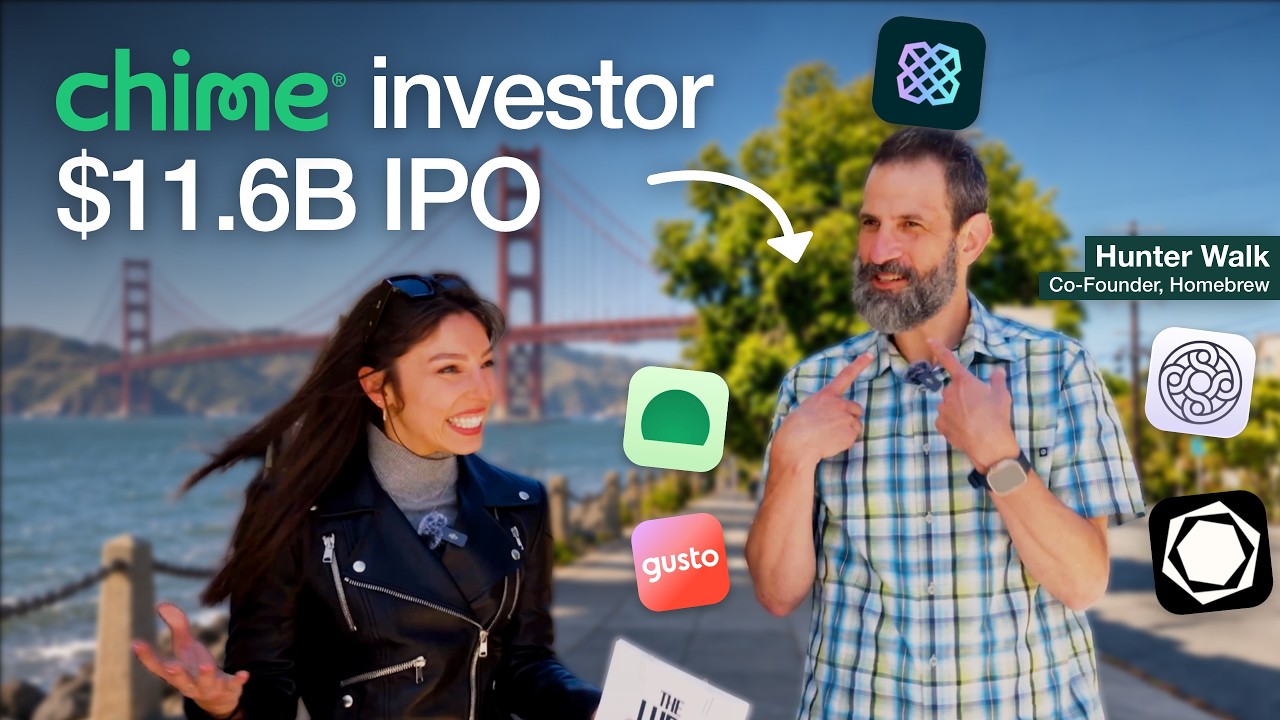
Today I walk with Hunter Walk, co-founder of Homebrew. Hunter led product at YouTube after Google acquired it, backed Chime years before its $11.6 billion IPO, and his firm led the seed round in Graphite before Cursor acquired it, and now he and his partner Satya Patel invest only their own money. He told me why skin in the game isn't enough anymore, and the one data point he'd use to explain why a startup succeeded.
- Why skin in the game isn't enough, and how a committed cap table carried Chime through its near-death years to an $11.6 billion IPO
- His founder "sandwich," and the hard question he put to Graphite's three Harvard co-founders before leading their seed
- Why he asks for the resumes of the first 20 hires, and what Google, Stripe, and Anthropic had in common at that stage
- Moving Homebrew to his own money, and why he doesn't need a markup from the next venture fund to prove he's good
- Naive VS dangerous: what founders should and shouldn't sacrifice for a startup
Chapters
- Trailer
- Hunter Walk, Co-Founder, Homebrew
- Skin in the game VS heart in the game
- How Chime almost died before going public
- Secondaries and the “next hot thing” mindset
- The founder sandwich
- Graphite: from seed round to Cursor acquisition
- Naive VS dangerous: what a startup costs you
- Investing his own money and skipping the markup
- Why the first 20 hires predict success
- Corner Health and primary care in a box
- Checking his ego and imposter syndrome
- Pre-consensus bets VS pre-anointed winners
- The Homebrew tattoo and Screendoor
- LeBron, Wembanyama, and backing competitors
- Food banks, door knocking, and touching grass
- Outro
About the guest
Full transcript
LubaHunter, thank you so much for coming on the show.
HunterThanks for having me. It's great. We met a few years ago, right? We got introduced. And now you're a podcast star.
LubaA star is a strong word, but...
HunterI've seen those view counts. I would say star.
LubaThank you, you're very kind. So you are a Silicon Valley veteran. You started your career—
HunterThere's gray hairs.
LubaProven, if I may say so. You started your career at the beginning of 2000, and you've been investing for over 13 years. And you're also a prolific writer, which I'm super impressed with, because you write pretty often. One thing I found really curious is you saying that skin in the game is not enough anymore. You've got to have your heart in the game. So I'm curious, when did you start noticing this in Silicon Valley?
HunterAs I used to say, you start a company and an investor comes in, and you're both committed. You're committed forever. It takes ten years, and that's all that matters. You're all focused on that end zone. But it feels like in the last few years, as both industries have grown, with so many more companies being started and so many more investors, the time to proof has condensed. If you're not a rising star in the venture landscape within a few years, in all these hot deals, or if your company isn't one that's being talked about as the next thing, everybody starts saying, well, what's the next thing? It's almost like you go to a party and somebody comes up and they're looking at your name tag, and you can tell they're looking over your shoulder.
LubaYeah. They're like, who's the next person who's more valuable?
HunterAnd so I feel like we've developed a little more of that: oh, I'm looking at the name tag. Who's the next thing? And we all know that overnight successes sometimes take hundreds of overnights, thousands of overnights. Some of the most valuable companies we were lucky enough to invest in, take Chime, the largest financial services provider among what they call the neobanks, which went public last year. Great company, but in its first few years it almost died a few times as they got the model right. What I saw was that they were able to create a great cap table of people who were really committed, willing to write the second check and say, no, this is working, we just need to get across that chasm. And fortunately, a team that also believed in this, not just because we think we're going to make a lot of money, but because there's a mission holding us together. We want to build financial services for the everyday American.
So for me, that's the idea of heart in the game, not just skin in the game. With skin in the game, you run a net present value calculation and ask, where's my time and attention best spent? Oh, this next new hotness, NFTs are hot, now I should jump off this and do that. Remember NFTs? Of course. But I feel like if you have heart in the game, you're willing to stick those out.
Now, everything's a trade-off. Sometimes you need a friend to come to you and say, you've been trying this for ten years, I know you're so committed, but there's an opportunity cost to doing this, let's talk about that. But frankly, as an investor, I'd much rather deal with entrepreneurs where I maybe have to have that conversation at some point, you tried your best, let's do something with this and give you another shot from a fresh start, than somebody who I think is always running in their head, should I continue doing this or should I go join Anthropic?
LubaYeah, that makes sense. So when did you start noticing people having this mentality of always looking around for the next hot thing?
HunterI think some of it is motivated by the post-Covid mindset, when we all got into thinking everything is transactional. I'm going to start trading crypto, I'm going to start betting on the prediction markets, I'm going to start getting into the collectibles market. Everything became this short-term adrenaline boost. You combine that with the structural rise of earlier and earlier liquidity via secondaries, and all of a sudden the idea was, well, you don't even have to wait your four years to be fully invested, and you don't have to wait till the company goes public.
LubaYou can get the bag.
HunterYou can get the bag. And now, look, I've written on my blog that early on I was always a big proponent of get, get, get, especially getting founders and early team members liquidity early. It's the difference between being able to move out of your two-bedroom with a roommate and move in with your partner. All those things are big. But when you start taking that up an order of magnitude, when you start saying, well, hey, it's been a few years and I don't have $5 million, $7 million, $10 million yet, I think that starts to misalign the incentives with the time and effort it takes to actually build something durable. It's saying, I don't care about durability, I just care about getting something, and then we'll see what happens.
So you get a lot of employees who almost treat their careers as, I'm going to get 18 months of equity here, 18 months of equity there. And that's fine. That's a choice. But as a CEO, you have to decide what combination of missionary and mercenary you want. If you're going to hire mercenaries, you need to put them in roles suited for mercenaries: go figure this problem out, get this started, and then jet. And if you want to hire people who are actually going to move into leadership roles, who are going to be great mentors to young talent, who aspire to join the executive team one day, I think you need to look for missionaries, not mercenaries.
LubaSo when you meet a founder these days, what are some things you do to figure out if their heart is in the right place?
HunterI've always joked that when I look at an opportunity, it's like a sandwich. Founders are one slice of bread, the problem and the market are the meat, and then founders again are the other slice. So it's two slices of bread and then the meat. The first thing is, do these founders have the ability? Setting aside who they are and how they're going to do it, do I just think they're really, really high-quality people, high slope, high CPU, blah, blah, blah. Are these people good enough to build a startup? Then, from a problem standpoint, what I'll say is I look to make sure—
LubaAnd actually, what do you do to figure out if they're good enough? How deep do you dig into that?
HunterI guess what I'd say is it's very easy—
LubaIs it intuitive? Pattern matching?
HunterIt's very easy to... There are plenty of false negatives. I don't want to say that it's authoritative. But I get the sense pretty quickly whether or not they understand what they're getting into, and whether they've thought deeply about the problem they're solving. You can usually get a ground truth pretty quickly based on what they've worked on, what they're proud of, what they choose to share with you, what you can find out about them. So a little bit of vibes, a little bit of backchannel. Then, is the problem they're trying to solve large? Orders of magnitude valuable?
But the bottom slice of bread is, I think, a little more what you're asking about, the intangibles for us, which is: are they solving a problem they're connected to in some way? Is their ambition beyond just the idea that this could be successful? Sometimes I ask, do they want it on their tombstone? Are they willing to build something that matters enough to them that, alongside whatever other roles they might have, parent, child, husband, wife, whatever, they want to put "founder" on their tombstone?
LubaIs their true identity.
HunterYeah. And are they going to build in a way that we're going to be proud not just of the outcome, but proud of the—
LubaProcess and decisions?
HunterSo, for example, we were very fortunate earlier this year to have a company called Graphite, out of New York, that exited to Cursor.
LubaCongratulations.
HunterThanks. I think the acquisition was just recent.
LubaYeah. It closed just a couple of days ago.
HunterWe led their seed round at the beginning of 2020, I guess. And I had the chance to work with these founders very closely. In fact, I'm attending one of their weddings later this month. When we met them, they were three guys who had gone to Harvard together, then all done their own thing and stayed friends, and it was clear: smarts, slope off the chart, hardworking, all that. The problem they wanted to solve was quality of code. The idea was that so much more code was being written. This was pre-GPT, so humans were writing the code. Now it's the same problem, just a combination of humans and machines writing the code. So besides the writing of the code itself, the IDE, they wanted to do everything else. I thought, well, that's pretty ambitious, and I believe your thesis. And the idea that you don't want to start with the IDE is actually quite interesting. So, okay, I like that.
Then the bottom slice was the one we had to spend the most time on. I said, hey guys, I don't mean to be rude, but there's a version of you, maybe in a parallel universe, a multiverse, that's three tech bros who all went to Harvard together, then worked at name-brand companies and are now doing a startup. They haven't put a lot of thought into how hard it's going to be, and they aren't used to taking a punch. So when you're wrong, you scurry back to your day jobs, and you hire the bros you worked with, whether or not those people, out of a 5,000-person Facebook/Meta, are right for a three-person startup. You haven't given me any indication that you're any of these things, but that's what I'd be worried about if I were investing in you. So let's talk a little bit about that.
It turned out there was a complete opposite of that. They were each very individual, so the whole was greater than the sum of the parts. It wasn't a carbon copy. And indeed they all stayed through the acquisition. It's very unusual to have three technical founders who all make it together for six years. You often end up crowding each other. They talked through their own backgrounds. I just had to check. But I would love to support you guys in building something you're proud of.
So that's the way I think about it. Nothing really substitutes, in those cases, for face-to-face time talking with the founders about these things. I think there are a lot of investors who either don't care about that, so it doesn't come up, or are afraid to ask anything hard like that, because these deals are competitive and founders can go anywhere. I don't want to offend them. Let's just get in business. But I think the best relationships actually start out with the idea that if we're going to work together, I need to earn and maintain your trust. There needs to be mutual trust and mutual context. That's how I help you become the best version of who you are as a founder, not just help your company be successful.
I've always enjoyed those relationships the most, regardless of the outcome. In this case, we were fortunate that the outcome was terrific for everybody. But I've been a part of investments where the outcome wasn't of the same magnitude, and I still wouldn't trade it for anything, because that's a founder, a CEO, a person we found other ways to work with, and we'll invest in their next company. If you have the combination of skill, ambition, ability, with humanity, commitment.
LubaYeah. And to the point that there are a lot of startups getting funded and getting started, and a lot of deals are hot, it's so important for founders themselves to also go on that self-searching journey and ask themselves all these important questions, like, am I actually ready for what it is? Am I ready for all the trade-offs that building the company and making it successful requires?
HunterI've sometimes told people, look, if somebody tells you that you don't have to sacrifice anything to do a startup, they're naive. If somebody tells you you have to sacrifice everything to do a startup, they're dangerous. Because it's true that there'll be periods where you have to sacrifice everything. But if you live in that mode forever, there's no way you're going to survive. I'm interested in companies that are successful and durable, led by their founders, who can look back and say, there are certain aspects of that I never want to do again, but who make it out the other end. And I'm not willing to throw them into the grinder.
But you do have to make some trade-offs, whether it's the way you spend your time, the stress you take on, the things you put on pause while you're building your company. A lot of people come to me and say, man, I just canceled my vacation. This is going to be the first one I took in five years, because I needed to go hammer out this code. I stayed up for two weeks and I got it done. And I'm like, you know what? Thank you for doing that. That is fantastic. This company really needed that. But how do we prevent that from happening five more times? Because once is okay. I know you have that in you. If we have to do it again, great. But this company will not find its full potential if you are always the one who has to save it. Where was your VP of engineering? Why didn't you know about this far enough in advance to deal with it? Not that you should have taken your vacation, but there was a failure case that led to you having to do that. Let's talk about that failure case. Because if this is going to be a great, durable company, we've got to make sure that doesn't happen every six months.
I just think some of that comes with the maturity of being around. And also, we shifted to a model where we're investing our own capital now as opposed to other people's. So, profanity is fine, I don't give a shit about... I don't need a markup from the next venture fund to prove that I'm good. I don't need that startup to get on some list just to help me increase my profile. I need that startup to be ultimately successful. I need the founders and the team to be happy with what they built, because that's the only way I'm going to make money, too.
So for me, it's coming back to the perspective of: what are you building? Why? And how can we make that even better? People say, well, what's your value add? I'm like, if I can slightly increase the probability and velocity of a founder being successful, I consider that value add. Obviously there are tactics and strategies and so forth. But investors don't make companies. Founders make companies successful. Investors just try to increase the probability of that success. It's the team that works for you from outside your company. But at the end of the day, it's founders and teams that build them.
Sometimes people ask, when did you know something was going to be successful? So I'll go to people and say, okay, if I could have one piece of data in an investment I made, what do you think it is? And people say, oh, how quickly did they make $1 million? Or tell me what companies the founders worked at. They give all different sorts of pattern recognition. And I'll say, show me the resumes of the first 20 people who joined. Show me the backgrounds of the first 20 people, because I believe talent attracts talent.
If I'm a year or two in and you start to see that magic happening, that nexus of people who had lots of opportunities, who left interesting things to come together and then brought one or two of their friends, enough of a dynamic where you have one or two hubs of talent, but then some people who came from outside the network, so you know that network is fresh enough to turn 20 into 100 people when they need to, and differences of opinion that clash constructively. If I can look at those 20 people, I can't tell you this is going to be Google. I can't tell you this is going to be Stripe. I can't tell you this is going to be Anthropic. That takes a lot of work. But I can tell you those all looked similar-ish when you look at what the first 20 people were. And that only happens so many times each cycle. So for me, the magic is that I back the founders, but I really, really care about what the early team looks like. So I'll get involved in helping the founders think through and build that, and be deliberate about it.
LubaHow do you actually do that? Let's say you back a founder and they need some help building out that team or recruiting. Is that one of the things that you—
HunterWe always used to say, amongst all the different things, here are the things we do for you, but here are the things that are on a 24-hour SLA, a service level agreement. If you need to—
LubaClose the candidate.
HunterClose the candidate, or retain somebody who's thinking about leaving, parachute in anytime, 24 hours. I don't care where I am or what I'm doing, we'll talk to people. We were one of the first funds of our size and shape to actually have a talent partner. Not a talent partner who is a sourcer, because a lot of those sourcers just find the same 100 resumes and show them to all the portfolios. We hired somebody who had spent quite a bit of time at Google and quite a bit of time at Salesforce, doing everything from technical recruiting to executive recruiting and so on, to really help teach our founders to fish, if they hadn't fished before, so to speak: how to build salary bands, how to build a hiring brand, how to think about all that. She sat atop all of the relationships we had with exec recruiters, software providers, coaches, mentors, that type of stuff. We found there were certain things Satya, my partner, and I could only do, and she was an amazing resource to those founders. She's moved on to another fund since we went DIY, but we still have a lot of that leap-in-and-help.
That's what I really missed during Covid. What I miss when people don't have an office, per se, is that if I'm going to hang out with the founders, I love to come to the office, because you get to walk around, you get to meet the team, you get to have some of those conversations. You get a good vibe check. And then you go sit down with the founder and say, oh, it's so interesting, I remember meeting him before, he was a little quiet back then, but he seems to have really blossomed. And the founder says, oh yeah, that person turned into an amazing team lead. Or, hey, I'm around, I know you have a hard stop, but I've got another 20 minutes or so. Is there anybody you want me to spend time with? Oh, our marketing lead just joined, do you want to meet him or her? So I try, as best I can, because people say, you want to do a Zoom? And I say, no, let me go. The next time I'd like to come by. And sometimes that means doing a day trip to LA just to go hang out with some of the...
LubaWhat's a recent company you went to?
HunterMy partner Satya and I were in LA a few weeks ago, and he went and helped judge an internal hackathon for a company called Corner Health, down in Santa Monica. Amazing team they're building. They're trying to solve the health care shortage, not by telehealth, although they can offer that, but by helping nurse practitioners spin up their own primary care practices. These are incredibly qualified people who would normally have to work in a doctor's office, under the same sort of pressures and below the doctor in terms of entrepreneurism, performance, and so forth. Corner basically helps them spin up their own practices. So it's like primary care in a box. But unlike the last wave of things that also actually bought the boxes, they don't buy the boxes. They do the software layer, they help drive patient demand, and so on. They've launched in five states. We did their pre-seed, then led their seed, and Oak HC/FT, which was a great intersection of health care and fintech, led there. And they're just amazing. So he got to go down and judge their whole project, which was so much fun. I've been down there before.
LubaSo you mentioned that you structured your fund so that you invest your own money, and you're clearly very passionate.
HunterNobody pays you to invest your money. It's a horrible business idea. My floor is much lower. I used to at least have a salary. But no, that was something we always wanted to do. We zagged while others zigged. All of our friends were getting larger and larger funds, and for us that was never a goal. In fact, I feel that sometimes that puts the business model of venture ahead of the work, and we never wanted the business model to get in the way of the work. I never wanted to meet a founder and have to say, this is great, but we need 15% of your company. Essentially, that forces you to crowd out other people. You're not building the best or most interesting cap table for those founders.
LubaWhen was the last time you had to check your own ego?
HunterOh, that's a great question. Probably every day. I think you always have to ask yourself, what do you need, and when do the things you need match what the other person needs? That doesn't mean you always have to subjugate your needs. But understanding them, naming them, and calling them out helps you manage that. My version of imposter syndrome used to be: oh, I belong in the room, but just barely. So I really needed to hold on, and I needed other smart people to know that I belong. So it was a little bit of performing.
LubaIs it because of your more artistic background?
HunterI think it was just because, when I got out here and got to grad school in San Francisco, I started to see what it was like. I'm like, oh my God, these people are so smart. I think I deserve to be here, but there are people who are just above.
LubaWhoa. Yeah.
HunterAnd what I realized was, of course, if you look at certain things they're spiky on that don't match your spikiness, you're always going to say, well, those people are better at math than I am. But then you look at the things you're spiky on, and I realized, oh, I'm spiky in a bunch of areas that they have no idea about. So I just need to work on things, or I'm naturally attracted to things where the fact that I can speak both tech and culture, like product and YouTube, things at the intersection of media and technology, matters. Luckily, that was a big mindfuck in terms of...
LubaWhen did you get past that?
HunterI got past it finally. Actually, I think it was...
LubaA few years ago?
HunterWhen I had a kid. I think you sort of realize you get to exhale for...
LubaLike 14 years.
HunterYeah. You get to exhale a little bit and you're like, okay, that's fine. And then, coincidentally, we start our venture firm. That's another one where you can set up structures that are, I think, poisonous to partnerships. Deal attribution, for example, which everybody does.
LubaYou guys don't do deal attribution, right?
HunterWhere you're also making economics dependent upon that. Obviously it's easier in a small firm. But Satya and I always said we're 50-50 partners. We don't do deal attribution. We do investments by consensus. We've gone through periods where, as you mentioned, I enjoy writing, so I'm writing more, and he's a perfectly good writer but doesn't enjoy it. So he says, well, I'll focus on getting the accounting done while you write the blog post. And you can imagine that in some firms somebody would say, oh, well, that person's the operations guy.
LubaSo I'm more valuable or whatever.
HunterAre you kidding? I couldn't do this without him. He couldn't do it without me. So we try always to have open conversations about that. Does that still feel right? How are you doing? Do you feel respected? I think there are a lot of those dynamics, because day by day things will come and go.
That's why I used to tell startup founders, look, even if you don't want a board of directors at this time, we intend to have board-level involvement, which to me, in an early-stage company, just means: in addition to the 24-hour SLA to help you close things, in addition to "I need these eight intros," in addition to "can you give me your point of view on my pricing model," we're going to come up for air at least once a quarter, whether in a conference room or on a walk, and talk about the arc. How are things going? Every 90 days or so, we're going to come up for air and just have a real-talk conversation. And then maybe as you get closer to raising your Series A, those will take the shape of a board meeting. Because if you're going to raise $25 million and convene your board for the first time, let's get you ready to be the leader of that company. You become a founder the day you incorporate, but you remain a CEO, you remain a leader, because you continue to uplevel who you are and how you're thinking about your span of control.
We always felt, especially for the first three to five years of a company, there was no greater joy than helping founders not just remain founders in the seat, but level up. So I always tell people, no matter how much you've achieved before we start working together, I hope you don't feel you've hit your ceiling, because we should continue to figure out how to help you raise it, not just mine what you already know how to do. I'm 52. I hope I haven't found my ceiling yet. It would be really depressing if I just kept investing in people all day who felt they'd hit theirs.
LubaYeah. And so I was wondering, how often do you feel like you have to personally uplevel?
HunterOh, I'm challenged all the time.
LubaWhen was the last time you were challenged?
HunterSignificantly. Significantly challenged. We've been fortunate that what we've been doing was never, from a venture perspective, broken enough that we had to go back to first principles.
LubaLike a founder might.
HunterSo everything we've done has been purposeful improvement. The sequence of things that were some of the biggest challenges is: when do you have blind spots in how you think about people's ability to rise to that? When is your belief in them warranted, versus when do you need to make a change? This happens so often, helping CEOs think through, okay, we were a small team. Do my most senior engineers become head of engineering? Does the person who was doing my growth marketing become head of marketing, or do I put someone on top of them? Do I have to hire somebody in?
We talk a lot about, in this role, are you looking for experience? How much does experience, having done it before, matter versus know-how and familiarity with the company? What do you have to think about to set them up for success? Maybe you're going to give them their first chance to be head of marketing. And instead of paying whatever you'd give a search firm, you take that and give it to a marketing adviser who can essentially be that person's mentor, because you don't have the right mentor within the company yet. So go find the best CMO, throw them a few shares as an advisor, and let them work directly with your ascendant head of marketing.
LubaBut given that you said you're more in the business of improvement versus rethinking things from the ground up, when do you feel like you need to uplevel and challenge yourself?
HunterWe've always tried to make sure we're sitting at the intersection of excellence and joy. Excellence in terms of financial performance, is what you're doing viable, and are you exceeding those expectations for yourself and others. And joy, are you—
LubaActually in your life?
HunterYeah. Now that we're in a phase where there's this bifurcation of the market into anointed companies that want to be pre-anointed as the winners, I think one challenge for us is always: do you just want to chase those and try to be part of the cheering squad, or do you want to take things that are, I don't want to say nonconsensus, but pre-consensus, and work with them to get to the point where they tip into everybody's favorite? What's challenging for us is that if you're going to commit to helping those people come along, you also have to de-risk that period of disbelief from a capital standpoint. People still have to get paid before everybody believes, before they can go raise $100 million. It used to be that we could just write that check from our fund. We had tens of millions of dollars from dozens of others who were meant to do that. In shifting to our own money, I can't write a $10 million check as a bridge, but we still need to have believers. So the challenge for us in leveling up is: how do you create those relationships with people who are going to say, Hunter, if you believe—
LubaI believe, and I'll write the checks.
HunterOn behalf of the founders. Because I think if you are an investor, part of your job is to—
LubaTo advocate.
HunterDe-risk the investment and put that on the line. So that's a different type of motion for us: let's get the group of supporters together, versus just supporting ourselves. And look, that's such inside baseball and, in the scheme of things, not the biggest problem to solve, but it's definitely something a little different, especially as a sociable introvert. I'm not by nature the guy out there finding the equivalent of a bunch of family offices and dentists who want to put money into tech, saying, I know you could invest in space, but let me tell you about the next space. I'm not a hand-wavy type of guy. But if I believe in something, I think I can be quite persuasive.
And the reality there, too, is that for the things you're not ready to believe in, you can't surprise those founders, but you have to say, sorry, we talked about how this company had to do XYZ, you've only gotten 50% of the way there, we're going to have to have a real conversation about what that means, versus, oh, let's just get a few more folks to come over, let's write another check.
LubaYeah. So it sounds like you both need to socialize the founders that you believe in and have those relationships, but also be comfortable with having those very difficult conversations.
HunterAs long as you're doing it with love, and also knowing, I'm just giving you my opinion, this is a discussion. It might not be a debate. I might not be able to change your mind. You don't have to change my mind. This is the reality of the situation, but given that, let's figure out what we can do. I think we're pretty straight shooters in that way. I can certainly look back on things and say, oh, I was right, but I could have handled that better, or I was wrong. And I'll sometimes even close the loop years later with somebody and say, I know you probably don't think about this very often any longer, but I didn't handle that as elegantly as I could have, and it's been bothering me for a few years. I just wanted to let you know. Not in a way where it's like, let's go get together and hug it out, but I just want to close the loop. I feel like I never closed the loop on that.
Because I think relationships transcend LLCs. My favorite people I worked with when I was a product manager, I still stay in touch with, and of course the same with founders. You get to know them at a point in their life, and then sometimes it continues.
LubaIt's like you're going to a wedding of one of the Graphite founders.
HunterExactly. I'm excited to see them there and be like, yeah, okay, I'm not on your board anymore, but thank you for a great six years.
LubaSo I know you're really big on being grateful to people who have helped you along the way. And obviously with Screendoor, the fund that is supporting emerging managers, you're building out a community there too, or encouraging community. Who are some people you feel really grateful to recently, let's say in the last five years, who have supported your journey?
HunterOh, goodness. My business partner Satya, of course. Everything we do is such a byproduct of wanting each other to be the most authentic versions of ourselves. Homebrew might be tattooed on my shoulder, but it doesn't exist without him. Literally tattooed on my shoulder.
LubaOh, it is?
HunterOh, yeah.
LubaOh, wow. Okay. Damn. That's amazing.
HunterI've only had to pull that out a few times to win a deal. I'd be like, okay, are you really going to take a term sheet from somebody who's probably not even going to have a firm in a year? I've got this.
So I'm always thankful to him. You mentioned Screendoor, which is the fund of funds we started back in 2021. We saw from our own experience that there was a next wave of new VCs. I'd say founders who started venture firms instead of companies. They were moving faster, and more deliberately, than everyone who was becoming a multibillion-dollar fund. But even the best of them don't necessarily know the LP community. They're setting up firms for the first time. They get plenty of advice, but they need capital too. So let's start something that can fund them.
And I often think we're funding competitors. I'm not looking for people where it's like, oh, it's so cute, you're getting started, let's see how you do. Or, you're not that great, but I can coach you up. We are backing people who are top of their game, who I imagine could find a company that I haven't found, or beat me. And not because I want to use their data and then go invest it. It's not that.
You asked about people I'm grateful for. We started that in 2021, and then we were fortunate enough in 2023 to hire a managing director, somebody who took a bet on us. This woman, Lisa Cawley, was working in a family office leading their emerging manager practice, and she stepped off a very successful career path to be an entrepreneur. So we gave her, and the team she hired, the management company. We said, this is now yours. Because I often think that unless you take a long-term perspective on setting things up structurally correct, for me, I've always wanted to bet on myself and get paid fairly, but I can get paid last. I don't have to maximize my share if we can grow it disproportionately large. So they've got a team of three. Anybody who's raising a venture fund should go talk to them.
And I learn so much from the people they back. The way I sometimes describe it, like I said, is that we're trying to back competitors. Humbly, I'd say it's like Victor Wembanyama. I'm an NBA fan, so I'll use an NBA metaphor. LeBron James, great basketball player, right? Victor Wembanyama, former Rookie of the Year, up-and-coming star. When they're on the court together, Victor will dunk on LeBron without fear. But when they're off the court, Victor might come to LeBron and say, hey, OG, tell me a little bit about how you manage likeness rights, because I've got a lot of brands I want to, blah, blah, blah.
That's the way I feel about working with these managers. Take someone like Liu Zhang, who started Sunflower, focused on very technology-oriented founders, dev tools, all this great stuff. She was at Sequoia. When we're out on the playing field, she will dunk on me. She'll find amazing founders that I don't even know. But then you get off the field and it's, okay, in my next fund, how did you guys set this up? That's the stuff I love, the bidirectional part, because you learn from each other. So I feel so grateful for Lisa and her team leading this. And being part of the group chats for these underlying managers, you've got—
LubaTo be on the group chats.
HunterYeah, with people I otherwise wouldn't be as close to or in contact with, or able to learn from or share with in that same way. So that stuff is all amazing.
And then, of course, my daughter. People sometimes say parenting is teaching your kid, and I always think, of course it is. But it's also being open to seeing the world through your child's eyes, because they'll teach you so much new stuff. This was the example I used to use. Now everything has Touch ID, right? But back in the day, the iPhone had it and the iPad didn't. When we got her first iPad, she was like three, and she had seen me using my phone, and she tried to use her finger on the iPad, but it didn't have it. And then, as opposed to throwing it down or being upset, she reached over with her tiny little hand, grabbed my finger, and tried to use my finger, like, okay, I thought fingers open this, but no, it's Daddy's. Which of course still didn't work, because I didn't have Touch ID. But I'm like, oh, you're right. That's the way it should work. Daddy's finger should open this. That's obviously a very small, trivial example. And now she's a teenager.
LubaWhat do you feel like your daughter taught you about yourself recently?
HunterI think my daughter is very good at reminding me that you have to show, not just tell. I can say, I'm emotionally available, and she'll be like—
LubaYou're on your phone.
HunterYeah. Exactly. So stuff like that. My daughter reminds me a lot that, whatever, it's...
LubaIt's not words.
HunterIt's not what you say. It's the way people feel. You have to show, not tell, and be in the moment. Which, as a teenage girl, there are obviously lots of distractions for her, screens and so forth, but she's got a certain joie de vie. Maybe it's because so many things she experiences are the first time she's doing something. That keeps me thinking about having more of those firsts together.
Those things are always, okay, how do I use my professional skills to help others? I actually really think it's important to do things that aren't professionally oriented and don't scale, that keep you in your community. There's a food bank we used to volunteer at with my daughter, where we'd bag rice and stuff like that. Or I used to do door-knocking for politicians, and people would always say, well, come on, they'd rather have you host an event to raise money, or tweet. And I'm like, yeah, but that takes you out of the day-to-day with voters. I don't want to just be a bundler. I want to have the diversity of being in a neighborhood, knocking on doors and trying to ask people what they care about. And so, similarly, over the next few decades I'd like to make sure I'm continuing to do things that keep me touching grass with the politics and issues of the communities I live in. Not, oh, look, there's this superstar new candidate across the country, donate to their congressional campaign. But I want to adopt one of the... what do you call them? The sewer grates that fill up on the streets when it rains, with the leaves? I don't want to call those... drains.
LubaDrains.
HunterSo I want to adopt one of the drains near my house. And when it rains, I go out in my waders and clean my drains. Maybe this is very literal. We all work in this world where we're talking about AGI and AI and the cloud and stuff, and I'm like, I just...
LubaCleaned the drainage drains.
HunterI want to figure out more of what service and contributing back look like, not just in an elevated, scalable, intellectual, and monetary way, but in a...
LubaOn the ground.
HunterYeah. Because I think so much of the polarization, so much of the detachment, so much of the socioeconomic sorting we have comes from a lack of interaction with each other. And so I've always enjoyed, to some extent, trying to keep myself interacting in those ways. And again, as an introvert, in ways that are not going out and hanging with everybody, but small-group interactions.
LubaAmazing. Hunter, there's so much to talk about. Thank you so much.
HunterMaybe next time we'll walk during a rainstorm and I can go clear some drains.
LubaExactly. That's for part two. Thank you so much.