
Jul 30, 2026 · 1 hr 1 min
LauraDeming
Co-founder of Until, a cryopreservation company; previously ran the Longevity Fund
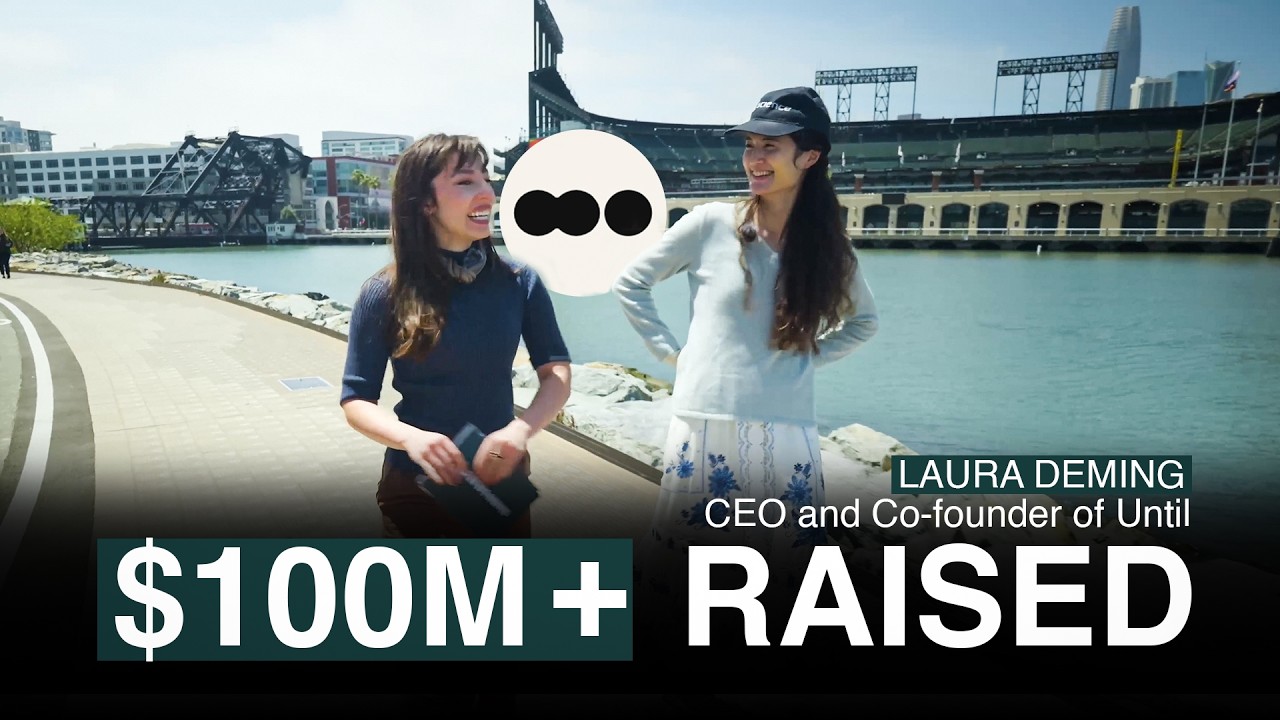
She Raised $100M+ to Reversibly Cryopreserve Humans — Laura Deming (Until)
In this episode
Today I walk with Laura Deming, co-founder of Until, a reverse cryopreservation company in San Francisco. Laura got interested in longevity at eight, started working in Cynthia Kenyon's lab at UCSF at 12, and spent years backing the field as an investor through the Longevity Fund. She now builds technology to pause biological time, starting with donor organs and building toward whole-body medical hibernation.
- The conference talk she was not supposed to give, and how it ended her VC chapter
- What "transcend death" actually means once you press on it, tested with a teleporter to Mars
- Why San Francisco kills intuition, and the breakdown in her mid-20s that made her protect hers
- The big magnet, and rewarming an organ in about a minute
- Why transplant patients live inside a two-hour radius with a pager on them at all times
Chapters
- Trailer
- Intro
- "I love science" and the things that have stayed constant
- A childhood without rules and reconstructing what normal means
- What is actually worth preserving when a person dies
- The Dreaming Machine and the film that never got made
- When you could not say the word aging out loud in the lab
- Emailing Cynthia Kenyon at 12 and the day her life started
- The talk that made her leave VC for cryo
- San Francisco as an intuition killer
- Molecules in clockwork synchrony and feeling loved by the universe
- The big magnet and rewarming an organ in about a minute
- The two-hour radius and the pager that runs a transplant patient's life
- Her best arguments against her own work
- The teleporter to Mars and what dies in the process
- Outro
About the guest
Full transcript
LubaHi everyone. We're in San Francisco and it's windy, and I'm about to talk to Laura Deming, the co-founder of Until, a cryopreservation company. And it sounds as wild as it is: to give us an ability to freeze ourselves and wake up sometime in the future. Laura is a fascinating mind with fascinating ideas, and we talk about how she finds math and biology so beautiful, her upbringing, Until, the current state of the company and its vision, and so much more. And I hope you enjoy this conversation as much as I did. Let's get to it.
Laura, thank you so much for taking the time. Really excited to chat. So one of the things that I read, I believe on your website, is that you don't know who you are and you don't know how you came here to this earth. Who are you?
LauraI love science.
LubaYeah. Great hat.
LauraThat's pretty consistent. Yeah. Okay. I love science. I love working with the people that I work with. I think math is very cool as well. That's separate from science. Yeah, those things are pretty consistent.
LubaBut it's interesting that you're describing yourself through verbs, like I love X and I love Y, versus describing your identity.
LauraI guess that just feels like the most consistent thing through your life.
LubaHas everything else changed significantly?
LauraChanged in surprising ways. It would be hard to predict, I think, who I would be now. Or the things that I used to assume wouldn't change did change. So.
LubaOh, interesting. Wait, tell me more. What are the things that you assumed wouldn't change, that changed?
LauraI think I'm probably a lot more friendly now than I used to be.
LubaInteresting. Okay. I didn't know you before, so that's very cool. I assume that was a positive change.
LauraWell, I don't know. I mean, I feel like a lot of it is just how you change in your teens to your 20s or your 30s, right? I think it's just hard to be as aware of other people when you're younger. You're kind of very inward-focused. And I think that changes as you get older, so I don't know.
LubaWhat do you feel like has been the biggest change in the last one to three years?
LauraOne to three years? Hmm. Probably putting down roots. It's funny, I have a lot of friends where it's very common for them to be like, oh, I've never lived in one place for more than a year or something. And learning how to have strength from being in one place and having roots in one place.
LubaIs that something that you didn't think you would do when you were younger? Rooting in one place?
LauraYeah, I think I used to think it was just crazy to live in one place, ever. The idea of being in one place for a long time just seemed insane to me. Like, oh, you could always be on the move to the next place.
LubaAnd how long have you been in San Francisco now?
LauraI think for a long time. Like over a decade.
LubaOh, wow.
LauraYeah. So I've been in the city, but I'd say I always had a lot of flexibility for where I was.
LubaI want to jump into your upbringing and your background. So something that I read is that you describe your childhood and upbringing as without rules, and you were fearless.
LauraYeah.
LubaI'm curious, did it cost you anything, the fact that there was unbound freedom when you were growing up? Did it show up in negative ways later on?
LauraWell, probably. I mean, I couldn't, you know, break stuff in our house without retribution, or, you know, there wasn't...
LubaIt was total unbound freedom.
LauraYeah. It wasn't total anarchy, but it was, you know, just at our house all day, and we would have lessons sometimes, but I could really just set my own schedule, kind of do whatever. And I never realized until later that other kids were going to a building with a lot of other kids and being told... really just the idea of the classroom, or that they have school. It was something that I saw sometimes from the outside, through a gate. It wasn't like I'd ever experienced it personally.
I don't know. I think the thing that I treasure about it is my sense of what's normal is deeply different from that experience. And it's fun. It's changed over time to become more aware of what most people say is normal, but my normal is quite different. But I think the downside is that you don't know what everyone else thinks of as normal. And so it's often a lot of effort to try and reconstruct, like, okay, why do most people think this way? What's going on? That's also... it's funny, my job is kind of, I think, a lot of trying to understand why. Why do we have these norms? What norms make sense? What norms are outdated? So helpful in that sense, too.
LubaWhat norm have you been grappling with most recently, deconstructing?
LauraI think identity, or basically, when we talk about the person that dies, what is the thing that we think is important to preserve? I'm obsessed with this question. I think it's phrased in a way that most people wouldn't actually relate to. But most people want to preserve something of themselves through time. But, you know, how does continuity of experience relate to that? How does physical continuity relate to that? How does causality relate to that? I don't know. I just think it's an interesting space where there's some logical questions of what is consistent with what other point of view, but also I think there's a lot of intuitions. Trying to figure out where those interact is interesting.
LubaSo tell me more about how exactly you are thinking about it. What do you think should be preserved? What does continuity look like? Obviously, you're working on cryopreservation, so I assume you're thinking so much about this question. But how has your thinking on this matter changed?
LauraI think I just took it for granted that there was some obvious thing that we were trying to preserve, and, well...
LubaWhat was the obvious thing before?
LauraJust like...
LubaLike the human body?
LauraWhoever I am. Like, I am me. It is good for me to be alive. I should continue to be alive, you know, for as much as possible. This is good. But I think one thing that I kind of realized later in the game is that transhumanism, I think, doesn't have as much of just a good picture for what is the thing that's going to happen. What is the...
LubaWhat does it actually mean to stay alive for a really long time?
LauraYeah. I think there are a lot of very simplistic perspectives, like, oh, you know, we'll just be like elves who are very subtle and political and nuanced, and people will kind of be very weird and mysterious, or like old dragons, or...
LubaOh, no. I love science, we knew that.
LauraYeah. So like that. I feel like there's always very simple extrapolations out from who we are now that people kind of imagine. Like, a thousand-year-old person might look a certain way. But none of those really feel correct to me. And I think that there's this question of just, what possibilities do you have in that realm?
The closest I've gotten is, you know, *The Great Wave off Kanagawa*, the kind of most famous picture of a wave rising like that. It was done by an artist in his late life. And there's this incredible quote where he's like, yeah, I think I just learned to draw, basically...
LubaWow.
Laura...at the end of my career. And when I'm 100, then maybe I'll be able to finally paint a line, or something. And then he died shortly thereafter. And so he didn't get to see the results of that. And there seemed to be something about what the best artists in the world could do with enough time, or how somebody could evolve with enough time. That's interesting. But I feel like we just don't have good intuitions for it now. But it's interesting to think about.
LubaSo how do you try to find these answers for yourself?
LauraFor me, I guess, just being confused. I don't think that it's likely that I'll have good answers for myself anytime soon. But I think being able to see clearly the ways in which I'm assuming things that just actually don't make sense, or that just won't be true, that seems helpful.
LubaSo when you say that transhumanism kind of misses a lot of the definitions and the specifics about what it means to stay alive for a really long time, can you be a bit more specific about what exactly you think is missing in the overall narrative of being transhuman? And what are, I don't know, the three things that we really need to define before we upload ourselves to the cloud, or preserve ourselves and live a thousand years?
LauraYeah, I think... and this is not just my perspective. I think probably a certain number of people share this. I think the thing that we inherited from the past in this philosophy is just a very linear perspective. Like, humanism is better. You know, take all the things about the human and you make them all better, and that's good. And we're different, but we're different in a way that's just a linear extrapolation, a linear recalibration from where we are now. And I think the thing that I'm interested in personally is, well, that doesn't really make sense to me. I'm not interested in that. It just doesn't quite seem like what the technology wants to be. There's something like, what would happen if you had all this extra time to evolve a conscious entity? You wouldn't keep the shape of a...
LubaWe wouldn't keep the same...
LauraYeah. It would not be the same. I just don't know if we have... yeah. There's a lot of confusion about that.
LubaSo in an ideal world, let's say you're a thousand years old. What would be the things that you would want for yourself? What would that thousand-year-old Laura look like, or do, or be?
LauraI don't know. I have no idea. I'd like the ability to be confused. As confused as I...
LubaAs confused as you are.
LauraAnd to not need to know that things would be a certain way, or to assume that I know what the future looks like. That feels interesting, I think.
LubaSo do you think that being human and most fulfilled is about embracing that uncertainty of tomorrow to the fullest extent?
LauraI don't know what being human means. I think being human can either mean a sort of conservative perspective, like being as similar to what's been around for a long time as possible... I think it's very political, that people use it in different ways to kind of support things. People are always like, yeah, being human; not being human is, you know, not good. But we've changed a lot as a species. So it used to encompass different things. I don't quite know what that phrase means to me.
LubaDo you think you were less confused or more confused ten years ago?
LauraMuch less confused.
LubaInteresting.
LauraMuch less confused.
LubaI mean, it's kind of the same thing as what people are saying: the more I know, the less I know.
LauraYeah, that feels true.
LubaWhat are the things you've gotten more confused about? And are you happy about the fact that you have more questions and fewer answers?
LauraMore confused about... I don't know. I mean, there's one thing which has stayed the same, which is just feeling like, okay, no matter where you go philosophically, if you imagine someone that you really love, they're on their deathbed, they have something that they wanted to do, something that mattered to them... Like my favorite actor, Satoshi Kon, had this movie that he was making called *The Dreaming Machine*.
LubaMhm.
LauraAnd he died before he could make it, you know, from, I think, pancreatic cancer, in his 40s. And just, like, that shouldn't have happened. Okay? And so I think when you work in medicine, you kind of have to bring yourself back to, okay, we can philosophize all we want, but at the core, if someone that I love was in that position, I would do anything that I could to give them the time that they wanted to finish things that they cared about. So that feels pretty consistent. But outside of that, everything is, you know...
LubaYeah.
Laura...unclear. Yeah.
LubaDo you remember the moment when you got interested in longevity? So when you were eight, what exactly happened?
LauraI think I visualized death quite clearly. And that felt bad. Like, death was not good.
LubaWere you visualizing anything else that was also bad, and there was a stack rank of things that were bad, and then death was the worst? I don't know.
LauraDid you do that? Maybe you did that as a kid.
LubaYou know, it's interesting, because as a kid, I also visualized death quite often. And I wonder if it's a kid thing to do, to visualize death. And obviously, some kids take it very, very seriously and decide to dedicate their whole life to the question of death.
LauraI'm not sure, but...
LubaYou know, I specifically remember visualizing the death of my parents and being really, really sad about it, and literally crying myself to sleep. And then I kind of grew out of it. But okay, so you were just visualizing death, and you were like, not good, got to work on this problem.
LauraYeah. Well, I think I was like, this is the most important problem that I could imagine working on. Like, you know, let's have at it. It felt very, very, very obvious, I think.
LubaHow has your relationship to death changed over the years?
LauraI think... well, it's definitely changed. And I think it's more compelling for me now to try and imagine what are the things that you could make that you wouldn't otherwise make, or to imagine other people dying. Yeah, I'd say it's changed.
LubaSo give me a little more there. What specifically changed? Is it that you're less scared of death? Is it that you're more determined to solve the question of death?
LauraThere's a simple thing which is good, which is, you know, for people who don't get to live as long as they would like to, in a kind of otherwise ordinary lifetime, for them to have time to do that. That seems pretty straightforward. But I think living a very long time would just be a different thing, and we just don't really know...
LubaWhat that would look like.
LauraYeah. And I think that you would change your identity. The person who started that journey would not be the same person that, even in 100 years, comes out of it. And so then the question is, what do you value existing in the world? Do you think it's worthwhile to have continuous consciousnesses continue to exist for a long period of time? But I think you have to then balance being thrown off from that, which is kind of like, yeah, but if someone's in the hospital right now, what can we do to help them?
LubaSo more of a short-term question, because that's the thing that we can imagine and viscerally feel, versus thinking about what life would look like 500 years from now?
LauraYeah. I think right now, you know, you're trying to kind of pick what you take as an axiom. And I think for me, the feeling of, damn, that person really should not be suffering, is one of the most compelling feelings that you can kind of go after. And that's a good enough motivation to take on as your life's thing.
LubaWhy is it that for you, that concluded in a question of life or death, versus a question of healthful living while you are living? Because, you know, you might prolong the life of that 60- or 70-year-old person who's on a deathbed, or you could make their current life a little better for a few more years so that they can live more healthfully.
LauraI think I just never saw the distinction between the two. But I think people have this, right? What I realized later on in life is people mostly experience prolonging life in the context of a medical system that does that in a way that is very uncomfortable. Often it might not be preferable to the person, who literally is like, the quality of life that I have is not sufficient for me to want to continue. That just wasn't at all part of what I was thinking about when I was a kid. It was just, yeah, you are a lot healthier, so then you can live longer. You live longer because you're healthier, not because you're kind of artificially prolonging.
LubaGot it. That makes sense. It's like one is caused by the other, and vice versa.
LauraYeah, exactly. So I think the first thing is definitely increasing quality of life. And then the idea is that, you know, amount of life extends downstream of that.
LubaI read somewhere that you think that aging and longevity is not a problem of science, but more of a social problem. Can you speak to that a little more?
LauraI remember what I was thinking when I said that. There's definitely also a lot of science questions. Hmm. Well, I don't remember when I said that, but I think a lot has changed. When I first started working in this field about 20 years ago, actually right over there, you know, UCSF Mission Bay...
LubaOh, yeah.
LauraYeah. It was crazy. You couldn't say the word aging. It was so taboo. You couldn't say the word aging. Longevity was, you know, us making up a word that was less controversial. But that's changed a lot. It's not totally mainstream, but I think it's gotten to be a category of its own. People almost view it as aspirational to start a longevity company in some contexts. And so I'd say a lot of the social problem feels updated now.
But there's still kind of a gap, where I'd say large pharma companies don't deploy a lot of resources into the aging field, because they haven't yet seen within aging the first clinical trials that actually work, that say, this is an indication I can develop drugs for that can be successful in a population setting. I think once that's done, then I'll feel pretty good about the field getting the resources that it needs.
LubaWhat's the milestone that you're rushing towards right now?
LauraIn the company, Until, just scaling up the cryo technology.
LubaTell me a bit more about how you talk about Until right now. And has the way you guys talk about it publicly, or the way you think about it, changed over the last few years?
LauraYou know, I think when we started, we had a lot of goals that we kind of viewed as hypothetical. Scaling up to an organ context, for example, to help transplant patients, came a bit later. And I think the biggest change is probably just feeling a lot lately like there are clinical indications that can really help patients, that we can probably get to fairly straightforwardly.
LubaOkay. So what you're saying, just to make sure that I understand, is that initially, maybe you guys started with just the visionary goal and idea, and then through time and working on the project, you realized that there are much clearer milestones that can help people much sooner. So, organ preservation and helping people who are getting transplants.
LauraYeah. It's very compelling. I think when we started, it was like, oh, hypothetically, cryo will scale up over time, and it'll take a long time to get there. You know, talking to people, like last week, hearing about an organ that's lost literally just due to timing reasons. Even one that had a lot more time than a normal organ can still be dropped for logistical reasons. You're talking to people who know of a liver surgeon who's sitting on a plane with the organ right next to him, and then the plane's iced out, and the organ doesn't make it because of a couple-hour delay. And you're kind of like, yeah, we think that it's possible to preserve these organs, and we want to show that. It just feels a lot more compelling to have a near-term use case as well as the long term.
LubaDo you remember how you guys came to the conclusion that there is this near-term use case? Was there a discovery that you had in the lab? Was it a conversation with your team or your co-founder, or a lot of independent solo thinking where you were like, okay, there is actually a much clearer goal that we can execute on right now?
LauraIt's conversation with the team. It really came from the team, I think. It wasn't just Hunter and I that made the call. That was pretty cool.
LubaThat's awesome. I want to bookmark talking about the company a bit more, but I want to come back to your journey. So when you were 12, you went to work with Cynthia Kenyon, which was kind of like being taken very, very seriously at a very young age. What did it feel like? Were you like, of course, this makes sense, that this very reputable professor in this space would take a bet on me, the 12-year-old? Or...
LauraNo. No, it felt like my life was starting. I don't know. It just felt like the best thing that ever happened to me. And I was like, this is the best. It felt like, not being born again, necessarily...
LubaWow.
Laura...but, you know, it was like, this is the best person I can imagine working with. I'm in this lab that is the best hub I can imagine working within in the world. My life starts now. I had a great life up until then, but it really felt very life-changing.
LubaDo you remember what you emailed her? What do you think made her take a bet on you? What was the cold pitch?
LauraYeah, I don't know. I think I was just very serious. I think I was completely serious in emailing her. There was no external motivation of, oh, I want to go there for a grade, or for extra credit. It was just, you know, literally, I worship the ground that you walk on, and it would give me no greater joy than to come work in your lab. This is the best thing I can imagine happening. But, yeah, I don't know.
LubaHow come your parents were so easy to, you know, uproot their entire life from New Zealand and move to the US? Was the lab why they did that? The fact that you started working in the lab?
LauraNo, I...
LubaDidn't...
LauraWe meant to move back at some point anyway. I was born in Palo Alto, so coming back here wasn't the biggest jump. But, I mean, yeah, definitely them being down to move at the time was extremely important, and I'm very grateful.
LubaWell, what was their way of parenting? So they homeschooled you. What was the decision behind that?
LauraI'm not really sure. I think my dad was just like, this seems better. Okay. And I'm really, really grateful for it. I think it was very formative, for sure.
LubaDo you have siblings?
LauraYeah, I have a younger brother.
LubaAnd he was homeschooled, too?
LauraHe was homeschooled, but he decided to go to school later.
LubaOh, why is that?
LauraI think he just preferred it.
LubaHe felt like it. So it's not like you weren't given a choice to go to school. Okay, got it.
LauraWe could both just pick which one we wanted.
LubaThat's awesome. So you come to the US, you were 12, you start working in the lab. Tell me what you remember from that period.
LauraI think I just remember every day feeling like the best day of my life. Literally, I walk into this university and it's like, this is the best day of my life. And the next day, it's also the best day of my life. It was just a high, just a total high.
And, you know, Cynthia was incredible. She would meet with me one-on-one, as though I were an actual student in her lab. She helped me find graduate courses and university courses that I could go take to actually learn. It actually was funny. In retrospect, it turned out that she had more than one young student in her lab that she really, really helped a lot. But I think she just was incredible, in that she took it very seriously. She didn't treat me like I was a kid. And, yeah, she was just a really amazing mentor in that sense.
LubaYeah. It seems like, from everything that I've heard from people about parenting, treating your child, or maybe your students, or any sort of kid-like creature, as an adult, as their equal, really makes a huge difference. It's amazing that she did that. So are you still in that period of your life where every day is the best day, or would you say that...
LauraOh, no. No.
LubaAbsolutely? Tell me more.
LauraI don't know. I mean, I think I've had months where you're traveling and you get to think about science all the time. And, you know, I'm so lucky. I think the best part of my day is often going to the lab and talking to my co-founder, Hunter, or getting time with the team. They're all amazing, incredible scientists. And if you love science, being around a bunch of great scientists and engineers is such a privilege.
But, you know, I think often with companies, you just get a series of insane things that you would not have predicted that come up. And then your day, which was supposed to be thinking about some beautiful science thing or figuring out some perfect story, is just like, all right, well, how do you figure this out? So, yeah, not right now, but hopefully in the future.
LubaHave there been any chapters in the company where it really felt super joyous every day?
LauraYeah. I mean, even not long ago, I think, when the company comes together to try and hit a milestone, and it's like getting to be in the lab, even just to watch or observe some part and see the team just execute. It feels like you're in a high-stakes... it's hard to describe. Everyone is so on and everyone is so present. And the team will solve three or four different things that would normally take a week or something for the average person to figure out, in a night, you know, overnight, trying to get experimental work done. And I just have so much respect. It's very compelling and very cool to be able to work with a team where, when we pull together to really try and make something happen, they can bring that level of serious focus.
LubaTell me about the moment when you decided to leave VC, to leave the Longevity Fund, to solve this specific problem.
LauraYeah, it was actually funny. I was at a conference, and I was supposed to give a talk about something else. But in the weeks leading up to it, I had just gotten really obsessed with this problem of cryo. And it felt so compelling and so important. And I remember I literally just tweaked it, and I gave a talk about cryo, even though I was supposed to give a talk about something else. And I had some friends in the audience, and I was talking about it, and I was just like, should I do this? And they were like, yeah. But just that level of... it's like when you get obsessed with something, you just can't stop thinking about it. And it just feels very compelling.
LubaSo in some way it was almost like an on-the-whim, pull decision, where you got obsessed with the topic, you went to do the conference talk, and the pull was so huge that you were like, I'm just gonna pivot and commit my life chapter to this problem.
LauraYeah. I basically knew... I think it might have been a month before that, I don't remember exactly how much earlier, but I had realized, oh, this is a very important problem. And that was enough. Like, I want a company to be started in this space. But then, yeah, it was just that I couldn't find a way to disprove that it was as important as I thought it was. And not just that the problem was important, but that, counterfactually, it was important for me to work on it. And that the best scientists that I knew were like, yeah, this actually checks out.
LubaIn some of your writing, and in the way you talk, oftentimes things like "it feels," or "feeling in my body," or "intuition," those words come up very, very frequently. How do you use your intuition in your day-to-day life? And what is intuition?
LauraIntuition? I don't know. I think I've learned that you have to kind of be careful. You can have intuition, but then also sometimes for a year, you just need to kind of show up to work and do whatever needs doing. It's kind of like, let's just get to the next thing. So I wouldn't say intuition is sufficient for everything. But I think for me, this was a feeling of just a really good feeling around certain things. And they kind of make me want to get close to them. And I found that just kind of following that is helpful, I think.
LubaHow would you describe that good feeling? Where do you feel it?
LauraIt's like the best feeling you've ever felt. Imagine the best ice cream.
LubaI love how you put ice cream. I do love ice cream.
LauraI know this about you.
LubaYes.
LauraSo the very best ice cream. And the feeling of overwhelmingly being loved by just the universe. Not even anything specific, you know, just everything being as good as it could possibly be. That kind of sounds amazing.
LubaSo I find the topic of intuition very interesting, because I think everyone should try to use their intuition more. But then it takes some time to figure out what is my intuition versus whatever I think, because intuition is actually a different feeling. So discerning that is really important, because otherwise you might be pulled in a completely wrong direction. And especially here in the Valley, we're always in our heads, we're always very cerebral. It's very easy to get disconnected from our intuition. And I find the times when I listened to that feeling that you've described were the times when I made the right or the best decision. Have you always listened to your intuition? Or did you have to go through, I don't know, any sort of intuition discovery in your own life, given that you've always been in science and more cerebral subjects?
LauraYeah, actually, I think for me, San Francisco is often a big... I feel bad... it's a big intuition killer. I moved here when I was very young. And I think you just really internalize a lot of the... the city has such strong attractor points, such strong values, that I feel like you can learn a lot. But also, especially for me, at least when I was younger, it just kind of crushed that.
I remember one time I actually almost had a breakdown, when I was in my early 20s or mid-20s, I think. And I was just crying. I was so sad all the time. And a friend helped me realize that I just had a part of me that was really curious and wanted to explore, and it wasn't able to express itself. So, yeah, I think now, I don't know, I just try to be more mindful of giving that space.
LubaAnd so what does giving that space look like for you?
LauraJust going to a random coffee shop and reading and writing. I think being allowed to be obsessed with things that seem weird or don't make sense. This isn't so weird, but I love math a lot. Or writing on a specific kind of Galois theory, and being like, I'm allowed to treat that as an important thing in my life. I don't know. I think also just being like, I will literally die if I can't express certain facets of my curiosity, and taking that as seriously as the phrase would imply. I found that helpful.
LubaHave there been specific times when you've leaned into this, maybe at the time weird, curiosity or weird obsession, and then it led you to something incredible, a discovery or something that was very important for your life later on?
LauraYeah. I mean, I think actually Until, at least my contribution to Until, was downstream of... I was actually not thinking about work. I was just taking some time to think about math. I literally moved to, I don't know, the East Coast for a couple weeks or whatever, to just do math.
LubaThat's awesome. Like solving equations?
LauraYeah, I tried, like, proving equations. I had this math tutor that I thought was amazing. And he had some specific cards that I wanted to cite, like the shapes.
LubaThat's awesome.
LauraYeah. And I was just in this mode of, you know, pure kind of connection with the ideas. And so I wasn't thinking about work. And then I remember just the idea of... you know, it's like the classic...
LubaYeah, like the download. You know, you're doing something different, and then you have an idea, and then you might either catch the idea, or the idea will go fly into the universe and someone else will catch it.
LauraYeah, exactly.
LubaI remember in one of the group conversations that you and I had at some point, you were speaking of the idea of beauty and spirituality. And currently you're obsessed with just kind of diving into the beauty of molecules and animation, and the way you're perceiving things is kind of more transcendent. Can you speak to that shift more?
LauraYeah. I think it's just because, for me, the feeling that I have around science feels very similar in affect to how people react to very holy things. I remember I went to visit some temple or sacred site when I was younger, and I saw people weeping and having just full-on experiences. And for me personally, that didn't trigger that response. But in the presence of certain scientific stimuli, I do get that feeling. And I just so wish that the way that scientific stimuli were presented kind of made that a natural place for people to go. I don't know. Yeah, that would be good.
LubaCan you explain that a little more? What do you mean by the scientific stimuli? Feeling... Can you actually just repeat the last part that you said? You wish that people were more enamored by science, or more in awe of science?
LauraYeah. I think in biology, for example, in the times when I'm allowed or enabled or can see molecules and really think about the fact that there's ten to the 27 atoms in you, and there's trillions of cells, and each cell is, you know, that many molecules, and they're working in clockwork synchrony to allow you to nod right now... It literally is like, I don't know how to feel more loved by the universe than by really internalizing that point of view.
But I don't think that in an academic setting it's always okay to have a full-on breakdown out of, you know, just the beauty of the thing. Maybe in some physics departments that kind of thing is okay. But you're supposed to not... there's a lot of culture around when you can or can't express this kind of overwhelming love for the world coming through science. And it would be cool for that to just be a little bit more widespread, I think.
LubaHow did you become okay with feeling that way and expressing it so openly? Because if there is a lot of taboo around expressing your feelings or transcendence when you're in touch with some sort of scientific beauty, then you might feel like, oh my God, something's wrong with me, or I shouldn't be talking about it, or I should be suppressing all these feelings that I feel. What helped you get more comfortable with that?
LauraWell, I think at some point I was just like, this is the thing that I care about the most in the world. There's nothing that I care about more. There's no reason that I wouldn't. I don't know. It's just, there's no reason I wouldn't.
But also, I think it feels very correct. It's hard to say, because plausibly you could also get this feeling from anything. But often it's like, okay, what does following this feeling want me to do? It wants me to study math. That doesn't feel so off base that I'm throwing my life away, you know. It's not the worst thing ever. And typically, it's like, I want to find the most beautiful part of math that I can imagine, and I want to really try to understand the concepts deeply. It's not looking for a certain level of status. It's going towards understanding. So at least it doesn't feel like a terrible thing.
LubaYeah, yeah. What is beauty to you?
LauraBeauty? I don't know.
LubaDo you have any sort of hunch on what it might be? Is that going back to feelings? Is it the feelings that you described? That is beauty?
LauraYeah, I think beauty... I don't know, I'm confused about it. I think beauty might have to do with what I know, and then the jump between that and something else I notice. It could be something that I find beautiful now would not be beautiful to me in the future. I'm not sure.
LubaHave there been things like that, that you felt were beautiful in the past, and now you're like, man, not that beautiful anymore?
LauraI don't think so. Not off the top of my head.
LubaSo that's been consistent.
LauraYeah, but I also haven't learned that much in the past.
LubaOkay. Let's go back to Until. So you had this idea of cryo, coming from that obsession with math, then the topic, then the conference, then checking in with fellow scientists. What happens then? Is it that you meet Hunter? Is it that you start working on some sort of prototype or an experiment on your own?
LauraYeah, so I started working on some stuff, but I'd say the big consolidation of the company was meeting Hunter. It's funny, because my favorite thing in the world is thinking about biology and other parts of it from first principles. It's very physics-brained. If you can find simple laws and then build up from them, it's just so satisfying to be able to have problems on my mind like that. And one of the things I love about cryo is I think it is a field that has a lot of material for that.
A lot of questions in biology feel very speculative. Like, okay, a hypothesis about a disease model, and you really have no idea whether or not it works. And for most drugs that are developed, what you can really know about their main mechanism of action is a lot less than you might want. But cryo is just very compelling. And Hunter was somebody who has this mix of... he can think through the problem from first principles, but he also has this deep-seated sense of care for people, and also a sense of urgency, of wanting to get a group to move forward in a certain way. So, yeah, meeting him, I was very lucky.
LubaOkay. Let's talk about Hunter. How did you guys meet?
LauraHow did we meet?
LubaDid you already know him, or did you meet him through the exploration of that?
LauraYeah, it was funny. We had this very specific idea of the person who would be the best in the world for this particular whole-body version of the problem as well. Someone who had a really strong physics background. They had to have the ability to think about neuroscience. They had to basically be able to think across domains very deeply. And so we just kind of narrowed that down.
LubaAnd who's "we"?
LauraAt the time, I was working with my staff, who has since started her own company, McKenzie.
LubaOh, cool. And is it McKenzie Byrne?
LauraNo, no, no. McKenzie Dionne.
LubaOkay. Got it. Aha.
LauraYeah. So then we just...
LubaSo you were pretty open to the idea of finding someone and, quote-unquote, co-founder dating, and seeing if your values and visions align? Because, you know, I feel like there's two camps of people. People who are like, no, the co-founder must be someone you've changed diapers with and grew up together with and you've worked with. And then there is obviously the camp of, it's fine finding someone from scratch.
LauraIt's funny, it's not even what we were looking for initially. It was just kind of looking for the best possible scientist.
LubaGot it.
LauraAnd then, I don't know, meeting him, it's hard to explain, but it was just pretty clear, very, very quickly, what the deal was, and that this was correct.
LubaOne thing related to beauty and the emotions that you were describing related to molecules and biology: I thought that the Until website was so emotionally beautiful. For anyone listening, there's two people lying in a park, and then as you scroll, they turn into molecules. And I thought it was very you.
LauraThat's actually the brainchild of a colleague that I'm very lucky to work with.
LubaThat's incredible.
LauraKind of hers.
LubaIt was her idea. It was her vision. Okay. But was the vision inspired by how you were feeling about the problem, too, or was it completely independent?
LauraI think the vision, artistically, creatively, she really started the whole thing. It was incredible. I think the thing that we wanted to convey was, a lot of the cryo art is very cool. It's very blue. It's kind of cold, and cold and dead are kind of the two worst possible associations with this field. And we just felt like we really cared about how people felt about the technology. We cared about how people culturally related to it. And we wanted to try to make something that just felt good, in how it felt.
LubaWell, I think you were successful at that, because you really have that warm and fuzzy feeling when you go on the website.
LauraI'll pass that on to my colleague.
LubaYes. What has been a recent milestone in the company or technology that you can share? Of course.
LauraSome milestone. We recently shared that we developed what we call the big magnet. Basically an induction technology to very quickly rewarm cryopreserved organs.
LubaAnd how quickly can you rewarm an organ?
LauraIn about a minute.
LubaWow. That's incredible.
LauraYeah.
LubaOkay. So for someone listening who has no idea how cryo or Until works, in very simple terms, how would you explain what you do?
LauraYeah. So there's this cool mental model that you can use, which is, basically, you want to prevent ice formation. That's probably required to solve this problem long term. And there's a danger zone for ice formation between around zero degrees Celsius and about... degrees Celsius. Below that, actually, there's just not enough kind of motion, essentially, of the molecules. And so you just want to get through this danger zone as quickly as possible, because ice nucleates and extends... ice typically forms stochastically in that range, and...
LubaAnd then it breaks the tissue.
LauraExactly. And so what you want to do is you can both perfuse the tissue with chemicals that prevent ice nucleation, or slow the rate of extension, and then also at the same time you can just cool very quickly and warm very quickly.
So for example, when you think about preserving embryos, which happens all the time... there are embryos that are preserved for 30-plus years and then rewarmed and give rise to healthy kids. That's done just because they're so small. Their volume ratio is so favorable to heat diffusion that you can just do it almost instantaneously. But with something larger, let's say up to the size of your kidney, or a whole human, the process of getting heat in and out is just a core part of the problem to solve.
LubaHave there been any organs that you guys already were able to cryopreserve and then rewarm? Like an actual kidney or liver?
LauraYeah. So we published on the magnet, and we'll talk about that.
LubaOkay. Got it. So for a day-to-day person, what would change in their life once the technology is there?
LauraSo for transplant patients, the biggest thing is that right now, if you're a transplant patient on the waiting list, you have to live within a two-hour radius of the transplant center. It's actually very unequal, in the sense that which transplant center you can afford to live close to might determine the quality of the organ that you receive, or how quickly you're able to receive one. So just economically, that's a factor for some patients.
And then also, you just literally are uncertain when this surgery is going to be scheduled, for months, maybe up to over a year or so. You can't go on vacation. You literally have to have a pager on you at all times. If you miss the call for the organ at any point in those months, which might come at like 2:00 a.m. in the middle of some night, then you go back on the waiting list, right? So it's just this really crazy period of uncertainty.
And then, for surgeons, on the other hand, it's often staying up 36 to 48 hours, just going on retrieval after retrieval, and then having to come back and do the surgery exactly when you get back. The organ is just like, no. Imagine running any logistics process with no ability to put a pause on the process at any time after the organ leaves the donor.
LubaSo my understanding is, if you're such a patient, then, one, it's super expensive to get a transplant. Two, the doctor has to fly somewhere with the organ, kind of immediately after the organ was taken out of the donor, to transplant it. Otherwise the organ will die. And then with cryo, you would be able to cryopreserve the organ right there, and then it can stay preserved for as long as you need it to be preserved. It will be much cheaper to transport it. And then you have the rewarming to revive it.
LauraYeah. It's like you don't have to charter a private jet at the last minute with a surgeon on board to go pick up an organ, which is just better for everyone.
LubaYeah. Makes sense.
LauraAnother thing, we recently heard a story about an organ where... yeah. You know, even when you have the time window, there's still things where, let's say, someone's traveling and then they can't make it back in time to do the surgery. And so minor logistical things become this huge problem when you only have a couple hours of buffer.
LubaYeah, that makes sense. And how many people work at Until now?
LauraApproaching 50.
LubaOh, wow. The majority are scientists?
LauraYeah. Scientists and engineers.
LubaAre you happy with the decision to headquarter the company in San Francisco? Is that a good magnet for talent?
LauraThere's pros and cons.
LubaPros and cons. Are you mostly happy?
LauraYeah. Mostly happy, I think.
LubaTell me more about you guys' hiring philosophy. How do you attract talent? How do you screen talent?
LauraI think one thing that's really consistent is trying to find people who can think really coherently about the problem. There's so many unknowns, especially when you get to the whole-body part of the problem. You need to work with people who are really able to think from first principles and are not very stuck in models.
LubaHow do you test for that?
LauraHunter does a technical interview.
LubaOkay. Got it.
LauraHunter and the team.
LubaSo you spent quite a few years as a VC in the space with the Longevity Fund. How has that career chapter impacted how you build as a founder?
LauraThat's a good question.
LubaGo on.
LauraI think it makes you a lot more impatient. There's so many different ways for things to go wrong. And then you see how simple some of the... I think the best founders I've ever met just always take it back to simplicity. You kind of learn how dangerous it is to become confused, or for things to get too complicated. And so there's a reason not to do everything. I think the best performers are just so focused on getting to the next milestone as quickly as possible, and they're able to think so clearly. And so it just kind of gives you a standard to hold yourself to.
LubaI think at the beginning of the conversation, we spent a lot of time talking about how you don't have answers to a lot of questions and you feel very confused. How do you pair that with the need to be very crystal clear about the problems that you're working on as a founder?
LauraI think you can have buckets where you're allowed to be confused, and buckets where you need to make a decision today. So, you know, we're allowed to be confused, just philosophically, about what a very long-term stream of conscious experience could look like, what kind of thing could evolve. And I don't think that we have to make a call on that anytime soon, because I don't think that's happening in the next year or so for the company. But on the other hand, what is valuable to somebody who will buy it and use it, and it will literally change their life in a way that we feel deeply good about? That's a very straightforward question that you can't bullshit.
LubaFor our founders listening, how do you keep your decision-making process, your thinking, simple and concrete? Because it is very easy to get lost and confused and think of 5,000 different solutions to your problem, and take too much time to do something. I don't know if you ever find yourself being pulled to do that, but how do you hold yourself accountable to the principle of clarity?
LauraLetting yourself hold space until you find the one thing that is important to you?
LubaI think it sounds like a part of that is also being honest with yourself, and knowing what problems you're facing.
LauraYeah. I think the weird thing is... I don't know if you feel this way, but I think for me, it usually turns out that I actually know what is the most important thing. You always know. It's just that there are a lot of other things that you could be doing...
LubaYeah, yeah.
Laura...that might be more...
LubaMore interesting, or fun, or important at the time.
LauraYeah, exactly. But, yeah, you really know what the most important thing to do is.
LubaDo you have any practices to clear your mind, to tap into the knowingness of what you need to be doing? I don't know, maybe you meditate. Maybe you go on a walk. Maybe it is literally staring at a wall.
LauraYeah, a lot of... I feel like if you live in SF, you just get deluged with this. But just a lot of, you know, body stuff, just kind of self-regulation, and, yeah, like thousands of hours of work. There's a lot of, where am I, what's the emotion, how is it triggering my body? Just doing that so many times.
LubaTell me more about that. What does the practice actually look like? How do you identify emotion in your body? Did you go through certain, I don't know, trainings, or therapy, or something else to be able to do that?
LauraYeah, so much mentorship. I think the thing that at some point I learned was, there's a period where I just couldn't spend enough resources trying to acquire more skill here. I think some people don't want to do that. Some people do. It's just time, or, you know, desire.
LubaYeah.
LauraI don't know. I mean, I feel like you can go on TikTok and find, you know...
LubaBut what did you do?
LauraFor me...
LubaWas there a mentor person, a therapist, a program?
LauraA bunch of different mentors, people that I work with. I think probably one thing that's helpful is just being like, if you're very dysregulated, or you just look and you're like, I'm clearly not thinking well... one thing that's been helpful for me for a while is just to be like, my one job is to be able to get to a point where I can think clearly. That's the only job.
LubaThat is most important for a founder.
LauraYeah, yeah. Because if you know what to do, you can at least get it done. Even if you can't immediately do it yourself, you can make sure that it happens, usually. But if you don't know what to do, that feels the most... And usually, if you're in a good mindset, you do know. But if you're not there, then being very attuned to that and being like, okay, try this, try this, try this, try everything. Okay. And then, now I know. Okay, do that thing.
LubaDo you work with an executive coach, or with someone, right now?
LauraYeah. A bunch of them.
LubaA whole bunch of them? Wait, how many coaches do you have?
LauraNontrivial.
LubaNontrivial? What are the different coaches that you work with? Do they have different methodologies? Are they focused on different things? How do you find them?
LauraI'd say one is more like an exec coach, just focused on things in that category. One is more body-focused, like what's going on in the body.
LubaComing back to the work at Until, do you have any arguments against the work that you're doing?
LauraOh, yeah. I've thought about it, for sure. I think the best argument against is something like... well, it depends, for different things. For the whole-body part, I think it's just, how much certainty could you give someone who is doing this procedure about when they could come out of cryo? Because I think for a lot of people, your family and friends are the most important part of your life. If you were to come back in 20 years and they're very different, that might be such a big loss for you that it's actually not worth being under for that amount of time, even if you would die otherwise, you know?
LubaYeah.
LauraSo...
LubaBut then do you really feel like it's in your power to answer that question? I feel like you're working on a technology to make that happen, but everything else, around how you're going to change and what's going to happen to your identity, that's more of a societal question.
LauraYou could try to figure out how to give people more predictive power over...
LubaOver what's going...
Laura...to happen if they were going to come out... versus, like, you know, pancreatic cancer: a therapy just came out that was transformative for some patients. How much could you figure that in advance? How much could you say, for a specific person, you know, I guess that this advance, maybe, we think that it would be helpful, but it'd be optimal to have another year of data. But then in a year, you come back out...
LubaOh, so it's like making the call for when.
LauraYeah, exactly. Kind of putting some bounds on it.
LubaAnything else, as far as arguments against go?
LauraI think there are unknowns of whether or not you can, obviously, cryopreserve your brain. The best argument for would be that you can take patients down to, say, deep hypothermia during certain types of cardiac surgery, and have them flatline, basically, and then recover function. And so you can do non-physiological, temperature-related changes to the brain that you recover from. But, you know, you don't know until you know. So I think showing that you can wake a brain up from vitrification temperatures will be a big deal, if and when we can do that.
LubaWhat are you obsessed with right now?
LauraObsessed with finally understanding Galois theory.
LubaOh, cool.
LauraI think I told you about that. It's basically showing that you can't create a general equation that solves polynomials of the fifth power or higher.
LubaOh, yeah.
LauraAnd linking that to some kind of symmetry-related concept in group theory, which I don't understand.
LubaAnd is your own understanding close to being complete? Or has there been any breakthrough in the space?
LauraOh, there's been a breakthrough. Yeah. Just personally, just for the most simple theorem.
LubaYeah. How did you pick that theorem specifically to understand right now?
LauraI had a mentor for a while who just said this was one of those beautiful kind of links in math, and I think that doesn't seem wrong, from the little that I understand so far. It's just very cool that there's a question in algebra, about polynomials, where the answer is so deeply linked to just the idea of symmetry. What comes out of symmetry. That feels very compelling.
LubaThat sounds amazing. This is the part of life that, unfortunately, I'm missing. I've never seen math as beautiful. You know, I've always seen it as numbers and understanding numbers, and trying to piece together how to solve equations and how to pass various exams on calculus. But I was talking to Grant Sanderson, and he was like, oh, yeah, when you come to a certain understanding of why a certain equation works, or why things click, there is so much beauty in that. And then it's really beautiful how randomly in nature pi would appear.
LauraYeah.
LubaAnd I was like, damn, maybe at some point I will also reach this feeling. But it's really interesting to hear you guys talk about how you find math so fascinating and beautiful. Sounds like a really cool obsession.
You mentioned, I believe on your website, that your values are... let me see what I have. I have them written down. Transcendence, service, and care. Is that still true?
LauraI'm not sure, actually...
LubaHow to...
Laura...remove it. Yeah, I think it was like a year ago. They've probably updated.
LubaDo you update your values every single year?
LauraSort of. Yeah. I'll just post a random new page on my website, but no one except Fergus...
LubaAsks, or researchers for an interview.
LauraYeah, exactly. I just... I don't know where else to put them.
LubaOkay, okay. What would you say your values are right now?
LauraTranscendence. Definitely still up there. That might just be the only one now.
LubaOkay. Well, one value.
LauraWent to zero.
LubaTranscend death.
LauraWell, I don't know. I think, like, death of what, right? And you're not the same person as when you were 12.
LubaYeah, yeah. Death of your identity at a given point in time, or death of your memories, who knows?
LauraYeah. But okay, let's say that. Would you go into the teleporter?
LubaGive me more specifics about this experiment. Teleporter to go where? Why? On which time horizon?
LauraIt's the Parfit teleporter. So basically, there's a teleporter. You get into it, and you really want to go to Mars, let's say. You want to go to Mars. And this teleporter, if you walk in, will get you to Mars. Except the way it does that is it creates a perfect clone of you on Mars. And then right after that clone is created, it will instantaneously and painlessly destroy the version of yourself on Earth. Is this totally a no-brainer, get into the teleporter, no question? Or would you pause a bit?
LubaYeah, I think I'd pause. It's a bit more nuanced than that. It depends on how attached I am to my identity on Earth. What does that mean? Is a copy still me? It reminds me of that show *Pantheon*, which I'm sure you probably watched.
LauraYeah, yeah.
LubaAnd there are all these questions around, okay, well, if we were uploaded to the cloud, is it still you? Is your identity preserved? What about your relationships? I mean, I'd never thought about those questions up until I watched the show, and I didn't really know how I would feel. Would I get uploaded right away? Depends on whether my friends and community are also doing it, but I'm probably not going to be in the pioneer batch. How about you?
LauraI think, philosophically, I might. But then I think it's good to not get in the teleporter for like 100 years. You just take some time between the philosophical decisions that you made in your 20s and 30s, and then possibly life-or-death decisions.
LubaSounds better. What's an age at which it's okay to make a decision to teleport yourself and make a copy? Is it like 550? You've reached all the wisdom and you're primed to make that decision. Okay, so why did you mention this specific experiment when we talked about transcendence?
LauraOh, just, you said "transcend death." And it's like, well, transcend death of what, blah, blah, blah. The version of you that was here has died or passed. So then is it your consciousness? It's like, this is the philosophical...
LubaYeah.
LauraYeah. I think it's an interesting question. We can glibly, or not glibly, say, oh, transcend death. But then there's a whole question of what does that mean?
LubaYeah, yeah. How does your value of transcendence show up in your everyday life?
LauraI get really distracted by stuff sometimes, by...
LubaTranscending things.
Laura...a math book. Not often, but sometimes I'll just get really caught by something.
LubaAnd my last question: what are you excited about in the future?
LauraI'm excited for Until stuff. It's just cool to see the team that we have and to watch them work. And so I'm really excited about that, and getting to the culture. I don't know. I'd like to understand the fundamental theorem of Galois theory. I would like to understand it, and I don't yet. So that'd be cool.
LubaAwesome. Laura, thank you so much for your time.
LauraThanks.