
Sep 14, 2026 · 1 hr 3 min
SpenserSkates
Co-founder and CEO of Amplitude, a public analytics company
Amplitude went public at a $5.6 billion valuation. Now its CEO is rebuilding all 800 employees around AI
In this episode
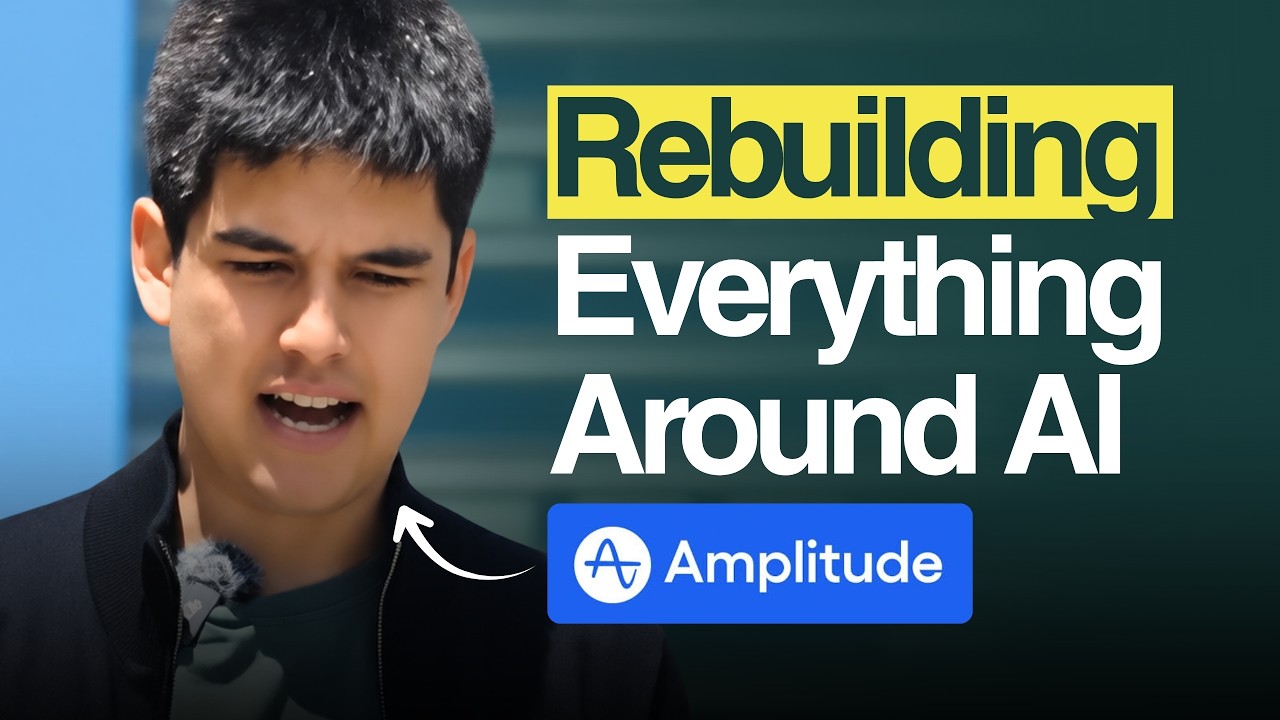
Today I walk with Spenser Skates, co-founder and CEO of Amplitude. Spenser has taken Amplitude from two college friends building a voice app into a public company with hundreds of employees and hundreds of millions in revenue, and now he's reorganizing the entire company around AI. He gets into why he killed his first startup despite its traction, and how growing up with two math PhDs for parents set him on the path to becoming a founder.
- Why he killed his first startup, Sonalight, two months after a Demo Day that got them press and tens of thousands of downloads
- The customer research rule he now enforces at Amplitude: talk to 30 teams before writing a line of the original product, and only build if a real chunk of them say yes
- Wave, Amplitude's new AI engine that scans a product's own data and rewrites its features, including one fix that tripled a customer's AI usage overnight
- Why he thinks the most ambitious operators, including a SaaS "legend" he looked up to, are driven by insecurity rather than confidence
- The Norman Borlaug story that convinced a 20-something finance analyst to quit trying to win zero-sum games
Chapters
- Trailer
- Spenser Skates, Co-Founder & CEO, Amplitude
- Why video games stopped feeling like real achievement
- Growing up in Cambridge and hating a life scripted by other people
- The Norman Borlaug story that convinced him to bet on tech
- Convincing Curtis to leave Google and co-found a company
- Playing StarCraft until 2am while pretending to build the startup
- The exact test for knowing when to kill a startup
- Why half a founding team's time should go to customers, not code
- The identity crisis of going from founder to CEO of 800 people
- Burning the boats on the old Amplitude to go all in on AI
- Wave: the AI engine that rewrites products using their own data
- Why insecurity, not confidence, drives the most ambitious operators
- Betting on his partner Anne and being "single until Series B"
- Outro
About the guest
Full transcript
LubaSpenser, thank you so much for being on the show.
SpenserOf course. Very excited to talk to you. Very, very happy to be here, Luba.
LubaI know you really love playing video games. Tell me a bit more.
SpenserStarting off with video games. I love it.
LubaTell me a bit more about what video games you like, and why do you love playing?
SpenserWow, that's a long, long topic. Who did you ask for that one, by the way?
LubaI think I knew that.
SpenserOkay. Okay. I've been playing a lot of Magic Online recently. But there's a huge range. I played Counter-Strike, Valorant, League, Halo, Civilization. Like, lots of strategy games. So StarCraft, StarCraft: Brood War, like the original, that was, like, really good. A lot of the Blizzard games, Diablo. I played a lot of the Battlefield series, Call of Duty. So it's just all over.
And I don't know, it's like this system that you can understand and you can compete at and kind of have fun at and, like, be really intense about. And so from when, like, I was a little kid, it was like a place where you could kind of fully immerse yourself and understand the system deeply, and then, like, get really good at it, like, whatever game it was.
I actually, in college, one of our dormmates was this guy John Lee, who was from Korea, and he got all of us very interested in StarCraft: Brood War.
LubaAnd who's all of us?
SpenserLike myself, my co-founder Curtis, like, a bunch of our friends, because, like, it was a big esport in Korea at the time. And so that kind of, yeah, opened up this world of competitive video gaming, and, like, how crazy and intense people would get about it, and, like, viewing it as, like, this, you know, sport sort of thing. So anyway, I don't know, it's just like a way to get immersed in, like, a very different world and master it.
The funny part is, the last few years I've been less into games, because after a while you realize they're, like, artificially designed. And so they're artificially designed to, like, kind of trick you into these dopamine loops. Not all of them are, but a lot of them, I mean, a lot of them really are. And so you realize there is no real achievement with video games, and it's like all just kind of, like, this. You're kind of in this fake world, and, like, ultimately there is no depth beyond what someone has designed. And so you're just kind of going through a world someone else has designed.
And so now it's like, when I play, I do it more for curiosity, because I find it interesting to navigate through, than it is for, like, achievement. And you realize the achievement part is, it's, like, silly. So, you know, the real-life world has much more depth than, you know, anything someone can create within a video gaming world.
LubaSo what happened a few years ago that made you take a step back and really realize this?
SpenserI played some of these mobile games. Like, there is this one that's, like, a zombie survival game or something, where you're going around and, like, it had all these, like, chest timing mechanics, where you have to click a thing every hour, or, like, once a day, or whatever. And then I'm like, "Wow, this really is just, like, a Skinner box that's just getting you to do something again and again and again and again, and there's no real end, like, reward or coolness."
I think really well-designed video games can kind of get past that. Like, if you look at something like a Minecraft, you realize there is a lot of depth and a lot of fun. But then you can kind of see what people who get really into them do. Like, my brother and his wife are, like, very into Minecraft, and they'll build these crazy contraptions that are, like, much more advanced and much crazier than anything I have time to. And then you kind of look at it and you're like, man, what I'm going to do is just nowhere near as cool as what someone else is going to do, because you just don't have enough time, especially when you get older. So you kind of realize, like, there's a limit to, you know, it's a piece of entertainment.
Like, the thing I actually really liked as a kid is that, so, there's other forms of media. There's, like, books, and there's TV shows and movies and all of that. But video games were interactive. That was the part I just loved. It gave you agency that you just didn't have with any of this other stuff. So it's like, oh, you can push a thing, and you get to think back, and wow, like, now there's this system where I can get better, and I can be part of creating the story, and I can create mastery. And so that's the part I loved about it. And even to this day, I kind of like that interactivity more than I like, you know, static pieces of media, where it's like you don't really get to choose something.
Oh, yeah, I really liked, I don't know if you read the Choose Your Own Adventure books as a kid, where they had, like, there were these, like, novels, or.
LubaUnfortunately, in Belarus, they didn't have them.
SpenserThey didn't have them. So yeah, so I'll have to get you one, Luba. So it was kind of like these campy, like, sci-fi or mystery stories, but the part that was really cool is you could actually make a choice, and, like, you know, you had agency over what you could do. So that's the part I've always loved about them.
But then I think, especially as a kid, because you're so forced into this world where other adults are telling you what to do, and you actually have very little agency generally, it was, like, an awesome way to express yourself and show that you can master something and get good at it, and do it in your own particular way and make choices. Whereas now, you know, now that I'm older, I actually have the ability to choose to do lots of things, and almost anything. And so, you know, that part of it, and you realize that the real world and real life has so much more depth.
LubaInfinite.
SpenserOh, well, not infinite, but yeah, it's, like, more than you can spend your lifetime learning, for sure. And so, yeah, it changes, I don't know, changes the need for it. But that's a really good question, because I've never been asked that. So thank you.
LubaOf course. Okay. So this whole thing about agency and choosing your own adventure reminds me that I've heard that when you grew up in Cambridge, you really wanted to leave home and go become your own person. I'm curious, what were your influences, and why did you have such drive to go craft your own story?
SpenserThe main thing I hated, it was actually less that there was something specific I wanted to do. The main thing I hated was that my world was dictated by other people. Like, that part I just could not stand. And so first, like, at home, I had to listen to my parents, particularly my mom, about what I was supposed to do.
LubaWhat did she think you were supposed to do?
SpenserShe always wanted me, she wanted me to, like, play violin, as an example. And I was terrible at music. I was really, really bad. And I didn't like it. Like, it just didn't resonate with me. And, you know, I could force myself and kind of get better, but I just really, really hated it. You know, I had to go to swimming lessons, which in retrospect, swimming lessons were a good thing to learn. And then at school, you didn't have that much choice on what you had to do. You had to do what the rest of the class is doing, and, like, you couldn't go off and explore your own interests. And so that lack of agency growing up, like, I hated.
And so for me, it was less the idea of any specific mission. It was more like, hey, I just want to be on a mission of my own choosing, where I can, like, do what I want. And the thing I realized in college was that, like, you could really be anything you wanted to be.
LubaDo you remember a moment when you realized that?
SpenserI remember, so when I was young, I thought growing up would be, if you were smart and you were ambitious, then I would be like my parents. And both my parents do cancer research. They're both mathematicians, statisticians, and they both work on cancer research. They try to do studies of different methodologies, and, like, help people and, you know, help cure cancer, which is an incredible, incredible application of math to, like, making the world a better place.
And I thought if you're smart and ambitious, that's what you do, because that was the whole world I knew, and I didn't really know anything about other worlds. I didn't know about business. I didn't know about, like, different industries, like technology.
And one of the things I realized in college was that, like, you could kind of be any person you wanted. You could be, like, a small business owner and try to start something there and, like, go take a risk. Or if you really wanted to go into politics, or you can go into law. Or if you really wanted to become an artist, you could become, like, a starving artist that was trying to make ends meet, but they made really cool stuff. Or you could, you know, go on adventures and travel. Like, you literally could do anything. You could be any character in any novel, or any film that you wanted.
LubaOr any game.
SpenserOr any game, right? And there was no real constraint that you had. It was just a question of people who chose it.
And I remember, actually, I was reading this interview with Brian Chesky, where he had a similar experience when he was going through and thinking about whether he wanted to start a company, where he realized the only difference between someone who did and someone who didn't was that they had made the choice, and that he could make the choice too. And so that really resonated with me.
And then I explored a lot of different things. I, like, explored potentially getting into nonprofits. I explored doing academic research. I explored going into finance. And then doing a startup, I didn't know if I was capable of doing it, and so I actually feared it for a while. I actually was scared, and I was like, man, this is, like, really striking out on your own with no validation, and am I someone who's capable of doing it? So I wasn't sure, and it actually took a while of me studying startups and how to start businesses before I said, "Hey, I actually think I'm capable of doing this."
But the thing that stuck with me is that, like, you could do anything you want as your life's work, and you didn't have to follow someone else there. One, there was no playbook for it. And two, you didn't have to follow someone else's desires. You could really follow your own. And so that was, like, incredibly liberating.
Because it meant that, like, instead of, I think a lot of even college students will look at the path in front of them and then just think about what's the next step. So, okay, if I'm in college, I think I want to get a master's degree or a PhD, or I want to get a top job in the hot industry right now, or I want to go to med school or law school or business school. And so you're always thinking, like, one step ahead of where you're at. You've been trained from school to think about what's the next step. And so instead of thinking about the next step, you actually realize you could go to any place you wanted. Like, you can just choose it, versus thinking incrementally about, like, what's the socially acceptable thing, or the approved thing, or the thing your parents will like, or the thing that's popular at the time. Like I said, you could be the starving artist if that's what you're really passionate about, or you could be the mathematician if that's what you really loved, or you could, you know, try to find the cure for cancer or solve global warming.
One of the stories that really inspired me was this guy named Norman Borlaug. Are you familiar with him, Luba, at all? Okay, so it's an incredible story. So he was an agriculture expert in the 1950s. And in the 1950s, one of the things that was happening at the time was that a lot of developing countries needed to import food from other countries in order to survive. So for example, Mexico was an importer of wheat and other food from the United States, and they were struggling to feed their fast-growing population.
So what he did is he went down to Mexico and he developed a new strain of wheat that was much, much more productive. It was, like, high-yield wheat. It had a few other traits that were important too for the success of the crop. So, like, one of the things that happens with high-yield wheat is the stalks get very heavy, and so they fall over and break, and that means you can't harvest them, because they die earlier than you want. So you want them to be dwarf, like, wheat. And then the other thing he made was disease resistance, because that was a huge problem at the time, where they'd get attacked by, like, different funguses or viruses or parasites or whatever.
And as a result of that, so he puts out this new strain of high-yield dwarf wheat and gave it away, basically, to all these people in Mexico. And because of that, what happened was Mexico quadrupled its wheat production in the course of a few years, went from a net food importer to exporter, and totally solved, like, the ability of that population to feed itself.
Then he went to India a few years after that, and India was really messed up, because it had recently gotten independence. Its population was exploding. It was extraordinarily poor. And he did the same thing. And, you know, if you remember, in the '60s and '70s, there was, like, people talking about, like, oh yeah, kids in India are starving. It was a very real thing. There were famines there all the time. But he completely solved the food equation, like, more than doubled food production in India. Went to Pakistan and did the same thing there, went to Africa after that and did the same thing there.
And so if you look at the sum total of his impact as an agriculture expert, he ended up feeding hundreds of millions or billions of people. Completely solved it, by bringing modern farming techniques and new strains of crop that were higher yield to farmers. And you fast forward to today, and, like, food is a completely solved problem for our society. Like, there are problems with distribution, but food production, we produce more than enough food for everyone to eat. Which is, like, kind of inconceivable. Like, a lot of people thought we wouldn't have enough food for ourselves to eat. Like, there were all these famous books, like *The Limits to Growth*, that talked about the Malthusian crisis, and how by the year 2000 there would be starvation and riots and limited food, and.
LubaAnd I'm sorry, did this story inspire you to pursue impact?
SpenserYes. Yes. So anyway, I looked at the story. So he got the Nobel Prize, but the real thing he did was he changed the course of history for the better. Like, for the very first time since the beginning of life billions of years ago, food was no longer a constraint for humanity. Absolutely incredible. And so I looked at that story and I was like, if I can have a fraction of that impact, I will be extraordinarily happy with the life that I'm living.
And so from there I said, okay, well, where's the biggest and best place I can do that? You know, should I go do research on one of these big problems that are facing humanity? Like, what should I do? And the thing I kept coming back to was that, if you look at where technological improvement was happening the most, it was in the tech industry. And the rise of PCs, and then the internet, and then mobile, and, like, all of this technology that just hadn't been there before.
And so I was like, okay, look, that's what I know how to do. Like, I had done this coding competition called Battlecode, and that had gotten me introduced to the technology industry and this idea that I could be a top performer in it. And, like, let me go start a startup, because this is the biggest and best way, because I'm a believer in technology improving our lives.
LubaYeah. Two, a couple of things. One, I love the philosophy of choice. I very much try to live that every day too, where I kind of think that, okay, we're on a quest, and we get to choose the character that we want to be in this quest, and it's all up to you. If you want to change the world around you, it's up to you to change the world around you, by starting with yourself. And the whole piece about agency is amazing too.
So you decide to start a startup, and you were like, "Hey, who do I start this company with?" And the story that stands out to me is the fact that you were convinced that you wanted to start a company with Curtis, who was working at Google for, like, a year while you were trying to figure out what startup to start. How did you feel about the fact that he hadn't committed full-time and you were so committed to it?
SpenserYou know, so Curtis was, I asked a lot of other people in my graduating class, "Do you want to start a company?" Because a lot of people, nominally, they were interested. It was an interesting thing to do. A few years earlier, Dropbox had just come out of MIT. Drew and Arash had started that. It was like, wow, if you can really start a company, that seems like an amazing thing to do.
As it turns out, most engineers are extraordinarily risk-averse. Like, just extraordinarily risk-averse. They want to do the path that has been set forward, because it is accepted, and society has told them it's good, and their parents, like, want them, you know, to do it, and, you know, their peers are doing it, and it's just.
LubaHow did you become so free of other people's opinions?
SpenserI was always not going to listen to anyone. I was just.
LubaJust a rebel from the day you were born.
SpenserYeah. A little bit. Yeah, yeah. I was always kind of talking back to teachers and not getting along with my parents and wanting to do my own thing and rebelling. After a while, you realize that, like, being a rebel is actually, you define yourself in opposition to a power structure, and that's also the wrong way to go. But.
LubaWhen did you realize that?
SpenserYou know, once you get older, and, I don't know, I just, in building a business, you kind of realize that, like, yes, you can rally people in opposition to some power structure, but you actually have to have a vision for how things are better. And that's the more important thing.
LubaOkay. So you asked around all engineers. Were they all.
SpenserPretty much. Like, probably 20 different engineers. And, you know, they're all like, we'd work on side projects, and I'd work on side projects with different people, and different people would come in and out of the group that I was working with. But no one was as committed to doing it full-time as Curtis. And Curtis said, "Look, I'll do it, but I want to work at Google for a year first, so I get some experience."
LubaAnd you trusted that? You weren't like, "Oh, it's going to be a year"?
SpenserWhat other choice did I have? If there was someone else willing to start it with me, then I would have gone for it. But no one else was willing to start it. So, you know, what else? Yeah, what else was I going to do?
And so I would work with Curtis on nights and weekends. And other people would work with us once in a while, but, you know, he and I were the two that were very consistent. And then, to his credit, after a year of working at Google, he did in fact leave.
I ended up taking a short detour into high-frequency trading, which is also an incredible field. Like, a lot of people rag on it, but I think some of the smartest and some of the best people who work in industry work in it.
LubaWould have outsized impacts with high-frequency trading?
SpenserYou know, it's like making the markets more efficient. Most of the value, though, is in beating the other guy and doing it a little bit faster. And so it's more zero-sum than it is, like, hey, we're creating, you know, tremendous value. You create some value by providing liquidity and allocating capital efficiently, but it is mostly a pretty limited, zero-sum game. And so there are brilliant people around it. The other part I didn't love about high frequency is the aura was very secretive. So you couldn't tell other people what you're working on, and, like, I don't know, they just.
LubaYou're more of an open.
SpenserTalking about knowledge and sharing it and having them share back. I love that ethos.
LubaHow did taking that leap and finally working on a startup test your own character? Were you like, "I'm cut out for this. This is what I want to do"?
SpenserExtraordinarily hard for the first four months. Because Curtis, I left my high-frequency trading job, and I was working by myself, and Curtis would work with me on evenings. I was really bad. I was not disciplined. I don't have much self-discipline, and so going to an environment where I was completely working by myself was just not a great one.
LubaWhat were you doing day to day?
SpenserIt was bad. I was playing StarCraft. StarCraft 2 had come out, so that was the hot game, so I was playing that at the time. I would wake up around 10 or 11 a.m. I'd play for a bunch of hours. Then, like, around 3:00, I'd be like, "Man, Curtis is coming home soon. I better work on this startup and actually show him." So I'd do, like, an hour or two of work. He'd come home. We'd work on stuff for an hour.
LubaDid you tell him honestly that you were just working?
SpenserNo, I didn't.
LubaOkay.
SpenserI didn't. I was like, "Look at all this amazing stuff I've done," you know, because I wanted him to feel like there was momentum and I was actually getting things done. And then we'd work on stuff for a few hours, and then he'd go to sleep, and then I would stay up until 2 a.m. playing StarCraft. And then you just repeat the cycle the next day.
And it was terrible. I didn't have any friends. Like, I'd come out to California, which I was really excited about, because it was this amazing promised land of, like, opportunity, and nice weather and space and people coming from all around the world. But it was, like, very isolating. Extremely, extremely, extremely isolating, where I was just by myself.
LubaSo how did you break out of the cycle of this lack of self-discipline?
SpenserYou know, honestly, the biggest thing was Curtis deciding to leave Google and coming to work with me full-time.
LubaFactor that you were like, "I've got to get my shit together."
SpenserYeah. Yeah. So once he started working, then it's like, I became a lot more serious very quickly, and I started working quite hard too. And that was, like, our first company, Sonalight.
LubaYeah. You guys ended up going to YC with it, right?
SpenserYeah, yeah. So we worked on this app. We did a launch. We got some downloads. We got, like, tens of thousands of downloads. So somebody who was not us was using it. And it was this app that allowed you to talk to your phone and send and receive text messages, so that you can safely text while you drive, without having to look at your phone.
LubaKind of like Siri. This was actually pre.
SpenserYes, this was pre-Siri. Siri actually came out a few months later. And we got into YC, and I remember one of the partners, Paul Buchheit, was like, "Look, I think you guys are going to get crushed by Google on this, but, you know, you guys seem worthwhile to bet on as a team, so we'll fund you."
LubaAnd then you intentionally killed the product, because it was pretty good, but not good enough to be a breakout success, right?
SpenserYeah. So it was really hard to keep users around. The quality of the voice recognition was just not good enough. And we did this amazing demo at Demo Day, where I had the phone in my pocket and I was having a conversation with it. And we actually got a lot of press and hype coming out of Demo Day, because it was a really cool presentation.
But, yeah, we ended up realizing that this was not the right thing to work on long term. Because if we had continued to work on it for a bunch of years, you know, we could have gotten some okay success and maybe grinded it out, but the product was not going to take off. And so we ended up kind of scrapping that and exploring a bunch of other ideas, but ended up landing on data analytics, because we had spent a lot of time on that ourselves with the development of Sonalight, and it surprised us how unsophisticated other companies were about how they did data. And so we said there's a much, much bigger opportunity there.
LubaSo coming back a bit to Sonalight and deciding to kill it: for someone listening who's not really sure whether they should continue with their product, how would you go about deciding whether to grind it out or kill something?
SpenserThat's so hard. I think this comes back to the question of, do you imagine the future to be successful with this or not? If you don't think it's going to be successful, you'd be surprised how many entrepreneurs kind of, like, internalize this, like, "Oh, like, I just don't think this is ever going to be, you know, I kind of know this is not going to be successful." On the other hand, if you know that there is a future where this is massively successful, and it's just a question of taking the time to do it, then, like, you know, there's no reason to keep going. It's definitely one of the hardest parts.
One of the things we saw was, we read *Founders at Work*, and then we read *Startups Open Sourced*, and we talked to all these other founders, asked about their journeys. And one of the things that was extraordinary and clear to us was that almost every company that was successful had this point, a year, maybe a year and a half in, where probably, from a rational basis, they should have given up. But for whatever reason, they decided not to and kept going, and then that ended up leading to some success. And so we knew that that was probably going to happen to us at some point. And so a year in at Sonalight, like, we knew that that was not the right product and company, but, like, we knew we wanted to keep going and work on something else. And we knew that that next thing was going to have a higher probability of success.
LubaDid your definitions of success with Curtis align? Because you keep saying that you need to see whether the product is going to be successful or not. And what it makes me think about is that you also need to be really honest about your own definition of success. So for example, I just shut down my company, and I'm sure, actually, I'm not so sure. I was in the dating space, and it's a really hard space to work in as a VC company. But I had to examine both: will this company be successful, and do I feel successful working on it? Is this what I want to be spending my time on?
SpenserThat's a great question. On that question, by the way, I think the really important thing is, are you willing to work? And the circumstances where the answer becomes yes is if you believe this thing is going to exist, like, and you're willing to spend multiple years working on it, even if you don't have any external markers of validation. And that's really key. And, like, almost every great entrepreneur story has that in it, where it's like, "Look, I knew this was going to happen. I just needed to will it into existence over a long enough period of time and not quit on it." If you don't feel that way, and that's a really high bar, then it's like, yeah, it's a good time to re-evaluate and revisit what it is you're doing.
LubaWere there any moments in time throughout your founder journey where you had doubts whether it's the right path for you, being a founder?
SpenserLuckily, no. So we had done our homework before coming in and starting a company, and we knew that we had to give it at least two years, no matter what. At least two years. And so when it came time to shut down Sonalight after one year, it was like, no big deal, let's just go on to the next thing. And then Amplitude, you know, it took a few years to really get traction, but we knew there was something there.
LubaHow did you know?
SpenserWe talked to customers, and they said that they would use it.
LubaLesson for founders: always talk to customers.
SpenserYou have to. One of the mistakes that great engineers make is that they don't spend enough time talking to customers. So a good heuristic I always give is: half of the founding team's collective time should be spent talking to customers, and half of it should be building product. And with engineers, they will always, "Oh, well, we did one customer conversation this week." And it's like, no, no, no, you need to do it, like, all the time. It's like, how many customers did you talk to? "Oh, like two." That was, like, two to three hours. Were they friends? Yeah. And that's fine. But half of your time, because you're exploring this, like, complex, almost infinitely dimensional space, and you want to make sure, like, you're looking for signal all the time, if you're going in the right direction, or what direction you should go in.
And by default, almost definitionally, the path you choose will not be the right path at the start. It's like, was it Eisenhower? "No plan survives first contact with the enemy." It's the same thing, where no idea you have is going to survive first contact with reality. And so there is no substitute for iterating with reality. In the case of startups, that's your customers. And so you should spend half your time talking with them, understanding them, getting to know them, learning from them.
And at Sonalight, that was actually one of the mistakes we made. We didn't spend nearly enough time with end users. Whereas at Amplitude, we were dedicated to making sure we corrected that. So even before we built anything, we just met with 30 different teams, and we're like, "Okay, hey, would you use this?" And I think probably seven of those 30 were like, "Okay, yes, this would be a significant upgrade from what we have." And we're like, all right, that's good enough, where I think we can go for it.
LubaSo obviously you've reached massive success with Amplitude. You're a public company.
SpenserStill early days. We're the small, Luba. We are the smallest fish in the biggest pond, as I always like to say. There's a lot more expectations for where we should be going.
LubaI heard you say that you had a massive identity crisis going from founder to CEO. Can you tell me more about what that looked like?
SpenserWhen you're early as a founder, there's all sorts of things you learn about what it means to be a great founder. So as an example, you always need to be leading from the front on the hardest problem confronting the business, because if you're not going to do it, who else will? So if it's a, hey, there's a really hard product and design problem, if there's a really hard engineering problem, if there's a really hard customer problem, if you're, you know, really trying to recruit someone great, like, you have to be doing that. You personally have to be leading from the front. And that leading by example inspires others. So you have to be leading from the front, because, you know, you're kind of the best executor, and that's where a lot of your moral authority comes from. On the other hand, when you get to very large company size, there are too many problems for you to lead from the front.
LubaHow many people are you now?
Spenser800 people.
LubaOkay. Wow.
SpenserSo there's just too much surface area. There's too much stuff we're trying to do on product. There's too much stuff we're trying to do on the people side, or too much stuff we're trying to do with customers. So while it's important sometimes to do that, you cannot do that all the time. And instead, actually, a lot of your job becomes recruiting, hiring, getting people to work on the right thing, and so putting them on the right work.
And now, learning those new levers as a large company executive, they're not hard. Well, they're hard, but, you know, you can learn them. Like, it's very possible for any great founder to learn how to be a large company executive. The hard part is actually unlearning the things that you did as a founder. That's the much harder part.
And one of the really interesting things in our space is that even very successful founders, I saw this, after about 10 years of building the business, they would give up, and they would quit. For a lot of different reasons, but so much of it came back to, learning that muscle is very different. So that's been one of my hardest challenges in the last few years: learning the large company executive stuff, and then unlearning the founder stuff. You have to do it still sometimes, and, you know, we can talk about founder mode and the importance of that, but appreciating that that's not how you generate value for the business anymore.
Like, as a founder in a small company, you look at these larger companies, you make fun of them, because they're like, oh, they're so inefficient, they have so many layers of bureaucracy, they have so many people, it's impossible to make decisions, they don't go fast. You know, they have these executives that come in and don't do any work themselves, but then just crap on everything and leave. And it's like, I'm never going to be like that. I'm going to be someone who's in the work. But it turns out there are good reasons for all of those things. And so the hard part emotionally is you are learning to become the person you hate, and you have spent so much time defining yourself in opposition to.
LubaIt sounds like it requires quite a bit of self-awareness and also humbleness.
SpenserIt does. It does require a lot of humility. Yeah. Most don't make the transition. Most are just like, "Fuck it, let me leave that, let me go start a new company at an earlier stage," because it's the more straightforward thing to do.
Now, the funny part, I'll say, is it's actually easier to be a large company executive than to be a startup founder, because you just have help. You have leverage, you have resources, you have other people on the mission. Like, yes, all those things I said are true, where it's like you have all these layers, it takes forever to make decisions, people don't pay attention to the details as much. Like, all those are real problems. But in exchange for that, you get leverage from all the people that are moving the mission of the company forward. Now, there's a whole conversation we could have, like, you can't ever fully outsource that, and your responsibility as the founder and the CEO to still drive that. But it is actually easier. My point is, it's hard, but it's possible to learn. And so the last few years have been very much about me trying to learn how to do that really well.
LubaWhat's driving you, though, to want to make the transition? Like, why not be like, "Okay, you know, it's too hard. Fuck it. I'm just going to go back to being a startup"?
SpenserI mean, look, we have an incredible opportunity with this thing. And so we're trying to build self-improving products. And if we do that, software is going to get better. How we all use products is going to get better. We're going to have technology that adapts to us as humans. It's going to be amazing. And we are at such early days relative to that that, like, yeah, we have to go.
The other part about it is that you have this amazing platform already, and you could keep compounding it. And why not, you know? Like, yes, you could go start a new one, but it would take me 10 years again just to get back to the same place, when all I need to do is just spend a little bit of time now rethinking who I am and what I have to do. And while it'd be, in some ways, easier for me not to have to redefine my identity, I think the better way for me to have impact on the world is to do that.
LubaIt makes me think of your addiction to achievement in video games. We started the conversation with that. And, you know, you were so hooked on this idea that, oh, you reach a certain level of achievements, until you realize that it all kind of doesn't matter.
SpenserYeah. It's all manufactured.
LubaYeah. What achievement are you looking for in your real life?
SpenserYou know, again, like, if I could have a tiny fraction of the impact, you know, that Norman Borlaug did, I would be extraordinarily happy. You know, if I could come and say, "Hey, I've helped make the world a little bit of a better place," then amazing. Amazing. And, you know, the other part of it is, make sure to enjoy life while you do it, because you only have one life. But if I could do that, then great. That would make me incredibly happy.
LubaSo, on this point of self-improving products: you said that you want Amplitude to be self-improving software that helps.
SpenserInfrastructure. We're infrastructure to help others build self-improving software.
LubaSo that brings me to Wave. You guys have Wave, right? What is Wave?
SpenserSo Wave is an engine that reads all the different data sources you have and comes up with different ways your product can be better. So it'll find small points of friction and bugs. It'll suggest new ways to design or lay out your product. Even sometimes it'll suggest new functionality for you to incorporate. It's all in the service of making that product a better product. And so instead of you, as a product person, having to look at a particular product, think of an idea, figure out how to spec it, it does all of that for you. And all you have to do is say, "Hey, yes, this is the right thing," or "No, this is not," and edit it, and then kind of give the thumbs up.
And so it's actually incredible what it can come up with. I was shocked. This has always been what we've been building at Amplitude, but the breakthroughs in the last few years with AI have meant the stuff it comes up with is crazy. Because people were like, "Hey, okay, cool, we're doing analytics, but where does this all build up to?" And I said, "Well, if we do it right, we get to build self-improving products." So in 2017, I put together a manifesto that talked about how we can build self-improving products. And so the fact that we're basically at the door and able to do it is incredible.
And so this is one of the most exciting times in our space that we've had. Because I think there's been a lot of focus with these large language models on coding as a first use case, and I've been blown away by what's possible there. Now that you actually have data, like, being able to look at data analytics and getting insights out of large data sets, it's really exciting.
LubaSo was it just, like, a glorious celebration when, again, as a public company CEO, you launched a new initiative? Or was it somewhat scary to be like, "Old Amplitude is dead, we're launching this new AI initiative, we're becoming an AI-first company"?
SpenserIt definitely was scary. So the new thing was not that scary, like, to say, "Hey, we're going all in on the new thing." The scary part was saying we're going to burn the boats on the previous Amplitude. That was.
I think, honestly, the fact that software has gotten so pummeled in the public markets, and everyone's like, "SaaS is dead," honestly kind of makes it easier to rally people to this new thing. Because it's like, SaaS is dead, so it just kind of doesn't matter anyway, so you might as well go all in on the new thing. So that in some ways does make it easier, because it's like, oh man, people understand the gravity of this existential moment.
So I've been transforming all of Amplitude over the last two years to be an AI-native company, which at 800 people is actually pretty hard to do. Because it means changing leaders, changing organizational structures, changing people, changing, you know, what you work on and where you get value out of it. Embracing this new technology. The vast majority of companies our size and stage are not going to make it, because they are changing way too slowly.
LubaAre there any public companies, or large enough companies, that you really look up to in making this transformation?
SpenserThere's not many, to be honest. I mean, I actually have to give it probably to what Jack Dorsey is doing at Block. That's quite impressive. What Tony's doing at DoorDash is also very impressive. What Brian is doing at Coinbase and what Tobi is doing at Shopify are also pretty impressive, actually. You know, those are all high-profile folks, you know, with great growing companies.
The one who I really love, who I've been extraordinarily impressed by, is Aaron Levie, because he was early to it, and he's been so consistently on message about enterprise AI transformation from the very start. And so I have so much respect for, like, the fact that he's grinded it out in, frankly, what is a space that I think is silly, but the Valley calls very not sexy. I think it's extraordinary. So I have a lot of respect.
But, yeah, you look at most of them, and you're like, okay, you know, they're giving lip service to it, where they have some team that does it, or they have some initiative over here, or a project plan, or, like, a two-, three-year roadmap. It's like, you guys are going way too slow. You're going to miss it. And so while there's a lot of desire at the executive levels, very few companies are transforming successfully, quickly enough.
LubaYou mentioned that for you to feel like you've achieved what you wanted in life, you want to have outsized impact, and then you also want to have fun along the way. What does fun look like? Like, what's a life that makes you feel fulfilled?
SpenserThis is fun. This is fun. Being able to work with great people on an extremely hard problem, a hard, worthwhile problem. Like, there's nothing better than that. So, like, as long as I can keep doing that, I'm going to be great.
I think for a while, one of the mistakes I made was thinking that I had to be some aspirational CEO out of central casting. And it's only in the last year or two that I've realized, like, okay, no, I can actually just be myself, and that helps me be more effective in what it is I have to do. And so, yeah, like, being able to be myself and, like, work with great people on hard problems, that's what fun is.
LubaAnd what would you say is that delta between what you thought you were supposed to be and the real you? That aspirational Spenser and the real Spenser?
SpenserLike, one of the things, as an example, is I'm very undisciplined. And so, like, doing homework, I'm just terrible at. So I never try to do something where it's like, "Oh yeah, I need to go do this thing later." And it's only the kind of forcing function of the deadline, or the minute, that gets me going. I've also set up a lot of help around me. Like, I'm hiring a chief of staff. You know, I have a lot of other structures around me that kind of help me stay on track with what's important and stay accountable.
But recognizing and accepting in myself that, like, you know, I'm not the guy that wakes up at 5 a.m. every morning to go to the gym and, you know, does the cold plunges and whatever. Like, it's just not happening. I'm not that person. But that's okay, because I have other incredible strengths. And, yeah, just being at peace with that, that was one that took me a very, very long time.
Like, I don't know if you know Myers-Briggs, but, like, I'm an extreme P. Very extreme P. And it's crazy. It's like, okay, yeah, but you can still be successful as a leader running a company. And not to say, like, yeah, you know, there are times where I do need to lock in and I do need to deliver something that's unsexy. But I don't have to be defined by the fact that I'm not good at it, you know?
LubaYeah. There is such an interesting line that I think everyone has to figure out for themselves, of where you take on the mentality of "if I tell myself I'm this, I'll become this," and where you need to take on "I just need to be really honest with myself and recognize that I'm just never going to be like this." And, yeah, I agree. In some things I'm, like, super disciplined, and in some ways I know that I need to set up certain accountability structures. Like, for instance, I'm not the person who's going to go to the gym every day on my own. But because my boyfriend goes to the gym every day, I can be like, "Okay, well, now I'm this person who works out all the time."
SpenserYeah. Yeah. Exactly. Exactly. So, like, understanding the impact of the people around you socially. There's other parts of this. You can design the system to make yourself most effective.
LubaI want to talk a bit more about trade-offs. You know, not having maybe a lot of friends along the way.
SpenserYes. Oh, you watched that podcast. I love it. I love it.
LubaI do a bit of research.
SpenserYou have really done your homework, Luba. I appreciate it.
LubaOf course. And the fact that you're really arranging your life around the company.
SpenserI have.
LubaTell me more about it. And I also would love to learn about how, you know, you have such a supportive partner that really took a bet on you early on to do that.
SpenserI'm extraordinarily lucky with Anne. It took me a while to understand what happened there. I'll tell you the story from my side, which is, Anne met me when I was in the early days of Amplitude, when I was very focused on building the company, and I'd been out of a relationship recently before, and I'm like, "Hey, this is not going to work, because I'm just too focused on this, and I don't have time for enough other stuff."
LubaIt's almost like you were single until Series B. Have you seen that meme?
SpenserOh, really? Is that the whole thing? Single until Series... actually, that was correct. I told Anne very early on, I'm like, "Look, I'm very focused on building this company, and so you have to be okay with me doing this. And if you're not, then it's not going to be the right fit." But she was very, very, very, like, understanding of that, and, you know, it fit into how she wanted to construct her life. And she was very prescient in a lot of ways. And so I was like, okay. And then a few years later, you know, what I realized is that.
LubaSo you guys started dating at that point?
SpenserYes, we started dating. Yeah. And then I realized a few years into it, like, Anne was this really special person. And then, like, even though I hadn't planned to get married or start a family, all this stuff, till later, it was like, she was the right person. And so I would have to mature a lot faster than I was expecting. But it was okay. I would figure that out, because Anne was worth it.
And then I realized, you know, she was looking for a very particular set of traits in a life partner, and someone she could build a vision of her life with. And, like, she was also extraordinarily career oriented as well. And so we could do that in a way that was additive together, as opposed to subtractive, whereas, like, you're always feeling the tension between the family and work, which is, like, the classic life tension. It's like, do you focus on family or do you focus on work? And so anyway, long story short, it ended up working out, and, you know, we're still together 11 years later.
LubaYeah. For anyone listening, Anne is an incredible investor, has her own fund. And my hypothesis was that Anne also wants to have an outsized impact, and I think she does. Like, she probably wanted to be with someone who had so much obsession and grit towards what you wanted to do.
SpenserYeah.
LubaDo you think that was the thing? Do you think that was the set of traits that she saw in you? Why did she decide to make that bet?
SpenserYeah. Yeah, that was very much it. That was very much it. I was obsessed with building this company and making it successful, and that was what I wanted to do, because I thought that was a great way to make positive impact in the world. And so, yeah, that very much was what attracted her to me. That, and she also knew that I had a lot of loyalty, which, you've got to be careful with these very ambitious men, Luba. They're not always the best in that dimension. So.
LubaHow did she know that you had a lot of loyalty?
SpenserYou'll have to ask her that one. But yes, I'm very, very lucky to be with her.
LubaAbsolutely. So what are some things that you feel like you needed to trade off? Like, how did you arrange your life in pursuit of your ambition with Amplitude?
SpenserA lot of things. I just didn't spend time on anything else in life. You know, your 20s is this time of exploration, where you can travel a lot and go to parties and have friends and do all this, and I did very little of it. And that was hard. That was hard in some ways. You know, a lot of people were hanging out and having a good time and exploring the world, but I wanted to be very serious about what I was doing. And, you know, I was so itching to get out of that youth, that me that was trapped in this box built by others, that I was like, yeah, look, as long as I get to do the mission I want to do, I'm going to be happy.
And so, yeah, I didn't have as many friends. And, by the way, thank you to all the friends who made the effort to keep in touch with me, even though I didn't reciprocate as much as I think I should have. You know, I didn't travel as much. I didn't, like, explore things. I didn't, you know, do side projects or anything like that. I was just only dedicated to this mission.
Oh, one of the other trade-offs was, yeah, I didn't make as much money as other people, because, you know, we're an entrepreneur, and, like, you know, we raised some. And both because of being an entrepreneur, and also because I was like, "Hey, I have to be so fanatically devoted to the cause, like, I'm not going to pay myself a lot." You know, you live this very ascetic life, almost a monk.
One of the things I would do is, I'd always compare myself to people in worse situations in life. And so, you know, if you look back a generation, our parents' generation, at least here in the US, like, they had to, they were drafted to go fight in Vietnam. Or, like, you know, there are other people that, like, literally live like a monk and forgo all material things in the world and are just, like, whatever. And so it's like, man, compared to those guys, this is easy. Like, you know, I still get to be in flow. I still get to pay myself a little bit. If I get success, it gets recognized, like, I'll get paid for it. You know, it's great. Like, this is the best ever. By making that comparison, that would always make me feel better about the situation. It's like, this is not that hard, you know? I can do it.
LubaDo you feel like if Amplitude didn't work out the way it did, and sure, you can argue that you're still making it work out the way you want to, you would have had regrets about the choices?
SpenserNo, no, no, no. I wanted to make this bet. What was clear to me is that if you were willing to at least give it two years, you would figure out some success. And, yeah, it might not be growing this massive company in this very impactful business. You could be acquired. It could open up other opportunities. Maybe you stay small. But at least you get to try to do it. And so the fact that I could do something and make a positive impact on my terms, that's priceless.
LubaThat's priceless. What are you insecure about?
SpenserA lot of things, honestly. That's a good question. For the longest time, I've mostly gotten over this one, but for the longest time, I was insecure about being a younger leader. Having to lead these execs who had more experience and more tenure and more skills than I did. And that took me a long time to get over.
LubaEven though there's so many examples in the Valley of young leaders.
SpenserThere are. It's more common now, but it didn't used to be. It didn't used to be. And even then, I had so much respect for the experience and the expertise, and I had seen founders who didn't listen to it, that I kind of put it on a pedestal, versus seeing it for what it was, where it's like, look, you know, yes, you're hiring these people because they're more skilled than you, and they have things that you don't, but it's not the be-all and end-all. It's a thing that will help contribute to your success, not the thing. And so just understanding that, like, dynamic of, like, what does it mean to hire experienced people who are more talented than you? That took me a while to appreciate.
You know, one of the craziest responses on this, Luba, that I ever heard is, actually, before I get to that: I'm still insecure about whether this is going to be successful. A lot of people have a lot riding on this thing and all of that, and I think we have the opportunity to, but it's definitely not a given.
One of the craziest ones I heard on the insecurity was actually, I talked to this other very experienced SaaS CEO. I won't say the name of, who's considered a great operator legend within SaaS. He's from a previous generation than me, and he would always do things early. So for example, on firing people that didn't work out, almost every leader is always like, "Yeah, I'm too slow on it." Like, including me, I can give you tons of examples of that. And this guy wouldn't. And so I remember asking some of my VCs, I'm like, "Hey, is there anyone who does this early? Like, everyone's always talking about doing it too late. I want to see someone who's actually ahead of the curve and does it early." And so they kept mentioning this guy.
So I finally meet him one day, and I'm like, "Dude, really excited to meet you. I've heard you're a legend, particularly on the fact that you are faster with changing the executive team when everyone's so uncomfortable and doesn't think it should be done. How do you do it?" And I was shocked by his response. He was like, "Oh, I am so insecure about being a good leader that I feel like I have to take every advantage I get, and that means being early to any decision and anything I do, including changing the team."
LubaWow.
SpenserAnd I'm like, "Holy shit." So, like, his insecurity.
LubaIs leading him to become very fast.
SpenserIs leading him to become, like, ahead of the curve on stuff. And I'm like, wow, that is crazy. And, you know, I look up to this guy as, like, this incredible.
LubaWow.
SpenserOperator and entrepreneur and leader. But even then, like, you know, that's the motivation that drove him.
LubaDo you think most people are driven by insecurities?
SpenserA lot are. A lot are. I want to get to a place, you realize that that's not the thing in itself. Like being the rebel, or trying to overcome. That's not, like, the end thing in itself that can fulfill you. You have to be part of a mission that's greater than yourself. And so while that can motivate, I think it's good to use it to motivate yourself sometimes, it cannot be the only thing. Otherwise, you get to a spot where you overcome it, and then it's like, okay, well, what else? What's next? What's left about it?
And so, you know, it's like being the rebel. At some point, I have this executive I call the rebel, and I'm like, "Listen, you're transitioning from rebel to ruler. Now you're in charge. So, like, you get to make the shots. So there is no one else you can point the blame at and complain about and say we want to overthrow. It's like, you have to do it." And so, yeah, at some point, if you're a rebel, you win and you get to rule. And so, like, let's see how well you can do that. You can't just rail against the system indefinitely.
LubaI love that framing. Spenser, I want to wrap up with a few lightning questions.
SpenserOkay, let's do it.
LubaFavorite book? The one that you actually reread.
Spenser*Talent Is Overrated*. That gave me the confidence to say I can be whatever character I want in any situation ever, as long as I am willing to put in the work.
LubaI love it. Life philosophy in one sentence.
SpenserSpend a lot of time getting really clear on what you want and why you want it. The why is so important. Almost everyone underspends time on that.
LubaOn the why, I think that's actually my life philosophy too. I think the why is so, so important. Being honest with yourself. A trait in Anne, your partner, that you're most grateful for?
SpenserI am grateful for her clairvoyance of the future, that allowed her to see the match with me and her was going to be a good one. Because I was very immature for a very long period of time, and I didn't appreciate what it meant to be a great partner. But she saw that, and saw the future potential benefit of us together, and was willing to make the decision for us to be together.
LubaI love that. That's so sweet. And last but not least: if I were to shadow you for a day, what would be the thing that I would be most surprised about?
SpenserMaybe just how unplanned I am. I remember one of my executives said this to me. I asked him a few months in, this guy Wade, who I tremendously respect. I asked him a few months in, I'm like, "What surprises you the most?" He's like, "Oh, like, you're every bit as smart as I thought you were, but it's not structured at all, or not systematic at all. So you're still able to keep the thing running, even though you're not, like, systematic and deliberate about it."
LubaBut you have a calendar.
SpenserI have a calendar. Yeah, I have a calendar. I have a priority list. I kind of redo the priority list all the time. Sometimes I stick to that. Sometimes I don't. Yeah, I don't know. I can't tell you how, it's not systematic, deliberate thinking. I'm always thinking about, is this the most important thing? And then recalibrating what I'm supposed to be doing based on that.
LubaI think this is a great testament to: you can be successful whoever you are, however you are.
SpenserYou can.
LubaSpenser, thank you so much for your time.
SpenserThank you, Luba. This is wonderful. I appreciate it.