
Oct 22, 2026 · 1 hr
RonNachum
Co-Founder & CEO, Sapien
This Harvard Dropout Raised At $180M Valuation To Build An AI Brain For CFOs
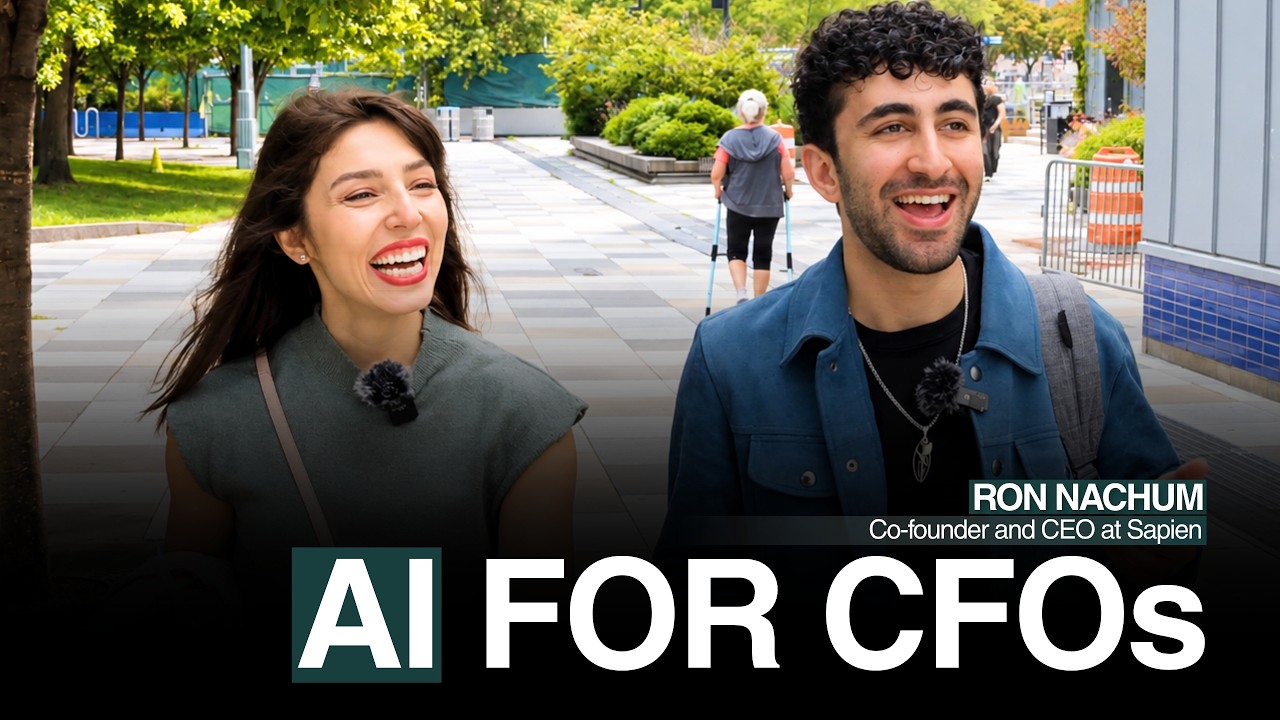
In this episode
Today I walk with Ron Nachum, co-founder and CEO of Sapien, an AI company that helps CFOs understand how their businesses run. Ron dropped out of Harvard to start Sapien with two friends from high school, recently raised from Neo and Ali Partovi at a $180M valution. Sapien works with CFOs at manufacturers and Fortune 500 companies, and now at 22 he's building an engine that reads a company's financial and operational data from the ground up. He gets into the night his co-founder found a $10M mistake hours before a customer's board meeting, and why he picks investors by asking if he'd want them at his wedding.
- The spreadsheet error that turned $10M in expected profit into a $2M loss, and how Sapien caught it the morning of the board meeting
- Why he'd rather start a hard company than an easy one when anyone can build anything with AI
- Dropping out of Harvard after Ali Partovi's first check from Neo, and why the risk felt asymmetric
- The wedding test he uses on every investor, and why he chose Neo over Y Combinator
- Juggling 500 times in a row in second grade, and the nurture-only belief behind everything he builds
Chapters
- 00:00Trailer
- 01:18Ron Nachum, Co-Founder & CEO, Sapien
- 01:35The $10M error found on board meeting day
- 04:53Telling CFOs twice his age they were wrong
- 07:55How a 19-year-old earns trust from skeptical buyers
- 11:53Why it's better to start a hard company
- 13:29Rubber band bracelets and 3D-printed fidget spinners
- 18:32The professor who told a 14-year-old not to email him
- 22:56Pain tolerance as the top founder trait
- 27:16Being too blunt as a young leader
- 35:43Why he records almost every conversation
- 38:31Dropping out of Harvard after Neo's first check
- 45:30Choosing Neo over Y Combinator and the wedding test
- 46:54From recruiting tools to the brain for CFOs
- 54:45Finishing SOC 2 controls overnight to close a customer
- 59:18Why he wants to build a hotel on the moon
- 1:00:45Outro
About the guest
Full transcript
LubaRon, thank you so much for coming on the show.
RonOf course, thank you for having me. We're excited for this.
LubaMe, too. So, you are 22 years old. You dropped out of Harvard. You're running a company with over 20 employees, working with some of the big CFOs in America, which requires a ton of confidence to do. So, I want to start with the incident when you and your co-founders, being 20 years old, found a $10 million error in one of your potential client's FP&A. Tell me more about how that happened.
RonYeah, it's funny. This is when we were first starting the company. We had built our first prototype, which is almost a stretch on what you could call it. And we were working with one of our first customers, trying to figure out how to automate one of their financial reporting processes they did every month for the last, you know, many, many years. And the idea behind the process was they wanted to understand what was driving their profitability. So, was it a change in customers? Was it a change in which products they were manufacturing? Like, what's contributing to it, so they can make the right decisions?
And they tasked us with automating this process with the early version of Sapien. So, we did that. We had Sapien understand the data, take it in, try to automate it. And what happened was we couldn't get our numbers to look like their numbers. There was just literally no way you could do it. And my co-founder Arya, he stayed up pretty much all night digging through their Excel spreadsheets, half with Sapien, half by hand, because the product had just really been built for the first time.
And we ended up finding the mistake, which was they weren't really averaging things correctly. So, when you look at a company that has tens of thousands of products, you can't just average the cost across all of them. You have to be very careful about how you weight that cost. So, like, some products get manufactured more and less, and you have to weight them accordingly. The way they were weighting it was wrong. And so, they thought they were making $10 million on a set of products, and they were actually losing $2 million.
And that realization hit us at about 7:00 in the morning. Arya in particular, he like shakes me awake, and we're like, "We have to get on a call with their CFO. Their board meeting is today, and they're about to present this information." So, we got on the call with them, and we try to show them piece by piece in the spreadsheet, and they're kind of dismissive at first. They're like, "No way." And eventually they click through and they realize, "Oh my god, this is actually real." And they had actually been making this mistake every month for years.
LubaAnd how much money was it every month? Cuz in your case it was $10 million.
RonIt was somewhere in that range. It was somewhere in the range of a few million dollars. They were looking back at the last 12 months. Every month they were trying to understand, like, year-over-year, what had been happening. But pretty much every month they were millions of dollars off on how they were thinking about the business. And once we pointed it out to them, they changed the way they did their reporting, they changed the way they thought about this process. And it actually helped them go and recover millions of dollars back to the bottom line of the business, because they were basically making products that were losing them money, and they had no idea.
I think most people who hear this story think, like, that's a one-off. That's not a real thing that happens. Almost every company we work with has some version of this. At least hundreds of thousands, usually millions of dollars, where they're just looking at their business wrong. And that was the moment for me that got me excited about what we were building at Sapien, because it's like every company is almost flying blind. There's so much data, there's so much stuff. Most people are making some mistake, not because they're, you know, being lazy or whatnot. It's just hard not to. We're human, right?
LubaYeah. And we're going to talk a bit more about what Sapien actually does, but I want you to take me back to that evening when you guys realized that you would have to tell these guys, who are... I don't want to focus too much on age, but it is true. They're probably twice your age.
RonI'd say more, yeah.
LubaYeah, and you'll have to be like, "Hey, you're wrong." What was that like?
RonI think a big part of being a founder, and granted, at the time we were just three co-founders in a shack in Palo Alto, but I think it's all about having a ton of confidence, and having a high degree of confidence in a small number of things, right? Like, I think the word ego maybe gets a bad rap, but I actually think it's really important. You have to be a little bit egotistical about a couple of things. And then the rest of it, let the world shape you and mold you into different things.
And I think in this example in particular, where I feel like I get my confidence from, to go and get in front of a room of people who are double or triple my age, or have spent way longer thinking about these problems than maybe I have, is confidence in the thoroughness that I put into my work, right? And I think when it came to getting on that call with them, we had spent... I'll give most of the credit to Arya, but we had spent so much time looking at and understanding how their business works, how the data works. Our early versions of Sapien were also helping with this.
When we got on that call, it was one of those things where we knew we were right. We had no doubt. There wasn't even a shred of, like, maybe we missed something, maybe we didn't look somewhere. We had looked through literally everything that we had access to. And I think that's what gave us the resolve, cuz it wasn't even that simple. We got on the call, and they were dismissive. They were like, "You guys are 20. You just started looking at our business a few weeks ago. You don't know what you're talking about."
LubaHow did you feel in that moment?
RonIt's interesting. I think back to that moment, and to the point on confidence, it didn't do anything. It almost bounced off, cuz we were so certain that we had looked through it. Honestly, I was more wondering if we'd be able to get them to see it. It was more of a fear of, like, would they listen? Not a, oh, maybe we're wrong and we messed up and we're going to look bad.
And I think that's also why it's important as a startup to get the right early customers. The folks at this company, I'd say now we're good friends with. We work very closely with them, and we've scaled up our contract with them like eight, nine X since we first started. And now they're almost like trusted partners in this. And I think their receptiveness to this early on, part of why they also trusted a startup like us early on, is they wanted to find something that would make them look at their business differently.
And I think that's kind of an important aspect of it. If people are going to trust an early-stage startup with young founders, especially when you're just getting off the ground, there's something about that where they almost want to be proven wrong a little bit. So, I think that's also part of what gave us confidence. They brought us in because they wanted something like this. They wanted to look at their business differently. And I think that's what made it feel maybe more comfortable than it honestly should have felt.
LubaSo, it sounds like you guys got really lucky with the specific customer where, as you said, they wanted to be proven wrong.
RonMhm.
LubaHow do you generally build trust with people who have been doing their business for a really long time? They obviously probably have a little bit of doubt, because you were so young and you were off to the races building a product, that they might say like, "What do you know about this space?"
RonRight.
LubaWhat's your approach?
RonI mean, I could talk about this one for a long time. When we first started, we were three 19-year-olds thinking about how do you take the world's most important businesses and run them better. That's a crazy ambition. And we were working with the most sensitive parts of these companies, right? The most sensitive data, the most sensitive elements. It's not like, you know, we're a product that gets bought on the side by an analyst, and they just kind of play around with it. This is, like, to the C-suite level with a lot of these companies.
LubaYeah, I want to bookmark how you guys, being 19, even came up with this level of ambition and idea. But continue with your story.
RonYeah. And funnily enough, it's also a question we got asked a lot when we did our first fundraise, which was, you know, why the college dropouts and not the disgruntled, you know, 50-, 60-year-old CFO who's dealt with this problem over and over again? And the thing I always kept answering to this question is, we're doing this differently. We're going to approach it in a way that nobody else does. That certainly makes the trust piece harder, but it makes our ability to actually solve the problem, I'd argue, better, right?
There's this element of, when you're so used to how things are, you only imagine them just a little bit better, a little bit different. When you come with a completely different angle, which for us was, you know, hey, corporate finance is obviously a very complicated problem, but really it's a data problem, right? Can you understand the data behind it? That's not what most CFOs think of, or if they do think of it, they don't have the underlying research and technical backgrounds to actually think about, what would it look like for an AI system to understand my data?
The trust piece, though, more broadly, is one that frankly we still work on today. And it's one where there's a lot of pieces to trust for us. There's trust in, are we even approaching this problem the right way? There's trust in, if I get a number out of Sapien, how do I know it's right? There's trust in, can Sapien actually make decisions for my business? There's trust in, does it understand how my company works? And there's trust in data security and all those sorts of things, cuz we're working with, you know, financial data of public companies, Fortune 500s, major financial institutions, all those sorts of things.
And I think the way trust, in my opinion, works is it's incremental. I think asking people to dump everything into you right away is never going to work, no matter what you do. It takes a long time to build trust, and it takes, you know, a second to evaporate it. I think for us early on, it was very much putting ourselves in places where we can make that trust easier. So, a lot of times for early customers, we'd be like, "Look, don't give us all your data. Give us a small anonymized spreadsheet, and we'll show you what Sapien can do."
LubaI like that instead of overselling them, you wanted to prove to them that you can actually do the small job, and then take a little bigger bite.
RonExactly. And I think it's really important to do that, especially at our earlier stage, because there's no reason for them to take a gamble on us. There's the classic, you know, you don't get fired for buying NetSuite. Nobody gets fired for buying Salesforce. Whatever. The traditional things that people are comfortable buying. It's like, why take the risk? We had to make it easy for them to do that. As we've grown, though, we start to get a little bit more comfortable with this. Now we're like, "Hey, we should just plug directly into your data." And why? Because...
LubaCuz you already have proven...
RonExactly. You have case studies that can show customers. Speaking of it, we can get people on the phone with references. But this is honestly one of the hardest things, I think, in startups, especially in industries like ours, is the cold start problem. We were cold emailing middle America manufacturers that had no reason to trust us whatsoever, and frankly are pretty skeptical of technology and those sorts of things. So, we had to start that way, but...
LubaDid you also take it as a personal challenge? Like, you personally seeing if these older industries will trust you?
RonI think there's a mixture of pieces there. I think I certainly thought that, and I think we collectively believed that it's better to start a hard company than an easy company.
LubaWhy is that?
RonI think being in a space that is so hard to get started in creates barriers to entry. In a world where, I think in 2026, anybody can build anything, right? There's so much ability, and when we started in 2024, that was starting to become more true. I think when you look at the world right now, you can build anything. And so, being in a space that's just fundamentally hard, hard because...
LubaCuz not everyone's going to take on the challenge.
RonExactly. And it means you're more sticky, right? Getting into these companies is different than selling into other AI startups. It's different than selling to other places. We had to break down the door to get into these companies. Honestly, I'm a person who loves doing hard things, hard challenges, but I also think it's actually pragmatic to do the hard thing first.
I think some companies try to avoid, you know, doing the hard challenge right away. And what that kind of leads to is, you know, you leave the hard problems for later. And I think that's not really the right approach, because you want to almost front-load some of that difficulty and get through those hard pieces, so that you have a stronger foundation to build off of. And I think that forced us to become a lot better at sales, a lot better at positioning, a lot better at talking to people earlier than if we had gone after a simpler market. But I think you can go both ways. I think that ended up being an approach that actually made a lot of sense for us.
LubaAnd you mentioned that you always liked a challenge. I want to talk more about that. So, when you were little, did you always want to build a company? What were your hopes and dreams?
RonYeah, I would say as a kid, and I'm sure people who knew me in elementary and middle school would definitely agree with this, I was pretty ungovernable, one might say. I hated people telling me what to do. I got in trouble a lot.
LubaWhy was that?
RonI just always felt like there was always a better way to do things, or just a different way to do things. Or honestly, sometimes it was just, I wanted to do things differently without really any good reason. And I grew up always wanting to create things. In first grade, I started a group of people to design spaceships to go to exoplanets. So it's like, why are you doing that in first grade? I had a whole binder of these plans and...
LubaWhat inspired you?
RonI was really into space growing up. I loved the idea of just how much there was to explore. I think when I was like three or four, I got this book called *Atlas of the Universe*, and it was basically this book that showed you all the different planets, all the parts of the solar system, all those sorts of things. And I remember distinctly, my mom would always say this, there's a page about Jupiter where it said "number of moons: unknown," and I couldn't get over this. I wouldn't let her go to the next page. I was like, what do you mean they don't know? How do we not know how many moons Jupiter has?
And I think I always had this innate curiosity for things that I didn't know. I wanted to just know more about them. I think that naturally leads to a bit of a self-starter nature, where it was like...
LubaWhat did your parents do?
RonSo my dad was in telecommunications for pretty much his entire career. So working for a lot of companies that would sell to, like, the Verizons, the AT&Ts, the T-Mobiles of the world, and then building a lot of the hardware behind it. And he was kind of on the technology and sales side of things. And then my mom actually had many different careers, but most recently she was in real estate.
LubaDo you think your curiosity was more nature or more nurture?
RonSo I have this debate with my friends and team members all the time. I am a big believer that everything is nurture. I don't like this notion that there's just some element of nature of, like, oh, you're just predisposed to be better at certain things. Obviously there's some element of this, certainly when it comes to athleticism and those sorts of things. But even with that, whether or not it's true, I like to believe that if you create the right environment, if you work hard, if, you know, the people around you support you, you can do anything. So, I'm probably one of the biggest believers in nurture you'll find in the world.
LubaSo, I believe in that too, but I still think that there are certain things we're more predisposed to, so it's easier to nurture.
RonRight. Right. And I think that's true. I just like to push as far into nurture as possible, because I feel like the point is, it's not worth me sitting down and saying, "Oh, I guess I'm not predisposed to do this." I think it's important to...
LubaBecause that's not really a mentality of taking responsibility for your own life.
RonI think that's like, whether or not it's true, I'd rather believe it, is kind of my perspective on that.
LubaYeah, some of my friends have this conversation about useful beliefs versus beliefs that are true. And there are ways to think about life where maybe there is no way to have any evidence whether this is actually true or not, but it is just a useful philosophy to live your life, because it allows you to be more ambitious or more driven or more growth-oriented in different areas of your life. Versus having a belief that's like, oh, you know, this is what I'm meant to do and this is what I'm not meant to do. And so you're ultimately having this closed mindset about what is possible for you.
RonMhm. Yeah, I think it's one of those things where, I don't know, you could say that there's free will or there isn't free will, but it's better to think that there is. Because if you, you know, lie down and give up, you could say that that was bound to happen or whatever, but you might as well try. And I think that's my mentality on pretty much everything. It goes to the confidence, it goes to starting a company.
I was doing all sorts of random stuff growing up. I was selling rubber band bracelets in third grade and getting my classmates to make them and giving them a cut of the profits. I was 3D printing fidget spinners on the school's printer in middle school and selling those. And then in high school, we had a club in my high school where you literally design and launch a satellite into space. And I went for a couple of weeks, and I didn't find it that interesting. And the reason why, actually, is because a lot of it was an instruction manual. You got instructions from NASA on how to put the satellite together. And there were a lot of really interesting engineering problems. I don't want to diminish it at all. But to me, I was like, I still feel like there's a little bit too much structure here. There is more that I could explore and more that I could do.
And I think that's what led me to doing a lot of the work that I ended up doing in high school, which led to, I think, my self-starter nature. I was doing research on Alzheimer's disease. I was building a liquid-fueled rocket on a goat farm. All these things that realistically a 14-, 15-, 16-year-old should not be doing. But I think, to the nurture point, I was in an environment where I would say I want to do these crazy things, and people would be like, "Sure. I guess. You could try it out."
LubaWas there anyone who was like, "You're crazy," and that stopped you at some point?
RonI remember, actually, I wanted to get into doing research, so I cold emailed a bunch of professors at some universities near where I grew up, cuz I wanted to learn more about AI at the time. Or broadly, I was interested in computer vision at that point, more of the visual side of AI. And I cold emailed a bunch of professors, and I remember one of them wrote back to me and was like, "You're 14. Why would you even email me?" I was like, "That's a weird thing to say."
And I think that was a moment that gave me pause, certainly. But then the next day I got an email back from somebody else who was like, "Here's a 30-page paper. Read it, come back to me with notes, and let me know what you think." And that was actually where I ended up starting to do my research. And I think I learned from these experiences this notion that there are two ways to take failure. You can take failure as, "Oh, I'm not good enough."
LubaMhm.
RonOr you can take failure as, "I'm not good enough, but I can become good enough." And I think, to me, that second part of the sentence, I feel like it got drilled into me. I don't know when. At some point earlier in my life.
LubaWho drilled it into you?
RonI mean, I would give a lot of credit to my parents. I grew up playing soccer a lot, and when I was little, one of the key things in soccer, or not key things, but you learn how to juggle, bounce the ball on your feet. And I used to be the worst on my team. I couldn't do more than like five in a row. And my dad basically told me, "You can practice and you can figure it out." And anybody in my second grade class will tell you, I went to recess every day and would juggle for 30 minutes straight, every single day that entire year, until maybe several months into that school year, I hit 500 juggles in a row.
LubaWow.
RonAnd it was just this notion that, again, it goes to the nurture point of view. You can just go and figure things out. And I think this got reinforced. I don't necessarily think it's a person that has to reinforce it. I think it's a person that has to give you the catalyst, and then you have to go and do things and realize, "Oh, I can go and learn how to do stuff."
And I think that, frankly, when running a company, is super important, because I spend every single day doing things that two or three years ago I would have literally no idea even how to think about starting. I think it's important to walk in every day and be like, "Yeah, I'm going to do something that I literally have no, you know, background in." And I think that is a core tenet that, sure, it helps with work and building a company, but I also think it helps every aspect of personal life as well, right? That mindset.
LubaHaving the mindset of, I can do it. I'm going to put the reps in. I'm going to enjoy the process even if it's painful, but I'm going to get there. 100%.
RonEnjoying the process is a new thing that I've learned. I used to be extremely, extremely results-oriented, and I would argue I still am. But actually Arya, one of my co-founders, we were really close friends in high school, and we always disagreed on this. He was always very, you know, love the process, and I was always like, "Who cares about the process? All that matters is the outcome." And I think we both actually kind of centered each other. And I've actually come to really, really appreciate the process a lot more, and he's come to appreciate, well, "Process can be great, but it does have to get somewhere, right?" And I think we always obviously had some balance of these, but I think we both...
LubaWhat allowed you to appreciate his perspective more?
RonI think I saw these situations where either one of the extremes didn't work well. And I think specifically, being very goal-oriented, obviously it gets you the results a lot of the time. But especially working in a team where you want to keep morale high and keep people motivated and whatnot, it's not always about just getting to the goal no matter what, right? The way you get there is really important. And having appreciation for that process while you're doing it, instead of retrospectively, I think is a lot of what I realized from Arya.
And I think vice versa for him. I think he saw more of the, hey, obviously thinking about the process is important, but we need to make sure that, yes, we could do all the steps right, we could build a really cool piece of technology, but at the end of the day, either the customer uses it or they don't. Those sorts of things.
LubaIf you're so outcome-oriented, or you were so outcome-oriented, were there times when you forced yourself to do the thing to get to an outcome without actually being like, "I love doing this"?
RonOh, a lot. I think that's actually one of the most important things to be a founder. I remember the first time I got asked to speak at a founder event, and I was like, "Really? I don't even know what I'm doing yet." I was basically asked, what is the most important trait for a founder? And I said, pain tolerance. There's this notion of doing things that you might not love for the sake of the underlying thing that you're excited to create.
And I think that is kind of part of it. Signing up for the founder's job, I think a lot of the average people out there think, like, oh, CEOs are the person who sits at the top and tells people what to do. I actually almost think it's the opposite. I want to work with amazing people. And so, my job is to do all the stuff that nobody else wants to do, so that the amazing people want to come work here and do the work that they're really excited about. And I think taking that responsibility is really important, but it's very difficult. You have to love that. Almost like, you have to be in love with the idea of what you're doing more than actually what you are doing sometimes.
LubaYeah.
RonAnd I think that was difficult for me to figure out at first, but I actually got very comfortable with it a lot quicker than I would have originally expected. Just because I saw what it enabled. It enabled us to go and work with these really big customers. It enabled us to go and hire some of our smartest friends. It enabled us to go and really build this thing. And once you see the results of that, whatever sacrifice or whatever you want to call it, I think it makes it easier to go and do more of it as you're going.
LubaYou sound so wise and mature. Who are the people who are really helping you grow?
RonI mean, I would certainly say my co-founders, Pranav and Arya. I didn't even talk about the full story yet, but they're two of my closest friends from high school.
LubaWe're going to talk about the full story.
RonYeah, so we can talk about that. But I mean, they're amazing, and I think we push each other a lot to grow. I would give a lot of credit to my parents. I think early on especially, whenever I was stuck on something, I would call them, and they gave a lot of advice. I have two older sisters, and we have a pretty big age gap. They're like 7 and 11 years older than me. And I think for a lot of my life, it felt like, you know, I was the annoying younger brother who was at a very different stage of life than they were. But I think as I went to college and started Sapien, I feel like we got a lot closer, and a lot of their advice has definitely shaped a lot of me today.
And then I'd also say that we got a lot of great early backers and investors who have been helpful. I mentioned earlier when we were speaking, Ali Partovi at Neo. He is just such an amazing human. The first time we met, he told me an entire story about how he tried to sell his company to Steve Jobs and basically blew the entire pitch. And this was the first thing he said to me when we met. And I remember being like, I want to be more like that guy. Yes, he told me a story of failure, but it was the vulnerability, the openness to do that.
And we've been fortunate to have a lot of other great investors. Niko and Max over at General Catalyst, who led our seed round, have been, you know, really great sources of advice. And a bunch of other angels as well that, you know, I've had the chance to spend time with, like Claire Hughes Johnson, the former COO of Stripe. Early on, we had a few calls where she gave me a ton of advice. She grew that company from, I want to say it was like 50 or 100 people, to several thousand. And there's so many learnings in that. She wrote a whole book about it. So it's cool to be able to speak to her about it a little bit as well. And then, oh yeah, the last group of folks: I think it's always great to talk to founders who are a few steps ahead on the curve. And so...
LubaWho are the founders you were talking to?
RonYeah, especially early on, we talked a lot to the founders of Mercor. Brendan and Adarsh, they gave us a lot of really good advice. When we were trying to figure out literally how to... They recommended our first lawyer. They helped us think about our first fundraise. They helped us think about our first hires. And I think having folks who are in a similar position but just a little bit ahead is really helpful, because the world's really different now than even five years ago.
Honestly, my founder advice right now, which I would still say take with a grain of salt, five years from today, I'd argue most of it will probably be useless. I think there's some core principles that certainly stay the same, but so much of the details of how to do these things just changes so quickly. So, it's nice to have people who are very close in proximity to the timing of what you're working on.
LubaI want you to talk about the story of how you guys got started, and your years at Harvard as well. But just spend a few more minutes on this startup mentality, a startup...
RonYeah.
Luba...personal development journey. How do you keep yourself in check? Because, you know, you know all these things. You're like, "Oh, this is the way I should do this. You got to enjoy the process. You got to be a good leader." But what are your blind spots, and how do you make sure that you are honest with yourself?
RonIt's a good question. I would say, when I think about blind spots, well, I guess the point of blind spots is you don't really know about them. But my guess on where I think they often are is, I think I'm a very, very intense person. And I think one of my blind spots is actually just being too intense sometimes. And I think this is actually something I struggled with a lot earlier, was things that work in your own head don't work for other people.
I think that startups and relationships are actually weirdly similar in that regard. People will, you know, care for another person the way that they want to be cared for themselves, whether that be a romantic relationship or a familial one or a colleague relationship. And I struggled with this a lot early, where I was like, "I want tough love. I want, you know, harsh feedback, and to figure out how to be better." And I would give this type of feedback to people, frankly, sometimes in an overly aggressive or just very direct manner.
LubaOr unprompted.
RonRight. Or certainly that. And I think it's my responsibility to do that, but I think there are ways to do it better. And I think this has honestly been an Achilles' heel of mine for a while, this degree of being too direct, too blunt, or just not adjusting how you do that to different people. And I think there were points at which this made me a lot less of an effective leader than I would like to view myself as.
I think I've improved a lot and learned a lot from this, but I think it's a very difficult thing. It's interesting, as I see people at Sapien taking on more accountability, it's funny, I see people who actually gave me the feedback to help me get better at this go and make the same mistake. They will now be responsible for people, and there will be something that goes wrong, and they get frustrated and they push hard on it. And I'm like, "Hey, this is the exact feedback you gave me. Here's how I figured it out." And I think that's part of the learning cycle a little bit. How do you do that better?
So that's one. And maybe another one that comes to mind for me is, I think there's always a little bit of this blind spot that just comes from, you don't know what you don't know. And I think there are good and bad parts to this. When we started this conversation, we talked about how being young and having a different perspective on how to do things leads you to different solutions. There are a lot of times that leads you to really overcomplicating things that should be really simple. Well, there are some things that we did well for this. For example, we designed our entire interview process from scratch, based on what we thought made sense for the people we wanted to bring on.
LubaVersus just going to other companies and being like, "Hey, what should the process be?"
RonI think that was actually a good decision. I think that one actually is really important for hiring. There are a lot of other places where, I know we rethought how our first demo calls for sales should work from first principles, and we rethought how our team should organize projects and how we should review code. And these are all things that are tricky, and I think are changing very rapidly.
But I think the core realization on this is, you want to be spending your time on the problems that your company is uniquely equipped to solve, and try to block out the shiny object syndrome of, I can do everything better. You don't need to do everything better. You need to do some things better. This is still, candidly, something that I personally struggle with, because maybe it's perfectionism or whatever you might call it. I love doing everything as well as you possibly can. Some things maybe just aren't worth doing that for. Some things maybe you should just go and see what somebody else is doing and do something that's good enough. But that almost hurts my heart a little bit. I don't like this notion of, oh, let's just do it because other people did it, because...
LubaYou're like, let's think from first principles. What do we actually need?
RonYou don't know if other people are successful because they did that or in spite of doing that. And survivorship bias is a very tricky thing. You can see this person be really successful and be like, oh yes, they did it in this way. You have no real way of knowing if that was good or bad. You just know that they were successful and they did that. And so I think that can lead you down bad paths. But you have to be efficient in some regard. And I think this is something we still struggle with, and I personally struggle with: when do you reinvent the wheel because it's actually worthwhile, and when do you just say, okay, let's go and take what's tried and true and use it that way?
LubaAnd what are the ways you personally analyze your own behavior, your own mistakes, your own pitfalls? Do you have a process? Well, obviously you're asking for feedback. Are you journaling? Are you working with an executive coach? Sounds like you have a startup community of founders that you talk to.
RonYeah, I think being reflective is actually one of the most important parts of... I mean, honestly, I think in general it's one of the most important parts of being human, but I think especially for a founder, it's extremely important. I think I've always been a very reflective person, but I don't think I always did it structurally. I think it's this notion of almost going back into your own head and analyzing, like, literally, how does it work? Why do I think this way? Why do I talk about things...
LubaSo you just sit and think and analyze. Is that it?
RonSo I think that's how I started doing this. I would say I started doing this actually pretty young. It was just some version of, I always tried to understand, why do I approach things in this way? Why do I think about things in that way? But then I think as I realized that I needed to formalize this more, journaling became a really... I've loved journaling, and I actually recommend it to every person at Sapien when they join. The first thing I recommend them to do is...
LubaDo you give them a journal as a gift when they join?
RonActually, we do. We give people a notebook on their desk, usually signed by the founders, and kind of a nice, you know, when they start. And that was something that early on we didn't realize, how much these little things matter. But now I love thinking about them. And I really encourage people. The first time I sit down with somebody when they join the company, I push them on this one. I thought this was super cliché. I thought this was a waste of time. But you don't realize how much is going on in your own head that you don't understand how to write down.
Like, you have so many good ideas, and you're going to open up the journal, and you're not going to write down a single one of them. That means you don't actually really have good ideas. You haven't let them congeal into something that's useful, or something you can communicate to other people. And writing, I think... I actually did a lot of voice notes as well, but I recommend to people, start with writing, because writing is harder than voice notes. And then once you build up the muscle with writing, you can save yourself some time by doing the voice note. But I don't think people should start with voice notes, cuz it's almost like a cheat. It's an easier shortcut to get there.
LubaSo how often do you journal?
RonI try to do twice a day. So once in the morning...
LubaTwice a day?
Ron...and once in the evening. It's like 5 minutes. Like, not even. It's just...
LubaJotting down some thoughts, some ideas?
RonLiterally, what are the few sentences that are on my mind right now. I usually do a bit more with stuff...
LubaDid you journal today?
RonI actually did not this morning, but I will be doing it after this. I usually do it the first thing when I get into the office.
LubaGot it.
RonI do it either on the way walking to the office or the first thing in the office, and then I try to do it right before I go to bed. And again, it's really not much. It can sometimes literally be one sentence. That's it.
LubaWhat was on your mind last night?
RonLast night, funnily enough, I had just gotten back from Nashville, where I was on site with a customer, and I've been thinking a lot about that experience. Being on the factory floor with this customer ignites my love for what I do. And I sent a really, you know, heartfelt Slack message and put photos and kind of gave everybody a feeling of what it was like. But I was like, I want people to feel this more. How do we do that? And that's honestly all I wrote. The last line of it, I think, was something like, how do we do more of this? I don't know the answer to it yet, but I have written down this problem, and I've formalized it instead of letting it swim around in my head.
And I think this is really useful, because writing makes it real, right? The second it's written down... You can convince your brain that you thought anything at any point. You can be like, oh yeah, I've always thought this way. I've always thought that way. If it's written down, you know exactly how you were thinking and what has changed. And that leads to much better reflective cycles, where you can actually think about what is and isn't working. How has my thinking changed? And I know that a couple weeks from now, if I haven't solved this problem, I'm going to look back and be like, wait, I knew this was a problem 2 weeks ago. I can't convince myself, oh, you know, I didn't really think it was that big of a problem. I know I thought it was a big problem. I think it has a lot of accountability.
And there's one more thing I want to add here, which is maybe the odd part of how I think about this, which is I record almost every conversation that I have. I'd say maybe this is a cultural thing.
LubaAre you being recorded? Well, obviously.
RonWell, this one is. But I really encourage everybody, whatever transcription app you want to use, transcribe every conversation. And we have this culture where people absolutely love this, because I then work with AI, and I have all my transcripts go in there. And at the end of each day, I can literally reflect on, like, I had 11 meetings today. What were the common things that I said?
And it's really cool also, because I can literally look at, how is the way I talk about Sapien changing week over week? How is the way that I talk about myself changing week over week? These types of insights were literally not possible to create even a year or two ago. And I think it's so important to capture all this information right now, because it's such an extension of yourself. It can understand so much about you if you just have it all written down.
I think tying together, hey, I'm capturing all the things that I'm doing actively, and I'm also taking some time separately to actually think about what happened in those. Having the two levels of reflection, I think, is really important. I think most people honestly do neither, but being able to do both is something that I find really, really helpful, and I think it's helped me be very rapid at improving myself. Not, oh, I'm going to look at myself once a quarter or, you know, once a year. I try to do this actively. People will notice this, which is, I'll have one conversation with somebody, and the second one will be completely different, because I could pick up on something I said that I don't think was quite so good, or the reaction wasn't what I expected it to be. I'm going to make it better next time.
LubaSomething that I started doing: I started voice-to-texting my day every single day, and I have little projects on Claude that are then analyzing my patterns and then telling me, "Okay, you know, this is the thing that keeps coming up. You need to work on it." Or, "This is the thing you've clearly already fixed..."
RonRight.
Luba"...because you're not talking about it," or the way you were talking about it has changed. And that's been really helpful.
RonYeah, I think it's such a powerful thing to have right now. Just being able to have all that information written down somewhere. Which is why I think writing is so important, cuz things in your head just aren't the same as when they're expressed. And I think getting them out there, where either other people or an AI system or whatever can dig through them... Having that external point of view is always so valuable.
And so creating places where you get more of that, whether it be yourself just looking at it, an AI system looking at it, you know, peers or people you trust supporting you and helping you think through problems. You have to create those environments for yourself. And at Sapien, that's something culturally we really care about. The number one thing I tell people is, you need to come in here, you need to be curious, you need to push back on what other people are saying. If you have no other skills, you need that one.
LubaOkay, I want to jump to your college years. So, you went to Harvard, you decided to drop out. Why did you drop out?
RonI think it was actually a much easier decision than most people think it was. I was working on, you know, the early comings of a company with two of my best friends from high school. We had just gotten our first check from Ali Partovi and Neo. He really believed in us and was like, "Hey, I know you guys are young. I know you guys are just starting, but I want to enable you guys to figure this out." And the risk was just asymmetric. We were all in as soon as we started this, but the notion of, worst case scenario, we don't figure this out, we go spend 9 months, 12 months learning things about it, we just go back to school. So...
LubaTwo things to tap on. One is, how did you even get started, cuz your two co-founders were at other schools? You guys were high school students together, but you went to Harvard yourself, the other one went to Stanford, and your third co-founder went to...
RonUT Austin.
LubaOkay. And then the second bookmark is Neo and meeting Ali and him empowering you guys to start the company. So, let's start with, how did you start the company with your two co-founders?
RonYeah, so I mean, Pranav and Arya are two of the smartest people that I've ever worked with. We met at some point in the high school cafeteria when we were like 14, and we just clicked really quickly. We worked on a bunch of projects, research, and things together. As a quick aside on each of them: Pranav was hacking things since he was in sixth grade. In middle school and high school, he was working for government contractors. Arya was a top 100 golfer in the world growing up, and he basically had the decision between going deep down the golf route, like moving to Florida, getting homeschooled, a lot of his friends are out now on the PGA Tour, or...
LubaWhat is the PGA Tour?
RonLike the big golf tournaments.
LubaOh, got it, got it. Okay.
RonAnd it was a choice between that and focusing on school. He decided to focus on competitive programming. His mom has two PhDs, which nudged him in that direction, and he ended up being, I think, one of, if not the youngest, students at one of UT Austin's top PhD labs as a freshman in college. So, two amazing people.
What actually happened to get us fully started was, they knocked on the door of my house over winter break. It was like midnight or 1:00 a.m. Knocked on my door, and I was like, "Why are you guys here?"
LubaOh.
RonAnd they were just driving around, like, "Oh, we were near your neighborhood. We just thought we'd come pick you up." And I was like, "Okay, sure." So I got in the car with them, and we drove around until probably 5:00 a.m. And we just talked about...
Yeah, pretty much. Just talking about school, this, that, all the things we were learning, all the things we were thinking about. And the theme we all kept coming back to was, we felt like we were missing something. There was something more that we wanted to be doing. Yes, we were learning a lot in school, but there's an itch to work and build something together.
LubaChange the world.
RonI mean, yeah. This is, not right after, but not super long after ChatGPT had come out, and people were starting to think about, "Oh, what do you do with all these LLMs?" And there was kind of this moment where it was like, what could we do? What could we build? And so we went back to school a couple weeks after, and we just kept FaceTiming, kept talking about different ideas. And so one day it was just like, "All right. What if instead of just talking, we just built something?" And so we built some initial prototypes. And then we were like, "All right, what do we do next?" And then we just applied to some startup accelerators.
Funnily enough, in this process, I went on a trip to New York with a group at Harvard called the Harvard Startup Trek. It was kind of their first version of this. It was some friends I had met through different things at college, and we came to New York for two days to visit, I want to say it was like nine or 10 different startups. Go and visit a bunch of places. I can't remember all the names. I mean, we were at Ramp's office, we went to Graphite's office back when they were like 15 people, a bunch of other really awesome companies. And on that trip, we went to a dinner where Ali Partovi was there. And this was my first introduction to him. As I mentioned, he gave this whole story about how he tried to sell his company to Steve Jobs, and it...
LubaWhy do you think he did that? What did he see in you guys, that he needed to build that trust and kind of, you know, sell you on his vision of potentially working with him?
RonWell, I think that's the thing. I don't think he views it that way. And that's why I was really drawn to working with him. I think he genuinely loves being around amazing and incredible people. And I don't think he views it as selling himself. I think he views it as literally just...
LubaBuilding a relationship.
Ron...sharing what he has learned so that you don't make the same mistake. I think that was actually what drew me to him a lot, was hearing that story. And it actually became a very core value of mine starting Sapien. I think everybody says some form of this, but I think being genuine is one of the most important things that you can do. And I try to always just be as transparent as possible. People are always like, "Oh, are you comfortable talking about this stuff?" I'm like, talk about everything. People want to go look at our codebase, we want to go into things.
LubaYou were asking me that before we started recording, too.
RonRight. I think it's better to be someone who puts everything out there, someone who's very expressive about what you feel and don't feel. That will probably push some people away. That's probably for the best. You probably don't want to be around those people. Exactly.
And I think Ali just embodies this so clearly. He's at this dinner, and he was just telling stories and things that he had learned. And I honestly took a lot of lessons away from it, and I was like, I want to be more like him. And so we kept in touch after that. And we ended up getting into some startup accelerators, and I was excited about doing Neo. And I remember texting Ali and Vincent, who runs their scholars program, and was like, "Hey, we have like 3 days to rush our application. Can you guys make it happen?" And they did an interview super quickly.
We ended up jumping on a video call with Ali, and it was supposed to be a 30-minute call, and it ended up being 2 and 1/2 hours. Just talking about all these different things, all these different questions, just life stories. Ali is Persian, and my co-founder Arya is also Persian, so they bonded over that. And it was one of those moments where it's like, we're not talking to an investor, we're talking to...
LubaA person.
RonLike a person, yeah. And I think that is what made it feel so right to drop out of school. I was on a call with three other people, my two co-founders and Ali, where I was just like, "Why would I want to be anywhere else? This is just such a great place to be." And yeah, the risk, in my opinion, was basically zero. My worst-case scenario is I'm going to have the time of my life, I'm going to learn a ton, I'm going to figure these things out, I'm going to do it with amazing people. When else am I going to do this?
And my dad really encouraged me on this as well. He was basically just like, "I saw what happened in the dot-com era. There were so many opportunities, there's so much stuff." He's like, "There are periods in which decades happen in, like..." That kind of feel. And that's also what really made me feel empowered to go do it, this notion of, if you don't do it now, you might regret it. You might regret missing the moment. So honestly, it's probably one of the easiest decisions I've ever made in my life.
LubaThat's incredible. What accelerators were you guys choosing between? So it was Neo...
RonYeah, mainly we were choosing between Neo and Y Combinator. We also looked at a few others, but I think that was really what the decision came down to. And as I mentioned, I think it really just boiled down to, we were incredibly excited to work with Ali as a human, and the rest of the Neo team as well, which we absolutely love. We're incredibly close with a bunch of them. One of them was actually in our office yesterday. I'm catching up with another one tomorrow.
LubaThat's awesome.
RonWe just very quickly saw them as family. And people ask me, "Oh, how do you choose your investors?" And it's like...
LubaIt's so important to choose people first and foremost.
RonNo, what I usually say is, you should just envision if you want them at your wedding or not. And that's pretty much it. You're basically going to spend the next 10 years of your life super close to them. Ideally longer than 10 years, but they're going to be a part of your life in some capacity. You should make sure that they're someone who you would enjoy sitting down and talking to for hours and hours and hours.
That has nothing to do with what firm they're a part of. Doesn't even have to do with their investment philosophy. Doesn't have to do with any of these sorts of things. It's just, are they someone who you think you can learn from, and who you would go to for advice? The other stuff also matters, but that's the first and foremost thing. If you don't have that, don't even evaluate the other criteria. And I think it was just so clear that we felt that so strongly with Neo, and we made the decision to do that. And a lot of people thought we were crazy at the time, but I feel like it's definitely been one of the best decisions I think we've ever made.
LubaThat's incredible. And it sounds like at the beginning you guys were working on something slightly different than what Sapien is now. How did the pivot happen?
RonSo, I get this question often, and I like to say it's not like a pivot is a moment. I think a company is constantly pivoting, right? You are shifting around. A company is exploring this high-dimensional space of opportunities, and it's like, where do you go next? You're always moving. The world's biggest companies are pivoting.
LubaOne of my executive coaches once gave me this analogy: imagine you're in a warehouse, it's completely dark, and you're supposed to find Cinnabons. And then you're just kind of walking around, taking turns, and trying to smell where they are to figure out if that's the right path or not.
RonThat sounds about right.
LubaYeah.
RonBut yeah, I like to think of it not as, "Oh, there's a day where we woke up and we're like, oh, we should do something different." It was an iterative process. Our very first idea that we applied to accelerators with, I barely remember at this point. It was something along the lines of, we were just trying to automate recruiting and the process of finding a job and those sorts of things. We were just kind of playing around with an idea. We realized we weren't super excited about building that. And so we thought, okay, scratch everything. What are we interested in?
And we started looking at finance, funnily enough, because Arya's dad is a wealth manager. And so growing up, Arya had seen all the types of modeling and manual work. And I think everybody knows finance is, you know, spreadsheets. It's manual. It doesn't feel like it should be, but it is. So we built prototypes for this high finance tool to help, you know, investment banks do more diligence and those sorts of things. And that actually ended up getting us into the startup accelerators.
But I remember when Ali called us to make us the offer to join Neo, he basically said, "Look, you guys are awesome, but it's clear you have just started. Explore the world of possibilities around this. We want you guys to find whatever, in this space or not in this space, you're excited about building." And that was really freeing, and again goes to why we were really excited to work with him and the team, because...
LubaThey give you the permission.
RonYeah, and it's not even like they needed to expressly do that, but they made it clear that they believed in us as people. Which to me goes back to the earlier confidence point, right? Someone's telling you, I believe in you and whatever you will do. And that's a lot of Ali's philosophy when it comes to investing, and I think that is pretty special.
And what that let us do is, we started cold emailing anybody with the title "finance." And so we got on the phone with literally anything from CFOs of small cannabis companies, to private equity operating partners, to the former CFO of Netflix. We talked to all of these people. And the thing that we kept realizing was honestly an accident. We actually were meaning to talk more to people on the high finance side, but we kept getting nudged towards corporate finance.
And the reason why is a few things. There's a lot of awesome companies on the high finance side, but I think we realized that that space is actually a lot smaller than most people think. There's, you know, a small number of firms that are the big ones that drive a lot of the decision-making power and the buying power. A lot of them are very experimental. They're either going to train their own models at some point, or they're going to, you know, buy a bunch of new solutions and try them out.
And ultimately, I don't think they're a place where building something with AI is going to make something, you know, a hundred, a thousand times faster, better, cheaper. And I honestly just couldn't get up in the morning and feel excited about that outcome. It's like, okay, yes, we can make these banking diligence deals faster. I'm not sure that actually does all that much. And also, their capital structure isn't even around that. If that was the core problem, hire more analysts, right? Improve that side of the business. They mostly spend their money on actually transacting, doing the deals.
So, I think that led us to realizing AI is actually more well-suited for the corporate side. Because you want to understand deeply how this business runs, right? Not, oh, we're going to transact one time with this company, do diligence, and then we're going to put it to the side. We are thinking about years and decades of understanding a business and evolving that understanding over time. That felt like a great use case for AI.
And it goes back to where we started this, that mistake in the data. Every company has millions of dollars that are just locked away in this data, but they don't have the bandwidth to analyze it. You'll go to, you know, mid-market manufacturers doing hundreds of millions in revenue, and they have like five or 10 people analyzing this data, and they don't have the wherewithal to actually go and figure these things out. So, that's kind of where we started hearing this problem more and more.
So, we started out by saying, okay, what if we automated financial processes like FP&A and reporting? But even that then kept getting broader and broader and broader over the last, you know, 18 months. It was like, who cares just about finances? People want to know why the finances are moving. Let's get into operational data. And then it wasn't even just operational data. Now it's all the pieces that flow into it. And it's kind of come to today, where we view Sapien as, how are we this, you know, this engine, this brain that understands how the world's most complex businesses run from their financial and operational data up, and how do we use that to help them run better?
That sounds like a very, very broad universe of things to do, but it actually starts very narrow. It's, how do you understand the transactions and what drives them? How do you understand the operations that build up to it? How do you understand the sales that flow into that? And then you basically understand how the business works, and you can go and make so many things downstream better. Manufacture more of the right products, cut down your costs in certain areas, sell into better markets. It's actually a very constrained problem when you break it down that way.
But it's so much more than we thought we were doing when we started it. It was not like, we're automating a board deck. Now we're actually helping these companies make millions of dollars more than they were before. And that's why I say it's iterative, because even what I'm saying to you right now isn't exactly how we felt about the company 3 months ago, and it certainly won't be, I hope, how we feel about the company 3 months from now, because we'll have an even bigger ambition as we work with more customers and see what's really possible.
LubaI briefly chatted with Niko about you and Sapien, and he said that you're a high-octane founder. Why do you think he said that?
RonI mean, I think one of the things that people probably say the most about me is that I'm extremely high energy. It's one of those things where I'll get off of a plane at 4:00 a.m., and I'll be in the office at 8:00 a.m., and people are like, "Did you not just get in at 4:00 a.m. last night?" And I'll be like, "I guess I did. I don't know." And I think I just am someone who's either 110% into what I'm doing or I'm 0%. And people have seen me at the 0%, and it's one where it's not like...
LubaWhat are the things that make you 0%?
RonThere were certain classes in college I just didn't really buy into, and I couldn't bring myself...
LubaIs there something you can't bring yourself to do now, but you have to, because of that mentality of, we just got to do what we have to do?
RonWell, I think the 110% is not necessarily about the thing that you're doing, it's about what it will accomplish for you. And I think there were some classes, for example, in college or in high school, where I just didn't feel like there was an outcome that I was working towards. And actually, looking back on it now, I think I was a little bit naive. I think some of my most interesting learnings are from classes that I honestly didn't fully embody when I was there, but looking back on it...
LubaThat makes me think about you being very output-oriented.
RonRight, certainly. So I think they did tie together. But I would say, when I'm 110% into something and it's outcome, I am that extremely bubbly and energetic person about it. I remember after we raised our first round, I did an interview with one of the Harvard, like, tech review, something like that. They were just talking to me a little bit, and the subtitle under the title was basically just, you know, about the energy. And I was just like, I didn't realize that that's how people view me. This is just me talking about what I do.
But actually, every time I go to a conference... I was in St. Louis a few years ago for a conference, and people would be like, "Wow, you're so excited about what you do." And I was just like, I feel like I'm just talking about it, but I'm glad you feel that way.
LubaThis reminds me, Ali said that you guys completed SOC 2 compliance in like a day or something, and it takes companies months.
RonFor legal purposes, we completed the controls. We did our audit properly in the months that followed, but yes, the controls were done very quickly.
LubaHow did you do it?
RonYeah, we had a customer we were trying to close. I accidentally told them that we had our SOC 2 certification letter, and I didn't realize that that letter was dated. So you have to actually get it with the right date on it. And so I looked at Pranav, my co-founder, and he was just like, "All right, let's figure it out." And...
LubaDamn.
RonIt's actually not as complicated a process as most people think, especially on very small, earlier-stage products. But yeah, it was one of those things where we have to figure out a way to get it done, and we did. So...
LubaSo what was the way, for people listening and wanting to follow your steps?
RonI mean, a lot of it is just logistical pieces. And I think, honestly, the answer that's maybe not super gratifying is we just did a lot of the work up front, where it wasn't hard to do. We built our infrastructure in the right way, where this wouldn't be hard. You can't take a product that's built poorly and just go do it in a day. But as I mentioned, Pranav is really good at this infrastructure, cybersecurity side of things, and so he'd already built a lot of the things with SOC 2 in mind, and so that made the process a lot easier. And then also, we just stayed up all night, and that was part of it. And I think those few things work pretty well together.
LubaOkay, what is your hope and dream for Sapien? What's the best possible scenario?
RonI get really excited thinking about this, because we started off with saying, okay, how do we automate financial processes? But as we've gone more and more into this, it's been like, okay...
LubaHow about for you personally?
RonFor me personally, two different things. Okay. I think for me personally, I have always been someone who's really excited about, I think of it as micro impact and macro impact. I mean, I don't even call it micro, but it's impact on the people around you. And I think building companies is one of the best ways of doing that. Feeling like I am helping people around me just be better. Whether it be being better engineers, being better salespeople, being better leaders, or being better friends or partners or whatnot. And I think being in a place that allows you to do that, honestly, I feel like I'm already exactly where I want to be in that regard. There's always so much more to do.
LubaWhy do you care so much about helping people be better?
RonI think it's pretty hard to explain, but there's nothing more fulfilling than seeing people succeed and feeling like you helped them do that. I think part of it is, I think that's instilled in me by my upbringing and my family. One story we didn't really talk about, but my grandfather was a Holocaust survivor, and growing up, he instilled a lot of this into me as well. This notion that you can overcome impossible things and still go and build a family, create a legacy, almost. And I think one of the best ways...
LubaAnd I'm sure it was also a story of choice. You can choose to do so, right?
RonRight. And I think one of the longest-lasting legacies I've seen anybody really leave is people, right? People who believe in something that you have created, and some impact that you've had on them. That lasts longer than, frankly, anything physical, like any building you might build or something like that. So I think that, to me, is extremely motivating.
And I think on the macro scale, I've always just been really excited about thinking about, how do you make technology that is as pervasive as physically possible? And I think, to me, Sapien is a vehicle to doing that, because we think not just about, you know, how do you run some of these businesses better, but it's literally anywhere where there's dollars and data. Small company, big company, governments, fire departments, non-profits. These are places that should run better, but they don't have the resources to do so.
And Eli, our first engineer, when he joined, he told me he was excited to join because he was like, if Sapien works, we basically just make every business in the world run better. Not to be too grandiose, it's almost like, how do you make capitalism the best version that it can be? And obviously capitalism has its good and bad parts, but there's certainly a lot of great parts that can be amplified. How do you create that?
And I think, to me, if you can be in a place in life where you're doing both of these, you're getting to spend time with really amazing people and have them shape you, and you shape them, and you feel that impact. But simultaneously, you're having a broader impact on the world at large. I think technology is a great way to do it, because you can do it at such a bigger scale than almost anything else allows you to do. That's honestly, to me, the themes that I look for in life, and it's like, what can I do every day that gets me closer to that? And to me, I wake up every morning and I'm like, this is the place where I get to do both of those as much as possible. So why would I want to be anywhere else?
LubaI love it. And to wrap it up, what are you trying to prove to yourself?
RonHm. Hm.
I think this answer probably changes hourly, but I think it's important to prove to myself, but also to others, that there isn't a limit on what you can do. We talked about this in all sorts of different forms today, but I always said growing up, I wanted to build a hotel on the moon, and people would be like, "What are you talking about? This is not going to happen." And I think there's this notion that if you want to accomplish something, you can do it. And I try to keep this up in life as much as possible, where even if there's something that I can't do right now for whatever reason, it's like, okay, how am I going to get there at some point?
And I think proving to myself, there isn't a limit. There isn't some ceiling that you get to, and it's like, you can't go further. There is always more that you can accomplish. I think that is kind of a motivator in the back of my mind all the time. How do I keep just expanding the realm of what I can even think of as being possible? And I think I wake up every morning just thinking about, how do I push that 1 inch further, 1 inch further, 1 inch further? Because I don't believe there should be a limit. But I think it's important to make that a conscious decision every day. How do you keep pushing that?
LubaRon, thank you so much for your time. I appreciate it.
RonThank you.